
Yorkshire crew lands 338kg bluefin tuna, first in North Sea since 1960s
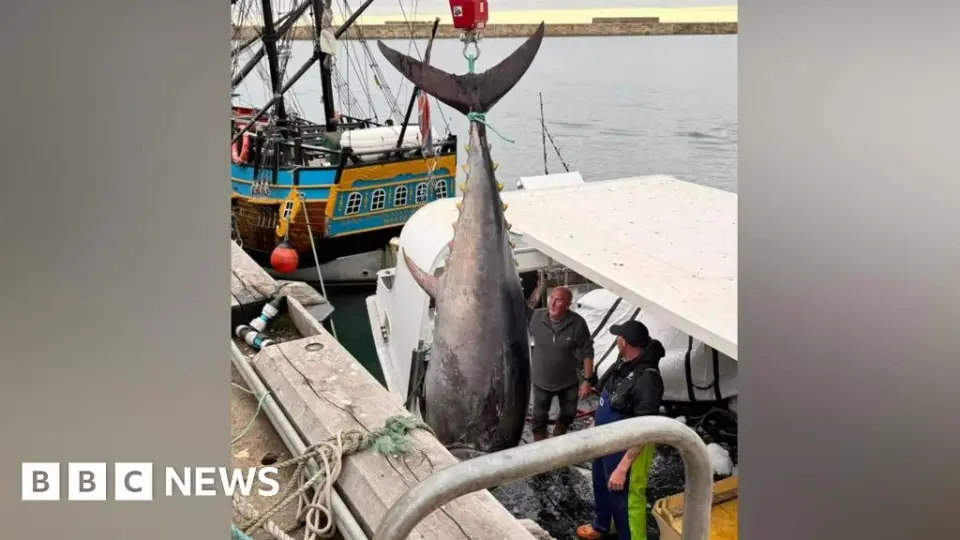
A five-person crew aboard The Dominator caught a 338kg Atlantic bluefin tuna off Whitby, marking the first landing in the North Sea since the 1960s. Researchers from the University of Exeter tagged six such fish, attributing their return to improved fishery management and healthy ecosystems. The catch sold immediately, with buyers noting premium prices for high-quality specimens.
Key points
- The 338kg bluefin tuna was caught approximately 10 miles from Whitby Harbour on Sunday, followed by a second fish of similar weight the next day.
- This is the first time a bluefin tuna has been landed on the Yorkshire coast in an estimated 60 years, with previous North Sea landings ceasing in the 1960s due to overfishing and herring depletion.
- Crew member Jack Gardner described the catch as the 'best feeling ever,' noting the fish's power and speed during the five-mile drag to the boat.
- The fish were sold before the boat returned to port, with buyer Lance Varrell calling them 'good quality' and suitable for restaurants and sushi markets.
- University of Exeter researchers have tagged six bluefin tuna off Whitby, noting they are considerably larger than those tagged on the south-west coast and may be genetically distinct.
Background
Bluefin tuna had previously returned to the south-west coast of England in recent years after decades of absence. In the interwar period, Scarborough and Whitby were famous for game fishing, with a British record of 386kg set in Whitby in 1933. Stocks declined by the 1950s due to commercial fishing technology. The archive does not contain relevant background for this specific story, as the only available archive article concerns rocket launch costs.
Why it matters
The return of large bluefin tuna to the North Sea signals a recovery in marine ecosystems, as these top predators require healthy underlying food webs. It highlights the impact of judicious fishery management and provides valuable data for researchers tracking migration patterns and genetic diversity.
What to watch
Researchers will monitor the tagged fish over the next one to two years to determine their origins and migration routes. The UK's current fishing quota for bluefin tuna remains small compared to overall stock levels, and continued monitoring will help assess the long-term sustainability of the species in British waters.
Want the full story? Read the original reporting
Read on BBC