
China-linked network floods Taiwan with 500 AI deepfakes to sabotage local elections
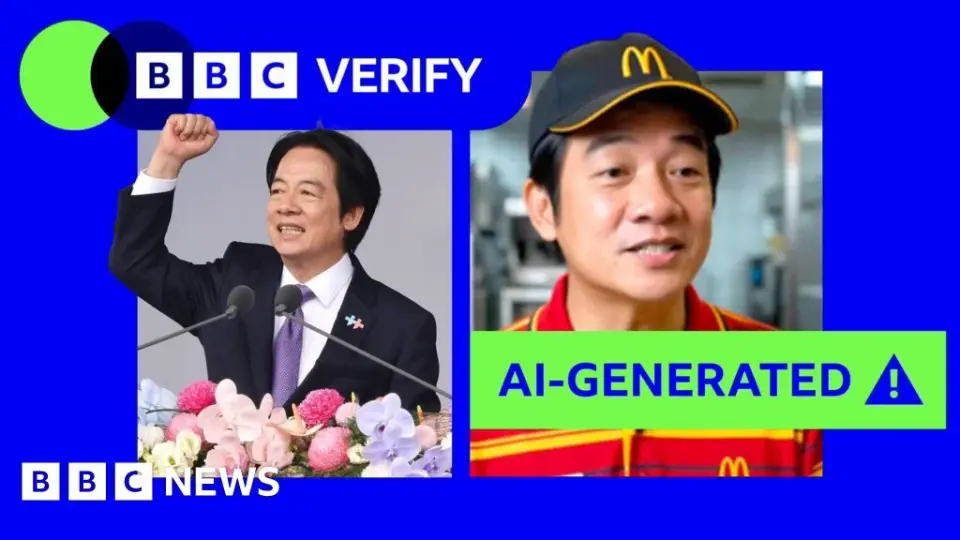
A China-linked network has generated over 500 AI-driven fake videos targeting Taiwan’s ruling Democratic Progressive Party (DPP) ahead of local elections. The campaign, which includes deepfakes of President Lai Ching-te and Taipei mayoral candidate Puma Shen, aims to erode public trust in democratic processes. Taiwanese authorities have responded by indicting a candidate for accepting Chinese funding and flagging nearly 2,700 social media accounts for removal.
Key points
- BBC Verify identified a network using AI to create over 500 fake videos targeting DPP leaders, including President Lai Ching-te and Taipei mayoral candidate Puma Shen, since May 2025.
- The videos, often shared via the account 'noxparable' and linked to Chinese firm Borderless, have garnered tens of millions of views, with activity ramping up in the four months prior to the elections.
- Taiwanese prosecutors indicted Taoyuan City Council candidate Chou Hsiao-yun on November 20 for accepting campaign funds and online support from Chinese Communist Party officials.
- Taiwan’s Mainland Affairs Council deputy minister stated that China’s interference constitutes a national security threat, while the central election commission warned voters about AI-generated deepfakes.
- Meta removed nearly 2,700 social media accounts flagged by Taiwanese officials as part of a Chinese information warfare campaign.
Background
This escalation follows a pattern of cross-strait tensions since the DPP took power in 2016. Recent archive coverage highlights broader Chinese efforts to influence democratic processes, including espionage charges against a California realtor linked to surveillance of President Lai’s son and AI-driven manipulation of US midterms. The current campaign in Taiwan mirrors these tactics, focusing on disinformation and financial infiltration to undermine electoral integrity.
How outlets are covering it
BBC Verify emphasizes the scale of the AI disinformation campaign, noting that experts view it as a 'cognitive warfare' effort to degrade trust in Taiwan’s democratic system rather than simply favoring one party. The American Enterprise Institute (AEI) and Institute for the Study of War focus on the structural infiltration, detailing how Chinese officials provided funds and bot networks to candidates like Chou Hsiao-yun to advance pro-Beijing policies. Kyodo News highlights the official government response, citing the Mainland Affairs Council’s accusation that China provided financial support to candidates, with some already facing judicial proceedings. While BBC focuses on the viral nature of the deepfakes, AEI details the specific mechanisms of funding and bot operations, and Kyodo underscores the legal and diplomatic dimensions of the interference.
Why it matters
The campaign threatens the integrity of Taiwan’s democratic process by sowing distrust in political figures and polarizing the electorate. As Beijing seeks to fracture Taiwanese society, the use of AI deepfakes and financial infiltration represents a sophisticated hybrid threat that challenges traditional election security measures. The response by Taiwanese authorities and international platforms like Meta signals a growing recognition of AI-driven disinformation as a critical national security issue.
What to watch
Taiwanese law enforcement is expected to continue prosecuting cases of electoral interference, while the central election commission will likely issue further warnings to voters. The outcome of the local elections will be closely monitored for signs of sustained disinformation impact, and international partners may increase support for Taiwan’s digital security infrastructure.
- China-linked network using AI fakes to smear Taiwan election candidates, BBC Verify finds BBC
- Taiwan's elections not about China, but Beijing has a lot to say Reuters
- Fake Personas Aligned With China Are Targeting Taiwan’s Election, Researchers Say The New York Times
- Kyodo News Digest: Nov. 23 Japan Wire by Kyodo News
- China & Taiwan Update, November 24, 2026 American Enterprise Institute - AEI
Want the full story? Read the original reporting
Read on BBC