
Cleanup Begins for 20-Year-Old Fish Sauce Stench in St. Mary's
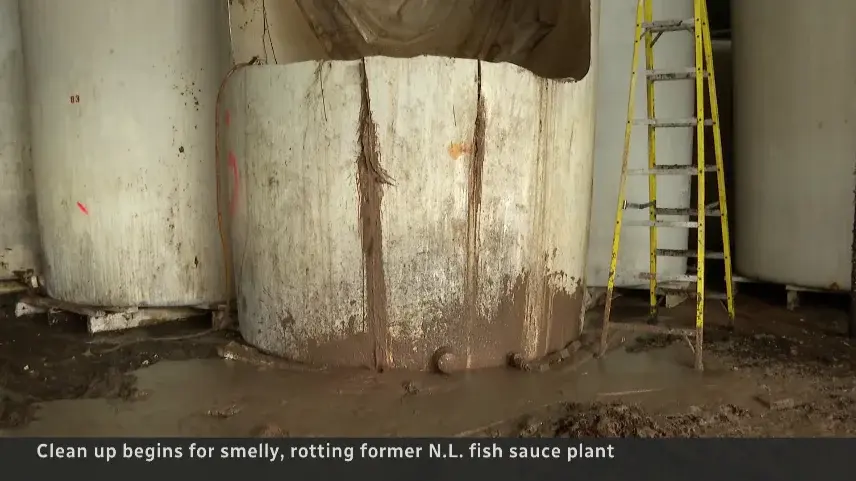
After two decades of persistent odor, cleanup crews have begun removing 900,000 liters of abandoned fish sauce from a defunct plant in St. Mary's, Newfoundland and Labrador. The project, funded by the provincial government, involves mixing the sludge with peat moss and transporting it to a specialized landfill in Sunnyside. Residents hope the operation, expected to finish by October, will finally end the community's struggle with the smell.
Key points
- Cleanup operations started on July 28, 2026, at the abandoned Atlantic Seafood Sauce Company in St. Mary's.
- The site contains 110 vats holding approximately 900,000 liters of fermented capelin and salt, left behind after the company closed in 2001.
- The province of Newfoundland and Labrador allocated $2 million for the removal, with the town contributing a loan of 198,000 Canadian dollars.
- The waste is being mixed with peat moss to solidify it, then hauled in about 200 truckloads to a lined landfill in Sunnyside.
- Mayor Steve Ryan described the cleanup as a major victory after years of advocacy, noting the federal government did not contribute to the cost.
Background
The Atlantic Seafood Sauce Company, founded by Vietnamese immigrant Sahn Ngo in 1990, aimed to produce fish sauce from male capelin discarded by a local processing plant. The venture faced regulatory hurdles and closed in 2001, leaving the vats to ferment for over 20 years. The resulting odor has plagued St. Mary's, a town of 300 residents, for decades, with residents previously boarding up homes to block the smell. An earlier failed cleanup attempt occurred in 2016.
How outlets are covering it
Defector highlights the scientific curiosity surrounding the 20-year fermentation, with food scientist Bryan Quoc Le speculating that the sauce might have complex, albeit rancid, flavor profiles due to Maillard reactions and amine formation. AP News and CBC emphasize the political and financial struggle, noting that Mayor Steve Ryan felt the federal government ignored the town, while the provincial government finally took responsibility. The Canadian Press focuses on the logistical challenges, describing the waste as a 'unique special waste' that does not fit standard classifications. All sources agree on the emotional relief felt by residents, particularly Mayor Ryan, who teared up during the initial cleanup.
Why it matters
The cleanup resolves a long-standing environmental and quality-of-life issue for a small coastal community. It demonstrates the complexities of managing abandoned industrial waste and the importance of local advocacy in securing government support for environmental remediation. The project also raises questions about the long-term chemical effects of uncontrolled fermentation.
What to watch
The cleanup is expected to be completed by October 2026. Workers will continue draining the vats, mixing the sludge with peat moss, and transporting it to the Sunnyside landfill. The site will be sealed with topsoil to prevent future odor release. Residents will monitor the area to ensure the smell does not return.
- Let Me And A Food Scientist Sample The Abandoned Fish Sauce Terrorizing A Small Canadian Town Defector
- Rotten fish sauce that has long stunk up a small Canadian town is finally being removed AP News
- St. Mary’s, Newfoundland, Will No Longer Reek of Rotten Fish Sauce The New York Times
- First load of rotting, decades-old fish sauce trucked away from abandoned N.L. plant cp24.com
- Decades in the making, work begins to remove rotten fish sauce from St. Mary's plant cbc.ca
Want the full story? Read the original reporting
Read on Defector