
Oman oil spill reaches coast as salvage efforts face monsoon and liability voids
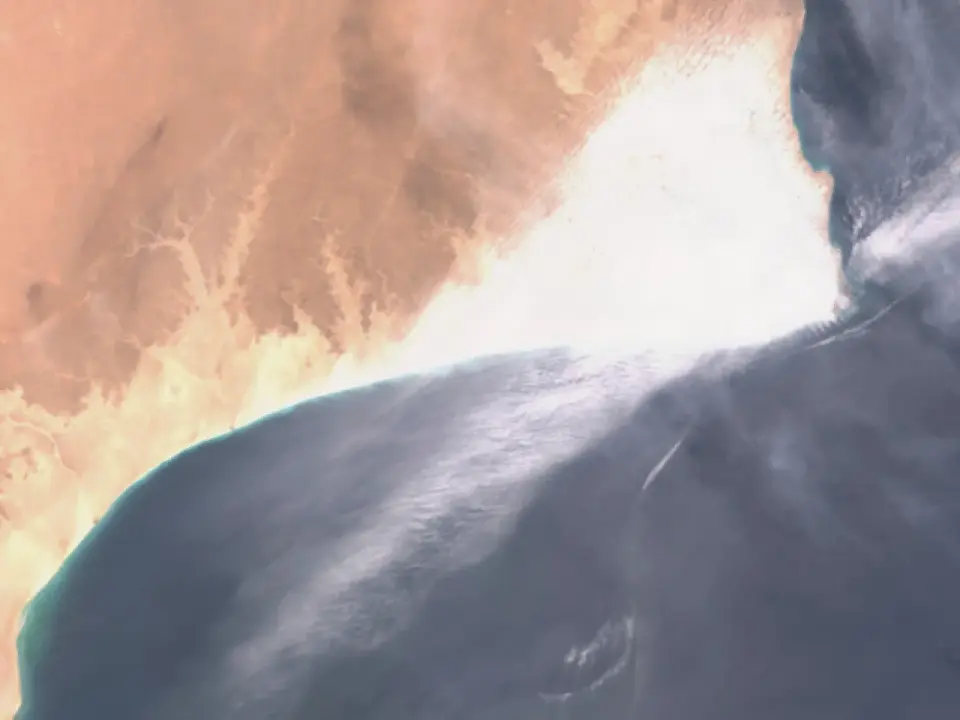
The oil spill from the sanctioned tanker Caroline Bezengi has reached Oman’s coastline, covering over 2,000 square kilometers and threatening a 40-kilometer stretch near Ras Madrakah. The vessel, carrying 800,000 barrels of Russian crude, ran aground in June after an unexplained explosion. Salvage operations are underway but hampered by monsoon weather and the lack of insurance or clear liability, raising fears of a catastrophic environmental disaster comparable to the Exxon Valdez incident.
Key points
- The slick now covers more than 2,000 square kilometers, up from 390 square kilometers reported earlier in the week.
- Oil has reached the mainland near Ras Madrakah and is expected to affect Masirah Island in the coming hours.
- The Caroline Bezengi, a 25-year-old vessel linked to Russia’s shadow fleet, ran aground on June 30 after an incident in early June.
- Salvage efforts are being conducted by Ambrey but are hindered by the Khareef monsoon and the absence of Western insurance coverage.
- The IOPC Funds has excluded the incident from compensation, classifying it as an 'act of war' rather than a standard accident.
Background
This incident follows weeks of escalating concerns as the spill expanded from a localized leak near the Hallaniyat Archipelago to a regional crisis. Earlier reports highlighted the vessel’s status as part of Russia’s shadow fleet, used to circumvent sanctions, and noted that the spill threatened a marine reserve established to protect rare species like the Arabian Sea humpback whale. The situation is compounded by the broader instability in the Gulf, where the US-Iran conflict has increased the frequency of tanker incidents in the Strait of Hormuz.
How outlets are covering it
Al Jazeera emphasizes the environmental threat, noting the spill could become one of the world’s worst in years due to the lack of a 'responsible party' for cleanup costs. CNN highlights the ecological significance of the affected area, citing Greenpeace’s warning that the spill is fragmented and poses long-term risks to coral reefs and seabirds. NBC News focuses on the logistical and legal challenges, pointing out that the IOPC Funds will not cover cleanup costs due to the 'act of war' classification, and that the vessel is uninsured by Western providers. All sources agree on the scale of the spill but differ in emphasis: Al Jazeera and CNN focus on environmental impact, while NBC News highlights the legal and financial voids complicating the response.
Why it matters
The spill underscores the environmental risks posed by unregulated shadow fleet vessels and the legal ambiguities surrounding oil spills in conflict zones. The lack of insurance and liability means the cleanup burden falls entirely on Oman, while the potential for a massive release of crude could have lasting ecological consequences for the region’s marine biodiversity. The incident also highlights the intersection of geopolitical conflict and environmental disaster, as the tanker’s journey was affected by multiple active war zones.
What to watch
Salvage operations will continue, but progress may be slow due to monsoon conditions. Oman’s environment authority will monitor the spread of the slick to Masirah Island and other coastal areas. The IMO will continue to monitor the situation, and international stakeholders may seek to address the liability gap for future incidents involving sanctioned vessels. The long-term environmental impact will depend on the success of the salvage and cleanup efforts, which are currently hampered by weather and legal uncertainties.
- Oman says massive oil spill reaches coastline: What damage could it do? Al Jazeera
- Salvors work to secure ship leaking oil off Oman, risk firm Ambrey says Reuters
- Huge oil spill off the coast of Oman now covers hundreds of square miles CNN
- Salvage effort underway for stricken tanker spilling oil off Omani coast NBC News
- Experts Race to Salvage Leaking Oil Tanker Grounded Off Oman Bloomberg.com
Want the full story? Read the original reporting
Read on Al Jazeera