
Sanctioned Russian Tanker Spill Expands to 2,000 Sq Km, Threatening Oman’s Marine Reserve
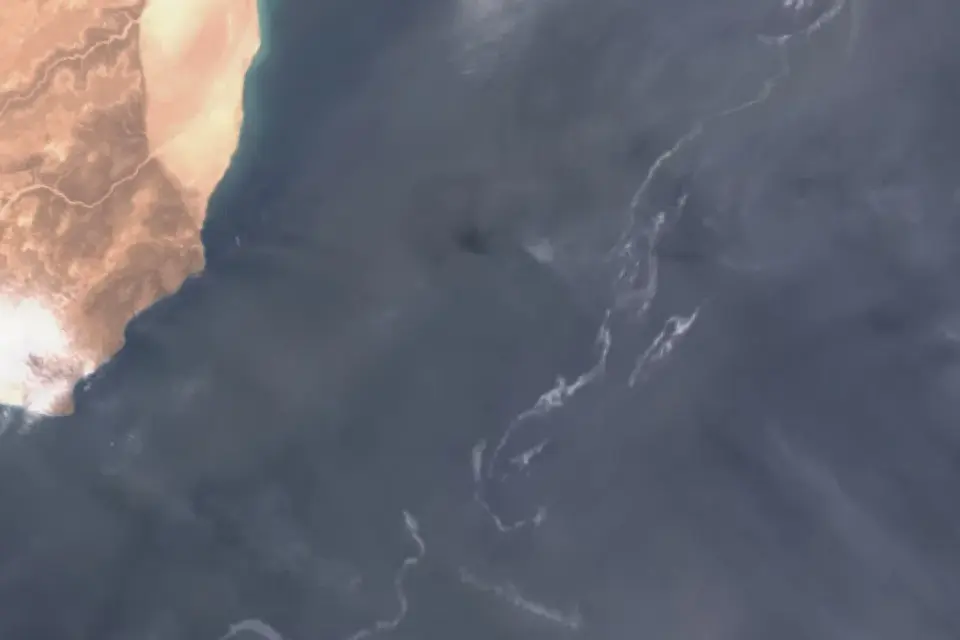
The oil spill from the sanctioned tanker Caroline Bezengi has expanded to over 2,000 square kilometers, reaching Oman’s mainland and threatening a protected marine reserve. The vessel, carrying Russian crude, ran aground in June and remains uncontained due to monsoon conditions and regulatory disputes over liability. While Oman reports a 400-square-kilometer slick, independent experts argue the actual impact is far larger, with potential for a catastrophic release of the entire cargo.
Key points
- The Caroline Bezengi, a 25-year-old tanker carrying 800,000 barrels of Russian crude, ran aground on June 30 near the Hallaniyat Islands in Oman.
- The vessel is part of Russia’s 'shadow fleet' and is under sanctions from the EU, UK, Switzerland, Canada, and Ukraine.
- The oil slick has reached the mainland at Ras Madrakah, affecting up to 40 kilometers of coastline, according to Oman’s Environment Authority.
- Independent experts estimate the slick covers over 2,000 square kilometers, far exceeding Oman’s official 400-square-kilometer figure.
- The IOPC Funds has declined to cover cleanup costs, classifying the incident as an 'act of war' rather than an accident.
- The tanker is uninsured by Western providers, leaving no clear 'responsible party' to finance the cleanup under standard international regulations.
Background
This incident follows a series of disruptions to oil shipping in the Middle East since the start of the US-Iran conflict in 2026. Previous coverage noted that the Caroline Bezengi was part of a broader pattern of attacks on Russian shadow fleet vessels, with Ukraine’s Operation Molochka targeting 172 vessels since July 2026. The spill also coincides with severe disruptions in the Strait of Hormuz, where oil exports have dropped significantly below pre-war levels, contributing to global supply shortages and rising oil prices.
How outlets are covering it
Oman’s Environment Authority reported the slick covers nearly 400 square kilometers and has affected 40 kilometers of coastline, emphasizing ongoing containment efforts. In contrast, John Amos of SkyTruth and Greenpeace argue the spill is significantly larger, with Amos estimating over 2,000 square kilometers and Greenpeace noting a rapid quadrupling of the affected area in early August. The IOPC Funds and Western insurers view the incident through a legal lens, refusing coverage due to the 'act of war' classification and lack of insurance, while Christopher D’Elia of Louisiana State University highlights the regulatory gap, noting that sanctioned 'illegal tankers' do not comply with the 'polluter pays' principle, leaving no clear entity to finance the cleanup.
Why it matters
The spill threatens a newly established marine reserve protecting endangered species, including sea turtles and humpback whales, and risks a catastrophic release of the entire cargo if the vessel breaks up. The lack of a clear responsible party for cleanup costs, combined with the vessel’s sanctioned status, creates a precedent for environmental liability in conflict zones. Additionally, the incident exacerbates global energy insecurity, as the Strait of Hormuz remains partially closed, contributing to rising oil prices and supply shortages.
What to watch
Oman is deploying specialized teams to monitor and contain the spill, with priority given to environmentally sensitive areas. However, monsoon conditions have delayed salvage operations, and the vessel’s deteriorating condition increases the risk of a total cargo release. The IOPC Funds and insurers are unlikely to cover costs, leaving the financial burden unresolved. Analysts warn that without urgent action, the spill could rival the 1989 Exxon Valdez disaster in scale, with potential long-term ecological and economic consequences for the region.
- Gulf oil spill fast becoming worst in years, agencies warn The Straits Times
- Huge oil slick hitting Oman's shoreline as agencies warn of disaster reuters.com
- Oman says oil spill from stricken tanker has reached its coast Al Jazeera
- Oman says the oil spill from a grounded tanker has reached its coastline AP News
- Oil rises on worries over supply disruptions as spill near Oman worsens CNBC
Want the full story? Read the original reporting
Read on The Straits Times