
Icelanders reject EU accession talks, leaving Brussels to pivot to Montenegro
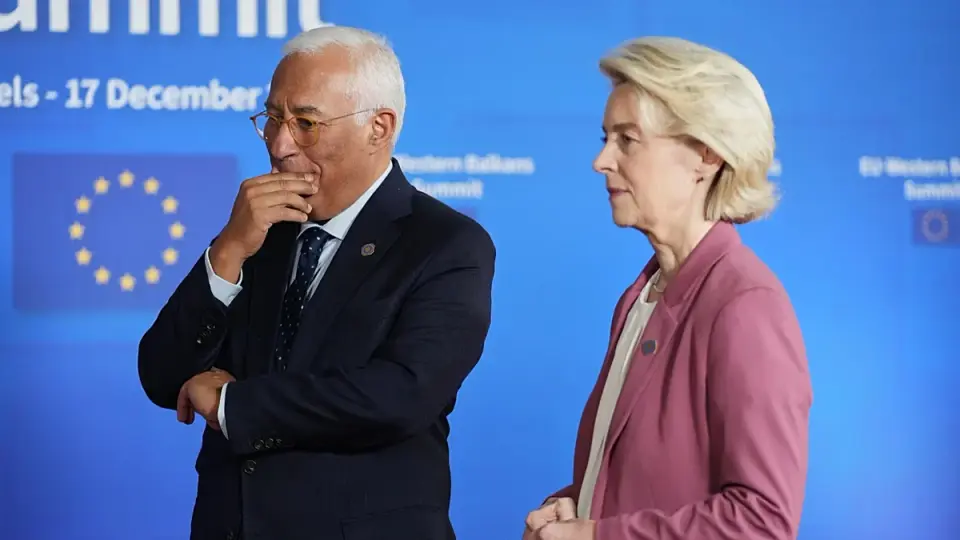
Icelandic voters narrowly rejected reopening EU accession negotiations, with 52.8% voting 'no' against 47.2% 'yes'. The European Commission and Council President António Costa expressed respect for the democratic outcome, emphasizing that Iceland remains a 'close partner' despite the setback. Prime Minister Kristrún Frostadóttir confirmed she will not pursue membership for the remainder of her term. The result stalls EU enlargement momentum, shifting focus to Montenegro, which aims to join by 2028. The vote highlighted domestic concerns over fisheries and agriculture sovereignty, which outweighed security anxieties regarding US pressure on Greenland.
Key points
- Icelandic voters rejected the reopening of EU accession talks by a margin of 52.8% to 47.2% in a nonbinding referendum.
- The European Commission issued a muted response, stating it respects the Icelandic people's choice and views Iceland as a 'close partner'.
- European Council President António Costa communicated with Prime Minister Kristrún Frostadóttir, affirming the EU's respect for the democratic decision and desire to strengthen bilateral relations.
- Prime Minister Frostadóttir stated she would abandon the matter of EU membership entirely for the remainder of her term following the result.
- The Commission had previously signaled intentions to find 'creative' solutions for contentious issues, specifically the Common Fisheries Policy and Common Agricultural Policy, which remain excluded from Iceland's current single market access.
- The referendum result threatens to dampen momentum on EU enlargement, which had gained political priority following Russia's invasion of Ukraine.
Background
This referendum followed a period of heightened debate regarding EU integration, with previous coverage noting that a 'yes' vote would have initiated talks potentially lasting 18 to 24 months. Earlier reports highlighted that the vote was framed by concerns over inflation, high interest rates, and fishing waters, as well as security dimensions related to US President Donald Trump's push for greater influence over Greenland. The nonbinding nature of the vote meant that even a 'yes' would have required a subsequent referendum for final approval, but the 'no' result effectively halts the process for the current political term.
How outlets are covering it
Euronews emphasizes the diplomatic and institutional response, highlighting the 'muted' reaction from the European Commission and the diplomatic exchanges between António Costa and Kristrún Frostadóttir. It frames the result as a potential dampener to the broader EU enlargement drive, which had gained momentum post-Ukraine war, and notes the shift in focus to Montenegro. The Washington Post focuses on the domestic drivers of the vote, arguing that local concerns over national control of fishing, farming, and other priorities outweighed fears related to Trump's threats regarding Greenland. While both sources agree on the outcome and the 'no' vote, Euronews stresses the impact on EU policy and partnerships, whereas The Washington Post highlights the primacy of local sovereignty issues over external security pressures.
Why it matters
The rejection of EU accession talks by Iceland, a country previously viewed as a 'five-star candidate' due to its high degree of integration, represents a significant setback for the European Union's enlargement agenda. This outcome may slow the pace of EU expansion and force the Commission to rely more heavily on other candidates like Montenegro. It also underscores the persistent tension between EU integration and national sovereignty, particularly regarding sensitive sectors like fisheries and agriculture. The result may influence future EU strategies for engaging with non-member states, potentially leading to more 'creative' solutions for partial integration rather than full membership.
What to watch
The European Commission is expected to continue strengthening its relationship with Iceland as a 'close partner' despite the rejection of accession talks. The Commission is preparing reforms to offer tangible benefits to candidate countries, such as access to certain EU programs, to maintain momentum in the enlargement process. Montenegro is likely to become the primary focus for EU enlargement efforts, with the bloc aiming to support its progress toward membership by 2028. The Commission may also explore 'creative' solutions to address issues like fisheries and agriculture for countries like Iceland that do not pursue full membership.
- 'A close partner': EU offers muted reaction after Iceland rebuffs accession talks Euronews.com
- Iceland opposes E.U. membership talks as local concerns outweigh fears of Trump The Washington Post
- Iceland’s Rejection of EU Keeps It a NATO Island Straddling U.S. and Europe WSJ
- Iceland Votes to Steer Clear of European Union Talks nytimes.com
- EU enlargement hits an Icelandic snag The Economist
Want the full story? Read the original reporting
Read on Euronews.com