Tag

Fisheries Policy

All articles tagged with #fisheries policy

Alaska Senate Race Hinges on Ranked-Choice Voting and Salmon Politics Amid Ballot Confusion
politics24 days ago

Alaska Senate Race Hinges on Ranked-Choice Voting and Salmon Politics Amid Ballot Confusion

Alaska’s tight U.S. Senate race between incumbent Dan S. Sullivan and Democrat Mary Peltola is complicated by a second candidate named Daniel J. Sullivan, a retired teacher whose presence on the ballot has sparked accusations of voter confusion. The New York Times reported that Democratic operatives helped recruit the namesake candidate, prompting a criminal probe by Governor Mike Dunleavy and a preemptive lawsuit from the Justice Department to block certification if Sullivan loses. While legal experts argue the tactics are likely lawful, the dispute threatens to delay results in a state where the outcome could determine Senate control. Simultaneously, the race is defined by a fierce debate over industrial trawling and salmon conservation, with Peltola advocating for stricter bans and Sullivan supporting new bycatch legislation.

Alaska's 2026 Senate Race: Fish, Tariffs, and the Independent Voter's Dilemma
politics2 months ago

Alaska's 2026 Senate Race: Fish, Tariffs, and the Independent Voter's Dilemma

Alaska's competitive Senate race pits incumbent Dan Sullivan against Democrat Mary Peltola, with independent voters prioritizing authenticity and fisheries protection over party lines. Sullivan faces criticism for supporting tariffs that raise costs, while Peltola leverages her Native heritage and anti-trawling stance to appeal to the state's large nonpartisan electorate.

Alaska Senate Debate: Sullivan's Glance at Peltola's Answer Sparks Viral Controversy
politics2 months ago

Alaska Senate Debate: Sullivan's Glance at Peltola's Answer Sparks Viral Controversy

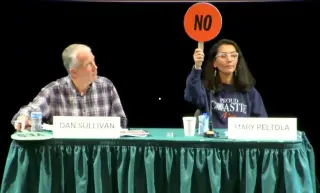
During a fisheries-focused debate in Kodiak, Alaska, incumbent Senator Dan Sullivan (R) appeared to copy the answer of his opponent, Representative Mary Peltola (D), after failing to hear a question. While Sullivan later apologized, Peltola mocked the incident on social media. The debate highlighted stark contrasts in their approaches: Sullivan emphasized his legislative record on seafood and foreign competition, while Peltola focused on her personal fishing heritage and proposals to ban factory trawling. Critics noted Peltola's demeanor shifted from her usual polished image to a more combative stance, whereas Sullivan was praised for his preparedness on policy details.

Iceland Rejects EU Talks, Highlighting Limits of Union’s Appeal to Wealthy Nations
politics2 months ago

Iceland Rejects EU Talks, Highlighting Limits of Union’s Appeal to Wealthy Nations

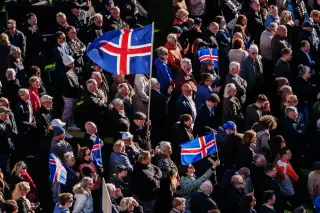
Icelandic voters rejected resuming EU accession talks on August 29, 2026, with 52.8% voting 'no' against 47.2% 'yes'. The result, which saw a record 82.5% turnout, signals that wealthy, stable democracies may not prioritize full EU membership over existing economic arrangements. While nine poorer candidate nations actively pursue accession, Iceland, Norway, and Switzerland prefer the European Economic Area (EEA) model, which offers single market access without political integration. The vote underscores that for prosperous nations, the political costs of joining outweigh the benefits, particularly regarding sovereignty and fisheries.

Iceland's 'No' Vote Tests EU Enlargement Strategy and Arctic Security
geopolitics2 months ago

Iceland's 'No' Vote Tests EU Enlargement Strategy and Arctic Security

Icelanders voted 52.8% to 47.2% against resuming European Union accession negotiations, a result that halts a process where 27 of 35 chapters were already opened. The rejection, driven by concerns over fishing rights and sovereignty, complicates the EU's goal of expanding its security and economic influence in the Arctic. While the country remains integrated via the European Economic Area and Schengen, the outcome signals that existing close ties may not be sufficient to persuade wealthy, stable nations to join the bloc.

Icelanders reject EU accession talks, leaving Brussels to pivot to Montenegro
europe2 months ago

Icelanders reject EU accession talks, leaving Brussels to pivot to Montenegro

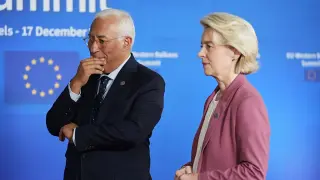
Icelandic voters narrowly rejected reopening EU accession negotiations, with 52.8% voting 'no' against 47.2% 'yes'. The European Commission and Council President António Costa expressed respect for the democratic outcome, emphasizing that Iceland remains a 'close partner' despite the setback. Prime Minister Kristrún Frostadóttir confirmed she will not pursue membership for the remainder of her term. The result stalls EU enlargement momentum, shifting focus to Montenegro, which aims to join by 2028. The vote highlighted domestic concerns over fisheries and agriculture sovereignty, which outweighed security anxieties regarding US pressure on Greenland.

Iceland’s EU Referendum Faces Geopolitical Shadow from Trump’s Greenland Ambitions
politics2 months ago

Iceland’s EU Referendum Faces Geopolitical Shadow from Trump’s Greenland Ambitions

Icelanders are voting on whether to resume negotiations for full European Union membership, a decision heavily influenced by fears over fishing rights and national sovereignty. The referendum follows a decade-long pause in accession talks, which ended in 2015 due to disputes over the Common Fisheries Policy. While supporters argue that EU membership offers economic stability and better European relations, opponents fear losing control over vital Arctic waters and national identity. The vote is not final; a 'yes' would trigger further negotiations and a subsequent referendum on the final agreement.

Icelanders Vote on EU Accession Amid Arctic Security Shifts
politics2 months ago

Icelanders Vote on EU Accession Amid Arctic Security Shifts

Icelanders are voting in a closely contested referendum to decide whether to resume negotiations for European Union membership. The vote, held on August 29, 2026, is driven by domestic economic concerns, particularly high interest rates and the desire for currency stability through the euro. However, the debate has been intensified by geopolitical shifts, including U.S. President Donald Trump’s persistent claims regarding Greenland and shifting Arctic security dynamics. While polls show a near-even split, with one survey favoring the 'Yes' side by a slim margin, the outcome remains uncertain. A 'Yes' vote would restart accession talks, potentially leading to a second referendum, while a 'No' vote would pause the process. Key issues include sovereignty over fishing rights, which account for nearly 40% of exports, and Iceland’s reliance on NATO and U.S. defense agreements despite having no military of its own.

Iceland’s EU Referendum Hinges on Arctic Security and Fisheries
politics3 months ago

Iceland’s EU Referendum Hinges on Arctic Security and Fisheries

Icelanders vote on Saturday to decide whether to resume EU membership talks, a decision shaped by fears of U.S. aggression toward Greenland and domestic disputes over fishing rights. While pro-EU campaigners argue that joining the bloc strengthens sovereignty against American and Russian threats, opponents warn that EU rules would undermine national control over fisheries and farming. Polls show a razor-thin margin, with economic concerns like inflation and agricultural subsidies competing with geopolitical anxieties in a vote that could reshape the North Atlantic’s political landscape.

Iceland's EU Referendum Hinges on Fishing Rights, Not Geopolitics
politics3 months ago

Iceland's EU Referendum Hinges on Fishing Rights, Not Geopolitics

Icelanders will vote on August 29, 2026, on whether to resume negotiations for European Union membership. While US President Donald Trump's interest in Greenland and Arctic security concerns have raised the strategic profile of the issue, domestic debate centers on economic sovereignty, specifically control over fishing quotas and agricultural subsidies. A recent poll shows a narrow 53% to 47% lead for resuming talks, with the outcome likely determined by fears over the EU's Common Fisheries Policy rather than geopolitical shifts.