
European Unrest Escalates: Youth-Led Protests Turn Violent Across Six Nations
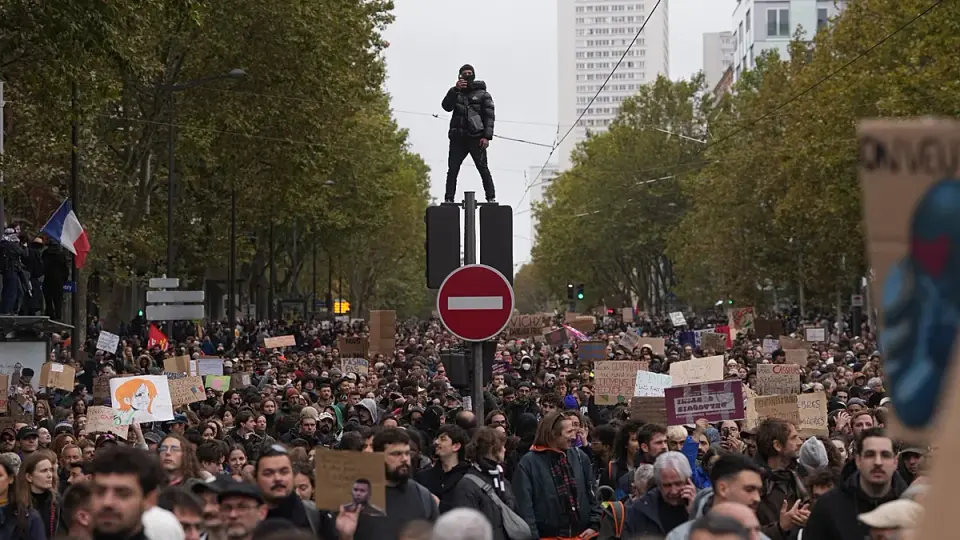
A wave of cross-border protests has swept across Europe, driven by Gen Z anger over housing, education, and living costs. France saw the most severe violence, with 2,400 arrests and nearly 1,000 security injuries. Similar unrest erupted in Italy, Spain, Portugal, Albania, and Greece, with authorities deploying massive police forces to contain the disorder.
Key points
- France: 2,400 arrested, ~1,000 security forces injured, 100 protesters injured in Paris alone; 70,000 officers deployed for Saturday marches.
- Albania: Tear gas used in Tirana; 300+ injured; government buildings attacked; PM Edi Rama refuses to step down.
- Italy: Clashes in 8 cities; 9 arrests, 371 detained (110 minors); protesters threw bottles and firecrackers.
- Spain: Pensioners demand inflation-linked increases and protection from privatization; 87-year-old eviction sparked initial unrest.
- Portugal: Housing protests in Lisbon; 55 arrested Tuesday; tents pitched in Rossio Square; demand rent caps.
- Greece: Students marched in Athens chanting 'from Greece to France, we want public, free education.'
Background
Protests began in early October with student actions in France and Italy, escalating through the month. Earlier coverage noted distinct national grievances rather than a unified movement, with France seeing over 500,000 demonstrators. Portugal's housing crisis saw police clear tent camps in Lisbon and Porto in late October, with Amnesty International condemning excessive force. The unrest follows a broader pattern of Gen Z protests globally, with shared economic anxieties but fragmented demands.
How outlets are covering it
Euronews emphasizes the scale of violence and security response, noting 2,400 arrests in France and massive police deployments. CNN frames the unrest as a generational crisis, highlighting how Gen Z fears they won't have the opportunities of their parents, with AI affecting entry-level jobs and climate crisis adding pressure. The Guardian focuses on the breakdown of the social contract, noting that governments worried about debt and bond markets cannot offer solutions, while far-right parties seek to capitalize on the unrest with lies about immigrants. The outlets agree on the cross-border nature of the protests but differ on emphasis: Euronews on immediate violence, CNN on generational frustration, The Guardian on systemic failure.
Why it matters
The protests threaten to reshape European politics, with four major states (Spain, France, Poland, Italy) holding elections within a year. Far-right parties are attempting to exploit the unrest, but lack real solutions to the economic and housing crises. The unrest could lead to a radical rightwards shift in the EU, fundamentally changing the continent's political landscape. The failure of governments to address the social contract breakdown may continue to fuel unrest, with more demonstrations planned in France, Germany, and Britain.
What to watch
France: Large demonstration in Paris Saturday, authorized by authorities; Macron banned non-union protests. Major trade unions in France and Spain called for general strikes on November 5 and 11. Germany: 'Gen Z regelt' group called for nationwide protests on October 31. Britain and Italy: Student unions planning a day of action on November 20. Albania: PM Edi Rama refuses to step down, blaming opponents for unrest. Serbia: Student-led protests form the most formidable opposition to Aleksandar Vucic in parliamentary elections on Sunday.
- Protests spread from Paris to other capital cities across Europe Euronews.com
- Gen Z are leading the European protests. Here’s why they’re angry CNN
- The agony of liberal Europe The Economist
- The Guardian view on Europe’s protests: the social contract has broken – and young people want solutions | Editorial The Guardian
- Youth protests across Europe: The overlapping crises facing Gen Z Phys.org
Want the full story? Read the original reporting
Read on Euronews.com