
Spain's Rail Crisis: Human Error and System Failure Spark Outrage Before Election
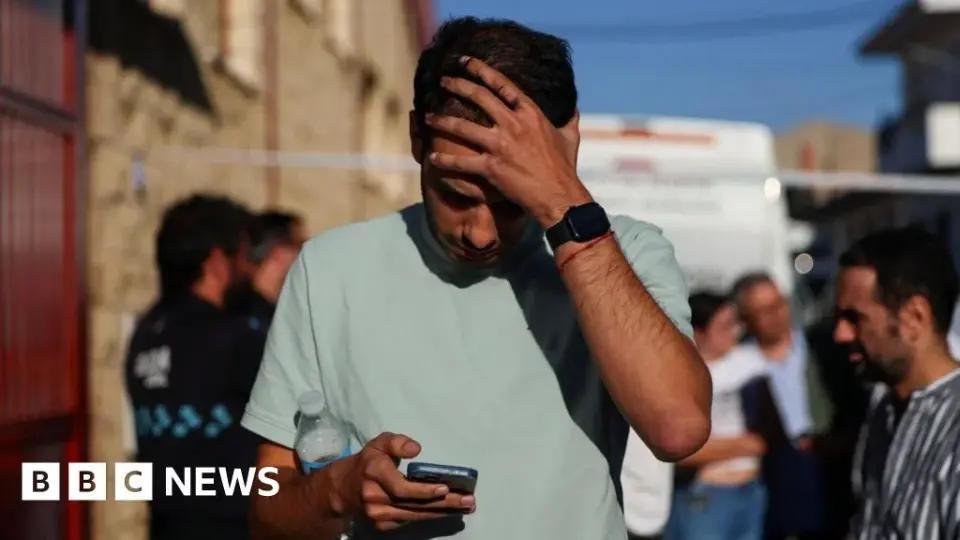
A high-speed train collision near Urda, Spain, killed at least 69 people, marking the second major rail disaster on the Madrid-Seville line this year. Leaked audio suggests a control room error allowed a Renfe train to proceed at speed into a stationary Iryo train after a signaling system failure. The incident has intensified political pressure on Prime Minister Pedro Sánchez ahead of November elections, with unions calling for strikes and the public demanding accountability for the safety of Europe's largest high-speed network.
Key points
- At least 69 people died and over 100 were injured in a crash near Urda, Toledo province, on Wednesday.
- The collision occurred when a moving Renfe train struck a stationary Iryo train on the Madrid-Seville high-speed line.
- Transport Minister Óscar Puente attributed the crash to a computer system failure followed by human error in a control room.
- Leaked audio recordings show a controller instructing the Renfe driver to proceed under 'normal operation' despite a red signal.
- Spain declared three days of national mourning, with Prime Minister Pedro Sánchez visiting the crash site.
- The incident is the second fatal rail disaster on the same line this year, following the Adamuz crash in January.
Background
Spain's high-speed rail network, the largest in Europe, was previously praised for its safety and efficiency. However, the Adamuz crash in January 2026, which killed 46 people, triggered a nationwide debate about the network's integrity. That incident was caused by a track break, whereas the Urda crash involved signaling and control room failures. Prior to 2026, Spain had the best rail safety record in the EU, with fewer than one death per million inhabitants in 2023.
How outlets are covering it
BBC emphasizes the emotional toll and political polarization, noting that the tragedy has fueled outrage in a divided climate. CNN focuses on the technical details, highlighting the specific sequence of events where a controller authorized a train to proceed despite a red light, and notes the international impact with 42 foreign citizens involved. The Guardian frames the incident as a rare rear-end collision on a high-speed network, comparing it to the 2011 Wenzhou crash in China, and questions the long-term implications for Spain's rail infrastructure and investment.
Why it matters
The crash has exposed critical vulnerabilities in Spain's rail safety systems, undermining public confidence just weeks before national elections. It has intensified scrutiny of the government's handling of infrastructure and could influence voter sentiment, as the opposition demands accountability for the two major disasters on the same line within a year. The incident also highlights the risks of human error in automated systems and the need for rigorous investigations to prevent future tragedies.
What to watch
A full investigation will examine the technical failure and the control room decision-making process. The train drivers' union SEMAF will continue its strike, demanding safety reforms. Political tensions may escalate as the election approaches, with the opposition pressing for the resignation of Transport Minister Óscar Puente. The government will likely announce compensation for victims and further safety measures to restore public trust.
- Shock of rail tragedy gives way to sorrow and outrage in politically divided Spain BBC
- What caused the deadly train crash in Spain? What we know so far CNN
- Families hold out hope for loved ones missing after deadly Spain train crash The Hill
- Spanish train crash death toll rises to 69 as rescuers search for victims Reuters
- How did the Spain train crash happen and what will investigators be asking? The Guardian
Want the full story? Read the original reporting
Read on BBC