
Global Dockworkers Strike 113 Ports to Halt Arms Shipments
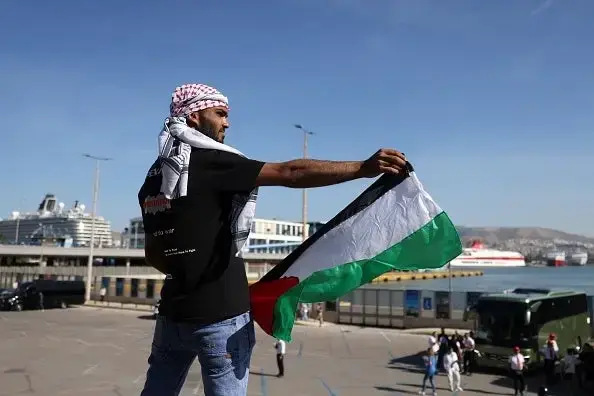
On October 30, 2026, dockworkers in 113 ports across 22 countries and five continents staged a coordinated strike to protest arms shipments to Israel and broader military policies. Organized under the slogan 'No Harbour for Genocide,' the action involved 25 trade unions, including Italy’s USB and Greece’s ENEDEP, aiming to disrupt military logistics. While organizers claim the strike could idle over $2 billion in cargo, supply chain experts predict limited global disruption, noting that a 24-hour halt is unlikely to cause shortages. The movement links labor rights with anti-war activism, drawing support from communist groups and Palestinian labor organizations, though it faces criticism for ideological framing and potential overstatement of economic impact.
Key points
- The strike targets 113 ports in 22 countries, including Genoa, Piraeus, Hamburg, and Oakland, with 24-hour actions in France, Italy, Greece, and Turkey.
- Organizers, including the 'No Harbour for Genocide' collective and 25 trade unions, demand an end to arms shipments to Israel and 'imperialist wars,' citing 315 tracked weapons shipments through 56 ports since August 2025.
- Fox News attributes the coordination to a 'red-green' alliance of communist, socialist, and pro-Palestinian groups, funded by Marxist tech tycoon Neville Roy Singham, while Al Jazeera emphasizes traditional labor solidarity against war.
- Supply chain experts, including Marsh and Freightos, predict minimal global disruption, though perishable goods and time-sensitive shipments may face delays; C.H. Robinson warned clients of potential operational issues.
- The strike coincides with a general strike in Italy and student protests in France, with unions linking the action to broader opposition against militarization and austerity policies.
Background
This action follows earlier port disruptions in February 2025, when Mediterranean unions first coordinated against weapons shipments to Israel. The October 30 strike builds on the 'Istanbul Declaration' from May 2026, which set the date and demands, including recognition of a Palestinian state within 1967 borders. Recent European unrest, including student protests in France and Italy’s nationwide strikes over living costs, has created a backdrop of labor activism. The strike also follows the 'Global Sumud Flotilla' campaigns, which used maritime confrontations to protest Israel, and aligns with broader anti-war movements in Europe and the Middle East.
How outlets are covering it
Fox News frames the strike as a coordinated 'spectacle' by communist and pro-Palestinian agitators, emphasizing the role of Neville Roy Singham’s funding and the 'red-green' alliance, while downplaying labor autonomy. Al Jazeera presents the strike as a historic labor solidarity action, highlighting union leaders’ demands for an end to genocide and the strategic importance of ports in military logistics. AP News focuses on the practical impact, noting limited supply chain disruption and the variety of strike actions, from 24-hour halts to shorter walkouts. The outlets disagree on the strike’s nature: Fox News views it as ideologically driven chaos, Al Jazeera as principled labor resistance, and AP as a moderate logistical event. All agree on the scale (113 ports) but differ on the perceived threat to global trade and the role of external funding.
Why it matters
The strike tests the limits of labor power in disrupting military logistics, potentially influencing future arms shipments to conflict zones. It highlights the intersection of labor rights, anti-war activism, and geopolitical tensions, with implications for global supply chains and port operations. The coordinated nature of the action, spanning five continents, signals a growing trend of international labor solidarity on political issues, while the debate over its economic impact underscores the tension between protest efficacy and practical trade concerns. For policymakers, it raises questions about port security, military mobility regulations, and the role of unions in shaping international trade and conflict dynamics.
What to watch
Monitor for follow-up actions by unions, including potential extensions or new strikes, and assess the actual economic impact on global shipping and perishable goods. Watch for government responses, such as Italy’s deployment of troops or stricter rioting laws, and any legal actions against union leaders, like Greece’s ENEDEP leader facing prosecution for prior protests. Track the 'Acte III' protests in France and any further coordination between communist groups and labor unions. Observe if the strike influences policy changes, such as European military mobility regulations, or if it sparks broader labor movements in other sectors. Also, watch for reactions from Israel, the US, and other governments to the strike’s messaging and any potential escalation in anti-war activism.
- ASRA NOMANI: 106 far-left groups in 'red-green' alliance target global ports Fox News
- What can a global strike of dockworkers achieve for Gaza? Al Jazeera
- Dockworkers strike in Europe and beyond against arms shipments, war deaths Reuters
- Dockworkers stage international strikes to denounce arms shipments and demand better conditions AP News
- International dock workers strike to protest arms shipments, including to Israel The Times of Israel
Want the full story? Read the original reporting
Read on Fox News