
Raj Panjabi’s New Book Offers a Strategic Framework for Navigating Personal and Public Health Crises
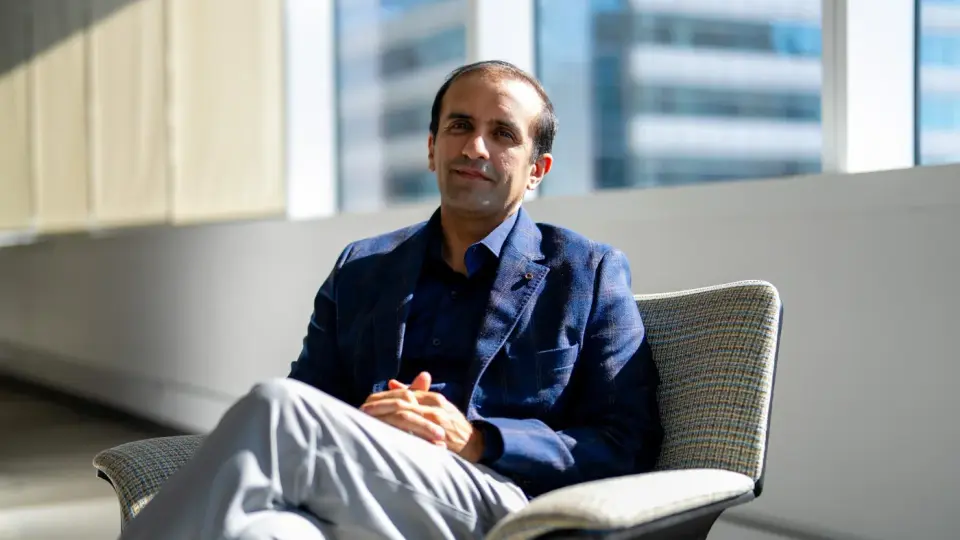
Dr. Raj Panjabi, a former Biden administration global health adviser, has released 'Safer: A Playbook,' a guide designed to help individuals manage personal emergencies and societal health threats. Drawing on his experience with his daughter’s heart failure diagnosis and pandemic response strategies, Panjabi argues that denial is a universal first stage of crisis. He advocates for 'if/then' thresholds to overcome normalcy bias and suggests replacing blame-oriented questions with barrier-oriented inquiries to build trust in public health initiatives. The book also addresses the dual nature of artificial intelligence in medicine, urging caution while leveraging its potential for developing new treatments.
Key points
- Panjabi’s book functions as a three-part guide covering personal crisis management, global public health issues, and practical advice for living-room emergencies.
- The author emphasizes that denial is the initial phase of most crises, often driven by 'normalcy bias,' which makes slow-moving threats difficult to detect until a tipping point is reached.
- To counteract this, Panjabi recommends setting specific 'if/then' thresholds, such as monitoring a child’s heart function via regular ultrasounds, to regain a sense of agency.
- In public health contexts, such as the resurgence of measles, Panjabi advises asking 'barrier-oriented' questions rather than 'blame-oriented' ones to understand and address practical obstacles to vaccination.
- He highlights that trust in healthcare remains high among Americans, with 80 to 90 percent trusting their local providers, suggesting that connection is a primary defense against crises.
- Regarding artificial intelligence, Panjabi notes its potential for developing cancer treatments and vaccines while warning that the same tools could be misused to create dangerous pathogens, necessitating strict risk minimization.
Background
This release follows a period of significant public discourse regarding health policy and leadership in the United States. Recent weeks have seen former health advisers, such as Calley Means, resign from the Trump administration and publicly accuse White House staff of prioritizing corporate interests over public health goals. Additionally, former Biden administration figures like Karine Jean-Pierre and Ty Cobb have been in the news for career transitions and political warnings, respectively. Against this backdrop of shifting political narratives and public trust in institutions, Panjabi’s focus on local trust and personal resilience offers a contrasting perspective on navigating uncertainty.
Why it matters
The book provides a tangible framework for individuals and communities to manage uncertainty in an era marked by both personal health challenges and complex societal shifts. By shifting the focus from blame to practical barriers, Panjabi offers a method for rebuilding trust in public health systems, which is increasingly fragmented. Furthermore, his insights into AI ethics highlight the urgent need for balancing innovation with safety in medical research, a topic of growing concern as technology advances rapidly in healthcare applications.
What to watch
Panjabi is expected to continue his work in medical research, focusing on using AI to develop new medicines and vaccines. He will likely engage in public discussions regarding the book’s strategies for overcoming denial and building community trust. The broader impact of his ideas may be seen in how public health officials and community leaders approach vaccination campaigns and crisis preparedness, potentially influencing how barriers to healthcare access are identified and resolved.
Want the full story? Read the original reporting
Read on NPR