
Airlines Challenge CDC’s Broad Ebola Travel Ban Amid Rising Global Cases
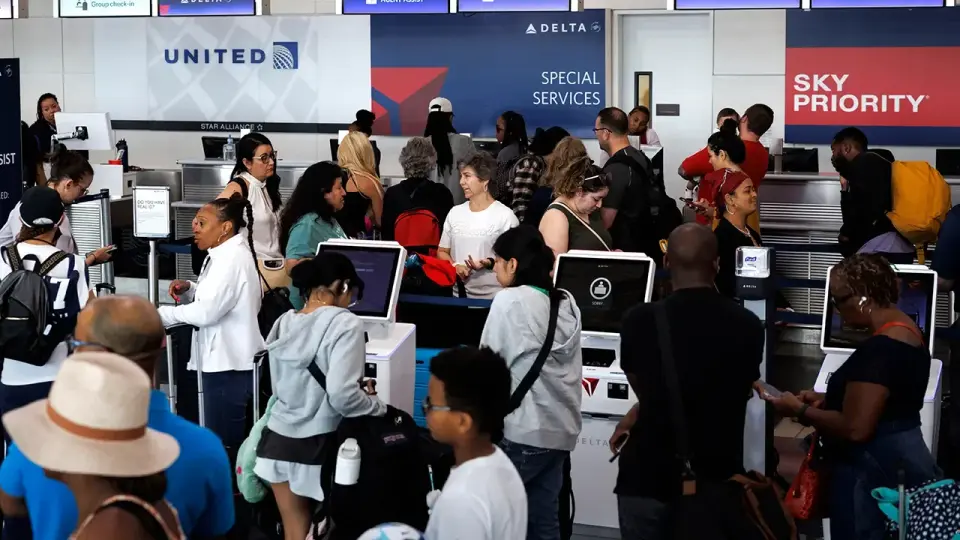
The CDC mandates a 21-day travel attestation for all international flights to the U.S. starting Nov. 3 to curb Ebola spread. Airlines argue the rule is too broad and rushed, while the outbreak in the DRC has now killed nearly 5,000 people.
Key points
- Effective Nov. 3, all passengers entering the U.S. must sign a statement confirming they have not been in the DRC in the last 21 days.
- The rule applies to all nationalities, including U.S. citizens and crew, and covers connecting flights even if passengers do not leave the aircraft.
- Airlines for America and IATA requested a delay, citing insufficient time to update check-in systems and train staff.
- The current Bundibugyo Ebola outbreak in the DRC has resulted in 10,141 confirmed cases and 4,928 deaths.
- Recent cases in Kenya and Nigeria share the same genetic lineage as DRC cases, raising concerns about international spread.
Background
This development follows a series of unrelated aviation incidents in late October, including a United flight diversion due to a hijack threat and an American Eagle flight returning to St. Louis due to engine issues. While those events highlighted operational vulnerabilities, the current CDC mandate addresses a specific public health threat rather than mechanical or security failures.
How outlets are covering it
Fox News highlights the conflict between public health experts and the aviation industry, noting that while Dr. Tyler Evans supports the screening as a necessary barrier, Airlines for America (A4A) argues the measure is disproportionate. The Tico Times provides a practical breakdown for travelers, emphasizing that the rule applies to connections and that false statements are federal crimes. CIDRAP offers the broader epidemiological context, noting that while the U.S. risk is low, the outbreak has spread to eight DRC provinces and recently appeared in Kenya and Nigeria. A4A and IATA both criticize the short timeline, whereas the CDC maintains the 21-day window is critical for preventing transmission.
Why it matters
The mandate impacts millions of travelers during the peak holiday season, potentially causing delays and confusion at major hubs. It also signals a shift in U.S. public health policy toward broader pre-boarding attestations, setting a precedent for future disease outbreaks. For the aviation industry, the rushed implementation threatens operational efficiency and could strain relationships between carriers and federal health agencies.
What to watch
The rule is set to remain in effect through Dec. 18 unless the CDC modifies it. Airlines are expected to continue lobbying for exemptions for crew and military charters. Public health officials will monitor the situation in the DRC and neighboring countries, particularly Uganda, to determine if the 21-day restriction needs to be expanded or adjusted based on new case data.
- Deadly disease sparks new CDC rule for US-bound flyers as major airlines seek delay Fox News
- Airline groups urge US CDC to reconsider Ebola declaration requirements Reuters
- Flying to the US Soon? Every Passenger Must Sign a New Form From Nov. 3 The Tico Times
- Ebola outbreak in DR Congo approaches 5,000 deaths as US issues new travel rule CIDRAP
- US introduces new Ebola travel declaration as Africa’s most populous nation confirms case for first time in over a decade Business Insider Africa
Want the full story? Read the original reporting
Read on Fox News