
Kenya Quarantines Ten Contacts After First-Ever Ebola Death
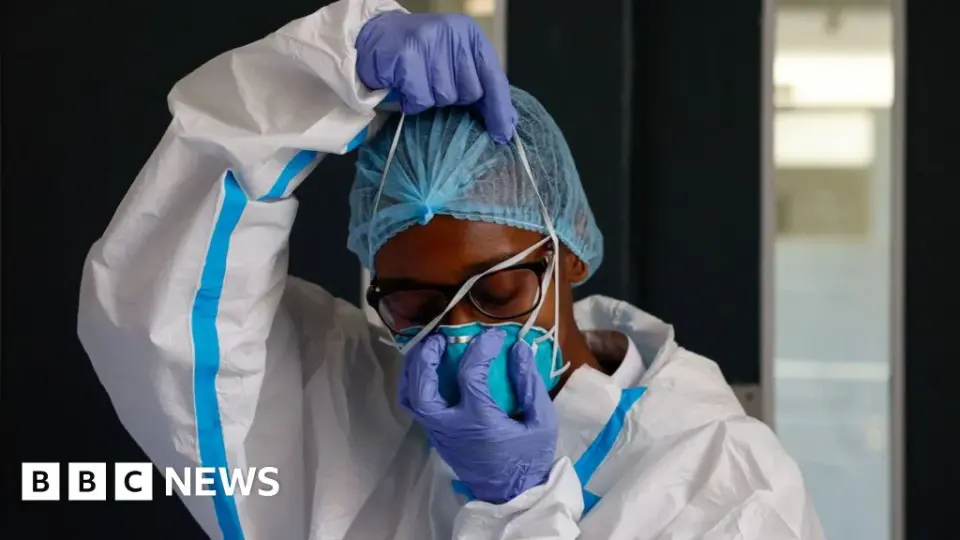
Kenya has quarantined ten individuals linked to the country’s first confirmed Ebola case, a man who died in Nairobi after traveling from the Democratic Republic of Congo (DRC). Health officials are tracing 57 additional contacts as concerns mount over the failure of border screening measures to detect the patient, who was symptomatic for a month before arriving in Kenya. The DRC outbreak, caused by the rare Bundibugyo strain, has killed over 4,000 people this year. While Kenya’s health ministry assures the public that surveillance is heightened, critics highlight significant lapses in border detection and the lack of rapid diagnostic tools at entry points.
Key points
- Ten contacts of the deceased patient are under constant observation at an Ebola isolation facility, with 57 others being traced.
- The patient, who died in Nairobi on Monday, had been ill for a month in the DRC before traveling through Uganda to Kenya.
- The current DRC outbreak involves the Bundibugyo strain of Ebola, which lacks an approved vaccine or treatment, though trials are underway.
- Kenya’s health ministry reports that over 650,000 travelers have been screened and 267 samples tested since the case was identified.
- The patient may have passed screening because medications masked his fever, a common issue noted by health experts.
- Kenya’s main doctors’ union criticized border lapses, noting the patient passed through the main airport unnoticed despite being symptomatic.
Background
This incident follows the declaration of an Ebola outbreak in the DRC in May 2026, which has resulted in over 4,000 deaths. Uganda previously reported two deaths but was declared Ebola-free by the World Health Organization in August. In June 2026, a US plan to establish an Ebola treatment facility in Nanyuki, Kenya, was halted by courts due to public concerns over cross-border infection risks. Recent discussions on cancer screening and diagnostic reliability highlight broader challenges in detecting asymptomatic or masked symptoms, though Ebola detection remains distinct due to the lack of rapid border diagnostics.
How outlets are covering it
The BBC reports that Kenya’s health ministry is managing the situation with heightened surveillance and has designated four hospitals for Ebola patients, including the Nairobi Hospital where the patient died. However, Dr. Dennis Miskellah of Kenya’s main doctors’ union criticized the government, stating that the case was not surprising due to witnessed lapses at border points, including the main airport. He argued that relying on traveler honesty and temperature checks is insufficient, especially without rapid diagnostic tests. The Africa Centres for Disease Control and Prevention (Africa CDC) chief, Jean Kaseya, emphasized that while Kenya was well-prepared to receive the case, other regional countries may not be, stressing the need for a regional approach. He noted that temperature checks are unreliable because medications can mask fever, and there are no quick tests for Ebola at border points. Uganda’s health ministry defended its screening, stating the patient had a normal temperature at departure and transited for less than 24 hours. The Telegraph source was inaccessible due to a security block, so no additional perspectives could be synthesized from it.
Why it matters
The failure to detect a symptomatic Ebola patient at Kenya’s main border highlights critical vulnerabilities in regional disease surveillance. The Bundibugyo strain’s lack of approved treatments increases the urgency for effective containment. This case underscores the limitations of temperature-based screening and the need for improved diagnostic tools and regional cooperation to prevent cross-border transmission, particularly in areas with high travel volumes and existing outbreak risks.
What to watch
Kenyan authorities are continuing to trace 57 additional contacts and have intensified surveillance at airports and border crossings. The Africa CDC is investigating the case alongside Congolese authorities, with a team due to meet Kenyan health officials. The government is considering converting a previously proposed US Ebola treatment facility in Nanyuki into the region’s first infectious disease hospital, pending the outcome of a court case. Public education campaigns are expected to address stigma and encourage symptom reporting, while regional coordination efforts aim to reinforce response mechanisms across affected countries.
- Ten people linked to Kenya's first-ever Ebola case quarantined as screening concerns grow BBC
- Kenyan authorities scramble to find passengers on Ebola flight The Telegraph
- Kenya Ebola case exposes gaps in border screenings Reuters
- Ebola Patient Boarded Commercial Flight, Died Shortly After Arrival WSJ
- Kenya Records Ebola Case for First Time The New York Times
Want the full story? Read the original reporting
Read on BBC