
Tanker Rates Hit Record Highs as Hormuz Crisis Drives 'Cascade' Effect
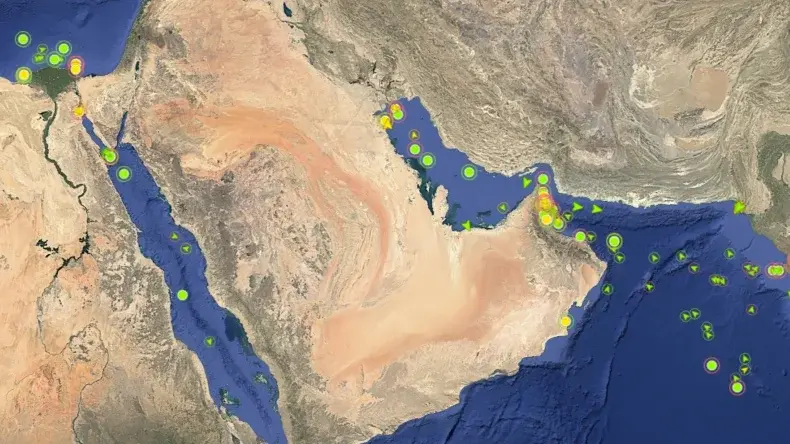
Crude tanker rates have surged to unprecedented levels, with suezmax and VLCC indices hitting all-time highs. This spike is driven by a 'cascade' effect where Middle East producers route more oil through the Strait of Hormuz under US protection, creating bottlenecks that force charterers to split cargoes and drive up rates across all tanker classes.
Key points
- Suezmax rates have doubled in three days, with the US-Europe index reaching $577,792 per day, up 150% week-on-week.
- VLCC rates are also at record highs; the West Africa-China index is $697,160 per day, and the TD3C index hit $1.33 million per day.
- Aframax rates have also spiked, with the US Gulf-Europe index at $313,794 per day, up 44% week-on-week.
- The surge is driven by a 'cascade' effect: VLCCs are prioritized for lucrative Gulf of Oman ship-to-ship transfers, leaving suezmaxes and aframaxes to handle Atlantic cargoes.
- Seafarers are receiving significant bonuses for transiting the Strait of Hormuz, with captains earning up to $100,000 per month plus a $50,000 per-trip bonus.
Background
This surge follows a mid-September tipping point where tanker rates first began to rise due to Hormuz disruptions. Previous coverage noted that VLCC rates had already approached $1 million per day, driven by fleet inefficiencies and strong refinery margins. The current spike represents a further escalation of that trend.
How outlets are covering it
Lloyd's List emphasizes the 'cascade' effect, where the profitability of VLCCs in the Gulf of Oman is pulling them away from Atlantic trades, thereby increasing demand and rates for suezmaxes and aframaxes. The Financial Times and The Maritime Executive focus on the human element, highlighting the massive bonuses paid to seafarers to incentivize transits through the dangerous Strait of Hormuz. Clarksons Securities notes that the balance of power has shifted to charterers, who are now competing for scarce tonnage, with refining margins acting as the ultimate ceiling for freight rates.
Why it matters
The extreme rise in tanker rates signals a severe disruption in global oil logistics. It increases the cost of crude oil for importers, potentially impacting global energy prices and inflation. The reliance on ship-to-ship transfers and the premium paid for crew safety highlight the risks and costs associated with the ongoing geopolitical tensions in the Middle East.
What to watch
Rates may continue to rise if refinery margins remain high and vessel availability stays tight. However, if refining margins weaken, charterers' willingness to pay could drop sharply, even if vessel availability remains constrained. The situation will likely remain volatile as long as the Strait of Hormuz remains a point of contention.
- Tanker rates, already higher than most imagined possible, just spiked again Lloyd's List
- Shippers Are Offering Sailors Up to $25,000 a Trip to Sneak Oil Out of the Gulf WSJ
- Ships’ captains paid $100,000 a month to transit Strait of Hormuz Financial Times
- Seafarers Now Command Huge Bonuses for Hormuz Transits The Maritime Executive
- Sailors Offered $25,000 for Risky Hormuz Oil Runs Yahoo Finance
Want the full story? Read the original reporting
Read on Lloyd's List