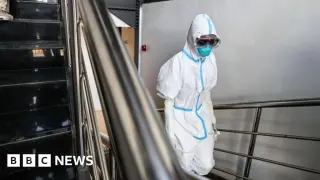
Uganda reports two new Ebola cases, total at seven
Uganda’s health authorities confirmed two new Ebola cases, bringing the outbreak total to seven as of May 25, 2026.
All articles tagged with #ebola

Uganda’s health authorities confirmed two new Ebola cases, bringing the outbreak total to seven as of May 25, 2026.

The Ebola outbreak is expanding and could become the deadliest on record, with ongoing live updates tracking cases, deaths, and the international response.

The World Health Organization warns that the Ebola outbreak is spreading faster than containment efforts can keep up, prompting urgent calls for increased resources, vaccines, and coordinated international action to curb transmission, with live updates monitoring spread and responses.

The Ituri province in DR Congo faces a fast-spreading Ebola outbreak with more than 900 suspected cases and 223 deaths; the military governor says the response is under-resourced and must include qualified personnel, secure treatment centres, and adequate food, warning that delays could lead to catastrophe as WHO raises the alarm and Africa CDC mobilizes funds and cross-border coordination continues.

Ebola and hantavirus outbreaks in the US spark widespread conspiracy theories—ranging from plandemics to anti-vaccine plots—amids social media amplification and distrust in institutions, while funding cuts and political tensions threaten an effective public health response.

An ongoing Bundibugyo-strain Ebola outbreak in the DRC—the third-largest on record—has no approved strain-specific vaccine or treatment. The existing Zaire-targeted Ervebo vaccine may offer limited cross-protection, but data are scarce and safety in this outbreak is uncertain. New Bundibugyo-focused vaccines (including a vesicular stomatitis virus–based candidate) are in development, though clinical-grade material and human trials likely won’t be ready for six to nine months. Therapies such as remdesivir and the MBP134 monoclonal antibody cocktail show promise, but delivery and safety in the field pose challenges. Beyond vaccines and drugs, rapid diagnosis, isolation, contact tracing, and strong outbreak response remain essential tools for control.

The Ebola outbreak has risen to 220 deaths, with health officials warning that 11 countries are now at risk as authorities monitor the situation with ongoing live updates.

The World Health Organization warns that the Ebola outbreak in the Democratic Republic of Congo is outpacing response efforts, with about 220 suspected deaths, as attacks on health facilities in Ituri disrupt containment and burial practices fuel transmission; Uganda reports cases, and there is no approved vaccine for Bundibugro ebolavirus, prompting scaled-up but hampered operations in insecure areas.

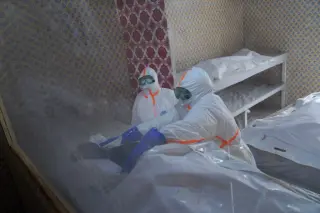
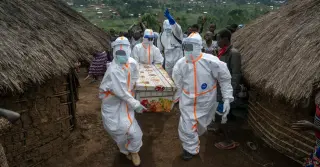
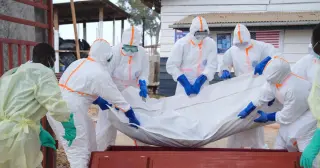
Police fired shots in the air to disperse angry crowds at an Ebola treatment centre in Mongwalu, DR Congo, where relatives demanded the bodies of loved ones who died from Ebola; unrest followed prior attacks on isolation tents. Red Cross volunteers are carrying out safe burials under police protection as the outbreak triggers regional coordination and funding efforts from Africa CDC and international partners, including Uganda, South Sudan and South Africa.

The Congo outbreak has about 220 suspected Ebola deaths, with Uganda reporting two new infections bringing its total to seven, and Congo’s suspected cases surpassing 900 mainly in Ituri. The WHO has declared the outbreak a public-health emergency of international concern, while a vaccine for the Bundibugyo strain has no approved treatment yet—though Oxford researchers are pursuing one that could enter trials in a couple of months. Response is hampered by fear, attacks on treatment centers, and distrust of authorities, with two Ugandan health workers and three Red Cross volunteers among those affected.

Suspected Ebola cases in eastern DR Congo topped 900 (904 cases and 119 suspected deaths) as violence, displacement and aid cuts leave health facilities overwhelmed; health centers were burned last week, complicating an already fragile response with cases spreading to North and South Kivu and across the border into Uganda.

MSF urges that the Ebola outbreak in the Democratic Republic of Congo is stretching relief efforts due to resource shortages, with no approved vaccines or drugs yet; WHO has declared a public health emergency, and transport disruptions and conflict hinder response as over 200 deaths and around 850 suspected cases are reported, underscoring the need for faster case confirmation and improved discharge planning.

A third attack on Ebola treatment centers in eastern Congo, including Bunia’s Sofepadi Hospital, underscores the fragility of the outbreak response as mourners gather for Ebola victims and health workers face escalating violence, threatening containment efforts and raising the risk of transmission.
Dr. Deborah Birx says the United States is well-positioned to respond to Africa’s Ebola outbreak thanks to a deep bench of experts and ongoing interagency efforts, even with vacancies at the CDC, FDA, and surgeon general; she notes that a rapid deployment of assets is underway and that detection delays can skew case trends, while suggesting that past U.S. withdrawals from WHO and aid cuts may not significantly undermine the response.

Suspected Ebola cases in eastern DR Congo have reached 904 with 119 suspected deaths, as the WHO notes a very high domestic risk but low global risk. Health facilities face arson attacks, security challenges and severe shortages amid ongoing conflict, displacement, and international aid cuts, complicating containment in Ituri. Authorities are tightening burial protocols to prevent transmission, while the Bundibugyo strain driving this outbreak has no approved vaccine or treatment.