
Rare Coin of King Ethelred the Unready Found in Shetland
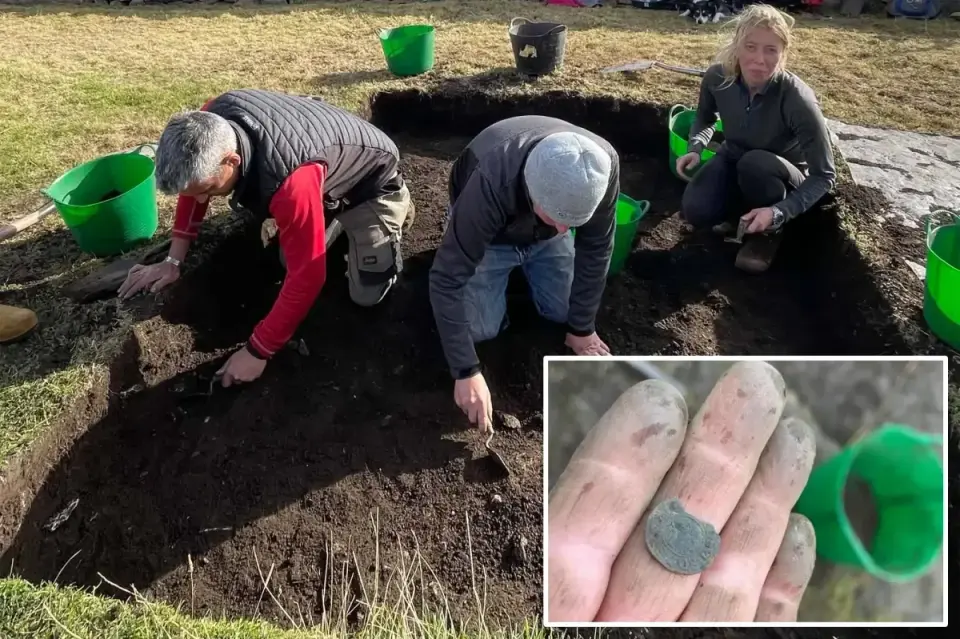
Archaeologists in Shetland, Scotland, discovered a 1,000-year-old Anglo-Saxon coin bearing the face of King Ethelred the Unready. The artifact, minted between 991 and 997 A.D., is the northernmost find of its kind and may reveal ancient trade or raid links between Viking-controlled Shetland and Anglo-Saxon England.
Key points
- A coin depicting King Ethelred the Unready was unearthed during an excavation in Nesting, Shetland Islands, Scotland.
- The coin dates to 991–997 A.D. and shows a greenish-brown patina with visible original markings.
- The discovery is the northernmost known find of an Anglo-Saxon coin in the region.
- Researchers suggest the coin may indicate trade connections or result from a Norse raid.
- Scotland’s Treasure Trove Unit will decide if the coin is offered to a museum, with hopes for the Shetland Museum and Archives.
Background
This discovery adds to a series of recent archaeological finds in the UK, including a 1,750-year-old Roman coin found during railway construction in England and a 900-year-old coin in Scotland believed to be the oldest minted there. Earlier this year, Anglo-Saxon bones were also unearthed during a kitchen extension in Kent, highlighting ongoing interest in medieval history.
Why it matters
The coin provides tangible evidence of cultural and economic interactions between Viking-controlled Shetland and Anglo-Saxon England, potentially reshaping understanding of medieval trade networks and the reach of Anglo-Saxon influence in northern Britain.
What to watch
Scotland’s Treasure Trove Unit will assess the coin’s status and determine if it should be offered to a museum. Researchers hope it will be added to the Shetland Museum and Archives collection.
Want the full story? Read the original reporting
Read on New York Post