A new genomic review suggests the ancestors of modern Indigenous peoples arrived in the Americas no earlier than 21,000 years ago, during the Last Glacial Maximum. While this aligns with some archaeological data, significant gaps in ancient DNA samples and conflicting interpretations of older sites like White Sands keep the debate open.
Archaeologists have discovered a child's skull built into the floor of a 2,500-year-old house in Scandinavia. The finding, reported by Yahoo News, suggests the remains were intentionally incorporated into the structure's foundation, offering new insights into ancient burial practices or ritualistic behaviors in the region.
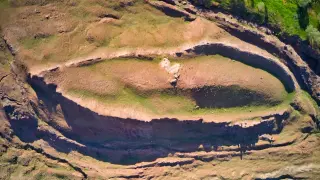
A new field season at the Durupınar formation in eastern Turkey has intensified the debate over whether the site is a natural rock structure or the remains of Noah’s Ark. Researchers from Sivas Cumhuriyet University and Noah’s Ark Scans drilled over 60 feet into the site, collecting more than 300 soil samples. Preliminary reports indicate the absence of solid bedrock, with drilling encountering mainly soil and boulders. While some claim radar scans reveal man-made structures, official university statements emphasize that laboratory analysis is still underway and results are inconclusive. The findings challenge previous geological assessments that identified the site as a natural limestone formation, but no definitive proof of a man-made vessel has been confirmed.
New findings at the Tambo Viejo site in Peru suggest the Inca performed sacrificial rituals by burying decorated llamas and guinea pigs alive, contradicting Spanish colonial accounts that claimed such offerings were burned.
A new genomic review suggests the ancestors of modern Indigenous Americans arrived in the Americas no earlier than 21,000 years ago, aligning with the end of the Last Glacial Maximum. While this contradicts older archaeological claims of 23,000-year-old footprints in New Mexico, researchers note that current DNA samples are limited and may not capture all early lineages.
A new study suggests that the origins of modern humans may have begun by the sea approximately 70,000 years ago, challenging traditional inland-focused models of human evolution.
A new study by researchers from the University of Mississippi and the University of Alabama analyzes stone spear points from the Tennessee River Valley to trace changes in human behavior over millennia. The research compares the Clovis people, who arrived around 13,200 years ago, with the later Cumberland group. While Clovis artifacts show signs of extensive resharpening, indicating a need to conserve resources, Cumberland points were often discarded while still usable. This shift suggests that as knowledge of local rock sources became established, the value of carrying spare tools decreased. The findings highlight how environmental familiarity and logistical constraints, such as the lack of pack animals, influenced the decision-making processes of early hunter-gatherers.
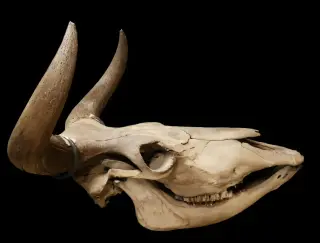
A new study reveals that aurochs vanished from Scandinavia thousands of years earlier than elsewhere in Europe due to a combination of genetic bottlenecks, intense hunting, and habitat loss. Researchers analyzed ancient DNA from bones found in bogs and settlement sites in southern Sweden and Denmark to reconstruct the population history of these wild cattle ancestors. The findings indicate that while the species survived globally until the 17th century, the Scandinavian population collapsed around 6,500 years ago. This early extinction was driven by a sharp drop in genetic diversity during their initial migration north, followed by isolation when rising seas flooded land bridges to mainland Europe. Concurrently, increased human settlement and hunting pressure, combined with the expansion of dense forests that reduced grazing land, led to the final disappearance of the species in the region.
Researchers at the Durupinar formation in eastern Turkey report that core drilling found no bedrock, only rich black soil, challenging the theory that the site is a natural geological feature. While some claim radar scans reveal man-made structures, experts note the findings are preliminary and unverified.
Police divers in Sardinia, Italy, discovered intact Roman-era terracotta artifacts on the seabed during a routine safety operation. The find, announced in late August, includes a transport basin and other vessels dating from the 1st century BC to the 1st century AD. Officials have transferred the items to the Archaeological Superintendent for further analysis to determine their precise origin and age.
A forensic anthropologist has digitally reconstructed the face and hairstyle of a man who lived in Ecuador approximately 3,000 years ago, based on the Punin-2 skull. The reconstruction confirms the individual was a modern human with Native American ancestry, resolving a century-old debate about the skull's origins.
A new study suggests the ancestors of today's Indigenous peoples arrived in the Americas no earlier than 21,000 years ago, coinciding with the end of the Last Glacial Maximum. Researchers analyzed genetic data to evaluate three migration models, finding that while humans were definitely present by 13,500 years ago, earlier arrivals remain uncertain due to significant gaps in ancient DNA records.
In 1940, four French teenagers, including 18-year-old Marcel Ravidat, discovered the Lascaux Cave after following a dog into a hole on a hillside. The site contained 17,000-year-old paintings of animals and geometric engravings. Public tourism later damaged the fragile environment, leading to its closure in 1963 and the creation of replicas like Lascaux IV.
A medieval castle thought lost for centuries was discovered intact within a Victorian-era building at University College Dublin. Professor Tadhg O’Keeffe identified the structure by analyzing 18th-century watercolors and recognizing architectural clues like thick walls and splayed windows. The discovery, announced in September 2026, reveals that 70-80% of the original Roebuck Castle survives beneath modern plaster, offering a rare glimpse into Ireland’s Norman-era history.
Renovation crews in Tbilisi, Georgia, discovered a cache of ancient pottery dating back roughly 1,000 years while upgrading Rustaveli Avenue. The artifacts, found 20 feet underground, include decorated fragments and jugs from the 10th and 11th centuries. Museum officials noted the find is consistent with the city's history as a multicultural hub on the Silk Road. Further analysis, including 3D scanning, is underway to determine precise dates.