
St. Ambrose Barlow's skull, hidden in a Manchester wall for 300 years, remains a private relic
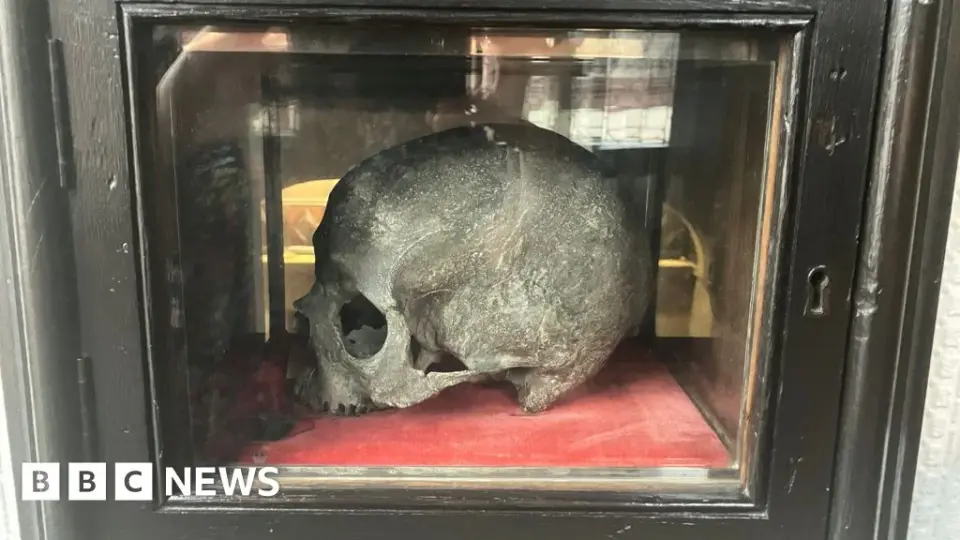
The skull of St. Ambrose Barlow, a 17th-century Catholic priest executed for treason, is preserved in a locked cabinet at Wardley Hall in Worsley, Greater Manchester. The relic was accidentally discovered during renovations in 1745 and confirmed as Barlow's remains in the 20th century. Barlow was hanged, drawn, and quartered in 1641 after refusing to flee a secret Easter mass, and was canonized in 1970. The skull is accessible by appointment, reflecting a rare private collection of a holy relic.
Key points
- Ambrose Barlow was executed on September 10, 1641, after refusing to flee a secret Easter mass at Morleys Hall, choosing instead to surrender to protect his congregation.
- His skull was placed on a pike as a public warning against Catholicism, later retrieved and hidden in a casket within the chapel wall of Wardley Hall by Francis Downes, a cousin of the Barlow family.
- The relic was accidentally uncovered during renovation work in 1745 by Matthew Moreton and later verified through forensic tests in the 20th century.
- Pope Paul VI canonized Barlow in 1970 as one of 40 martyrs of England and Wales, honoring those killed for their faith in the 16th and 17th centuries.
- The skull is currently kept in a glass-fronted cabinet on the main staircase of Wardley Hall, the residence of the Bishop of Salford since 1930, and is viewable by private appointment.
Background
This story highlights the enduring physical legacy of Catholic persecution in England, a theme previously covered in our archive regarding religious hate crimes and the historical treatment of faith communities. While our earlier reports focused on modern incidents of religious intolerance and unrelated topics like skull injuries from hair clips, this piece connects to the historical roots of such tensions. The discovery of Barlow's skull underscores how physical relics serve as tangible links to historical persecution, a concept distinct from the modern legal or medical contexts found in our recent archive entries.
Why it matters
The preservation of St. Ambrose Barlow's skull in a private residence offers a rare, tangible connection to the violent suppression of Catholicism in 17th-century England. It illustrates how historical trauma is physically memorialized and how relics continue to hold spiritual significance for believers, even centuries after the events that created them. The story also highlights the intersection of local history, religious heritage, and modern media through the BBC Sounds series 'Hidden Manchester,' bringing overlooked historical narratives to a contemporary audience.
What to watch
The skull will remain at Wardley Hall, accessible to private groups by appointment. The BBC Sounds series 'Hidden Manchester' will continue to explore local historical stories, potentially featuring other overlooked aspects of the region's past. No further public exhibitions or changes to the relic's status are mentioned, suggesting it will remain a private, sacred object within the Bishop of Salford's residence.
Want the full story? Read the original reporting
Read on BBC