
Pew Projects Islam to Become World's Largest Religion by 2035, Driven by Fertility Rates
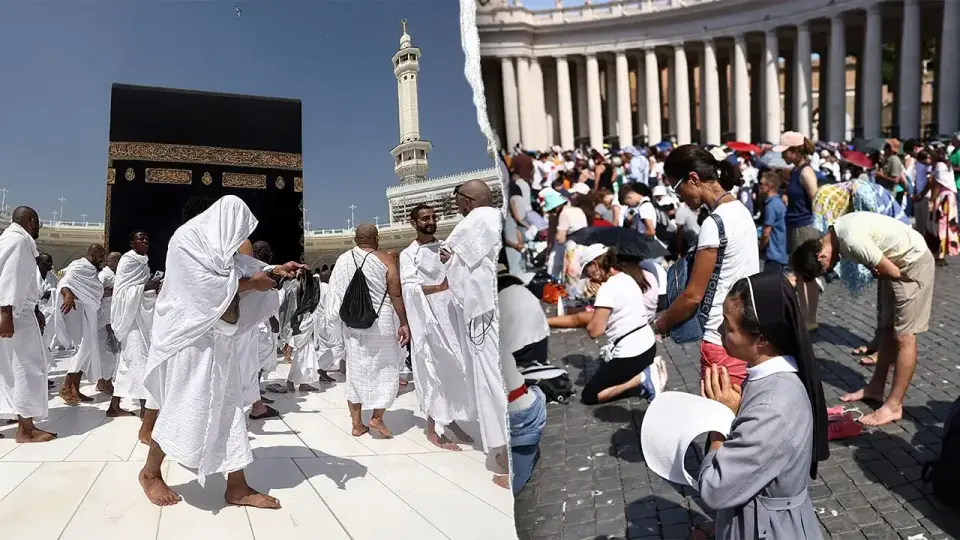
A new Pew Research Center analysis projects that Muslims will outnumber Christians globally by 2035, becoming the world's largest religion. This shift is attributed to higher fertility rates and younger age structures among Muslims, not mass conversions. By 2070, the global Muslim population is expected to reach 3.6 billion, while Christians will number just under 3 billion. The report also highlights a major geographic shift, with sub-Saharan Africa becoming the center of Christianity and the United States losing its Christian majority.
Key points
- Muslims are projected to outnumber Christians worldwide by 2035, becoming the largest global religion, according to Pew Research Center.
- The demographic shift is primarily driven by higher fertility rates (3.1 children per woman for Muslims vs. 2.5 for Christians) and younger age profiles among Muslims.
- Between 2020 and 2025, Muslim women gave birth to 252 million babies, exceeding the 208 million born to Christian mothers.
- By 2070, the global Muslim population is expected to reach 3.6 billion, while Christians will number just under 3 billion.
- In the United States, Christians are projected to fall below 50% of the adult population by 2065, with the religiously unaffiliated rising to 41% by 2070.
- The center of Christianity is shifting southward; by 2070, over half of the world's Christians will live in sub-Saharan Africa, and the Democratic Republic of the Congo is expected to surpass the U.S. as the country with the most Christians.
Background
Recent coverage has highlighted the demographic trends behind the projected shift in global religious majorities. Earlier reports noted that the rise of Islam is driven by fertility and youth rather than conversion, and that the U.S. is expected to lose its Christian majority as the unaffiliated population grows. The geographic shift of Christianity toward Africa has also been emphasized, with the Democratic Republic of the Congo projected to become the nation with the largest Christian population by 2070.
Why it matters
The projected shift in global religious demographics has significant implications for international relations, cultural dynamics, and political landscapes. The rise of Islam as the world's largest religion, driven by demographic factors, could influence global power structures and cultural exchanges. The shift of Christianity toward Africa may reshape the religious and cultural influence of the West, while the decline of Christian majorities in the U.S. and Europe could impact domestic politics and social norms. Understanding these trends is crucial for policymakers, religious leaders, and scholars seeking to navigate the changing global religious landscape.
What to watch
As the projected demographic shifts unfold, observers will likely monitor the actual fertility rates and population growth in key regions, particularly in sub-Saharan Africa and the Middle East. The impact of these changes on global politics, cultural exchanges, and religious institutions will be a focus of future research and analysis. Additionally, the rise of the religiously unaffiliated in the U.S. and other countries may influence domestic policies and social norms.
- Muslims poised to outnumber Christians globally by 2035 amid demographic shifts Fox News
- The Future of World Religions: Population Growth Projections, 2020-2070 Pew Research Center
- Muslims to outnumber Christians worldwide by 2035, study finds The Washington Post
- Islam forecast to soon exceed Christianity as world's biggest faith Reuters
- Muslims may outnumber Christians by 2035 The Economist
Want the full story? Read the original reporting
Read on Fox News