
Denmark’s Oldest Citizen Accused of Leading Local Nazi Party Branch During WWII
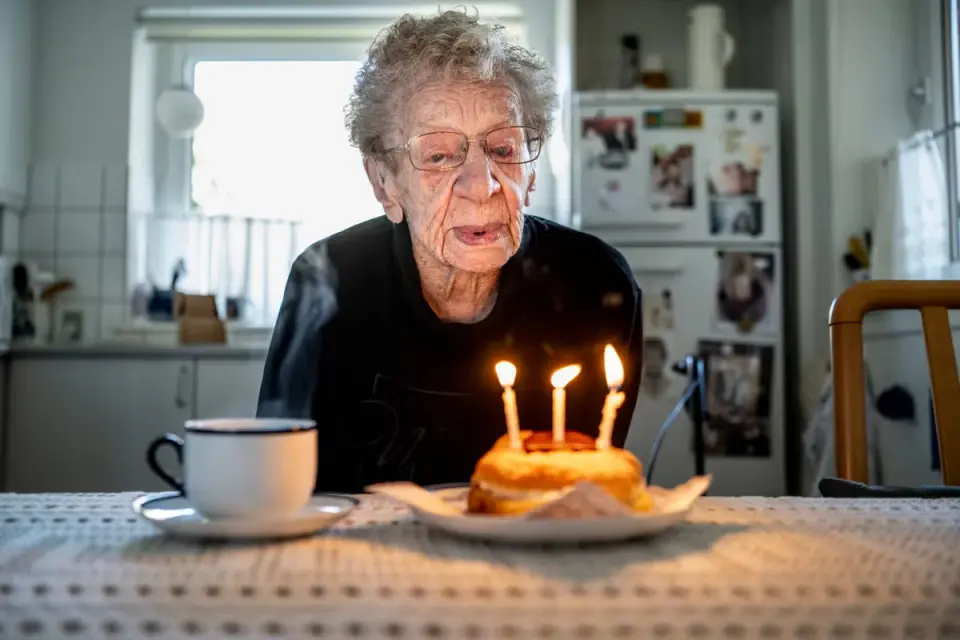
Kirsten Schwalbe, 112, is accused of holding leadership roles in the Danish National Socialist Workers Party during the German occupation. Archival documents contradict her claims of passive membership, leading to the withdrawal of her biography and cancellation of a TV documentary.
Key points
- Schwalbe became Denmark’s oldest living person on October 14, 2026, at age 112.
- Archival records from Frihedsbrevet allege she served as acting branch leader and women’s group leader in Holstebro from August 1943 to July 1944.
- Her biography, 'We’re Going to Have Something to Laugh About,' was pulled from shelves after omitting her wartime activities.
- Schwalbe previously claimed she joined the party passively at her husband’s urging and 'barely knew' what it stood for.
- A reality TV documentary about her was halted due to her health and the media scrutiny.
Background
Schwalbe’s status as Denmark’s oldest citizen was celebrated in October 2026, following the death of Karla Lindholm Jensen in 2020. Her biography and TV appearances had made her a public figure before the controversy. Denmark’s post-war history includes the prosecution of collaborators, though recent efforts have not resulted in convictions for wartime actions.
How outlets are covering it
The Independent and CTV News report the archival findings as a direct contradiction of Schwalbe’s earlier claims, emphasizing the historian’s assessment of her as a 'prominent' local leader. The Telegraph frames the story as an 'exposure' of a 'wartime Nazi Party leader,' highlighting the gap between her public persona and the archival evidence. The Times of Israel focuses on the publisher’s decision to withdraw the biography, quoting Gyldendal’s statement that the work did not tell her life 'faithfully.' All sources agree on the archival findings but differ in emphasis: The Independent and CTV News stress the historical correction, while The Telegraph and Times of Israel highlight the media and publishing fallout.
Why it matters
The case raises questions about historical accountability for wartime collaboration in Denmark, where post-war prosecutions were extensive but recent efforts have not led to convictions. It also highlights the tension between public memory and archival evidence, as Schwalbe’s biography and TV appearances had shaped her public image before the revelations.
What to watch
Schwalbe’s family has requested privacy, and she has declined to comment. The publisher has pledged to update future editions of the biography, and the TV documentary remains halted. No legal action is reported, as the events occurred during WWII and post-war prosecutions have not resulted in recent convictions.
- Denmark’s oldest living person identified as former Nazi party member, report claims The Independent
- Denmark celebrates its oldest woman – then finds out she was a Nazi The Telegraph
- Biography of Denmark’s oldest person pulled after newspaper reveals she was an active Nazi The Times of Israel
- Denmark’s oldest person, 112, in hot water over Nazi past CTV News
- Archives Reveal Denmark’s Oldest Person Held Local Nazi Party Leadership Roles i24NEWS
Want the full story? Read the original reporting
Read on The Independent