
Brazil’s October Election: A Global Crossroads in a Statistical Dead Heat
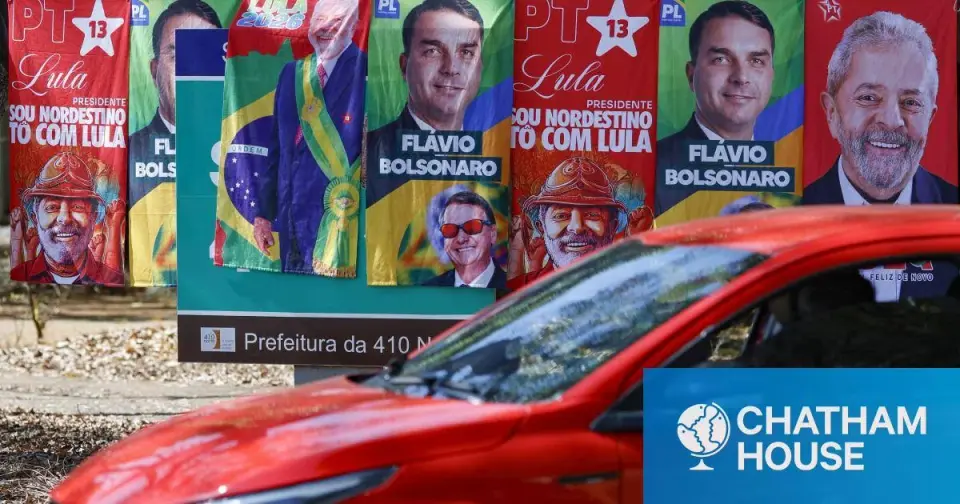
Brazil’s October 4 presidential election remains a statistical tie between incumbent Luiz Inácio Lula da Silva and Flávio Bolsonaro, with polls showing a margin of error that obscures a clear winner. The contest extends beyond domestic politics, potentially reshaping Brazil’s role in global alliances like BRICS and its relationship with the United States. High voter rejection rates for both candidates and deepening distrust in electoral integrity, particularly among right-wing voters, underscore the polarized nature of the race. A victory for Flávio Bolsonaro could align Brazil more closely with US-led initiatives, while Lula’s continued leadership would maintain Brazil’s multilateral stance, though both candidates face significant public disapproval.
Key points
- Lula leads Flávio Bolsonaro by 2 percentage points in a simulated runoff, but the result is within the margin of error, indicating a statistical tie.
- Flávio Bolsonaro, son of former president Jair Bolsonaro, is running for the presidency as his father serves a 27-year prison sentence for plotting a coup.
- Voter rejection rates are high for both candidates, with over 54% disapproving of Flávio and 52% disapproving of Lula.
- A Flávio Bolsonaro victory could lead to a reduced role in BRICS and closer alignment with US-led security initiatives like the 'Shield of the Americas'.
- Distrust in Brazil’s electoral system is higher among former Bolsonaro voters, with only 45% expressing confidence in the integrity of the upcoming election.
Background
Brazil’s political landscape has been marked by intense polarization since the 2022 election, which Lula won narrowly. The current race echoes similar trends in Peru and Colombia, where conservative candidates won narrow victories. The 2023 riots in Brasilia, aimed at overturning the 2022 results, led to Jair Bolsonaro’s imprisonment. Recent developments include Lula’s ban on online betting and a diplomatic row with the US over tariffs and visa denials, highlighting the election’s global implications.
How outlets are covering it
Chatham House emphasizes the global implications of the election, noting that a Flávio Bolsonaro victory could shift Brazil’s foreign policy away from multilateralism and closer to US-aligned agendas. Al Jazeera focuses on the statistical tie in the polls, highlighting the narrow margins and the uncertainty surrounding the outcome. Both sources agree on the high levels of voter rejection and the polarized nature of the contest, but Chatham House places greater emphasis on the potential foreign policy shifts, while Al Jazeera concentrates on the domestic polling data and the tight race.
Why it matters
The outcome of Brazil’s election could significantly impact global alliances and trade relationships. A Flávio Bolsonaro victory might reduce Brazil’s role in BRICS and align it more closely with US-led initiatives, while Lula’s continued leadership would maintain Brazil’s multilateral stance. The election also reflects broader trends of political polarization and distrust in democratic systems, with potential implications for Brazil’s global influence and its role in the Global South.
What to watch
The first round of the presidential election is scheduled for October 4, 2026. If no candidate wins more than 50% of the vote, the top two candidates will advance to a runoff. The outcome will determine Brazil’s future foreign policy direction, its role in global forums like BRICS and the UN, and its relationship with the United States and China. The high levels of voter rejection and distrust in the electoral system may influence voter turnout and the stability of the post-election period.
- Brazil’s presidential election is more than just another polarized contest Chatham House
- Brazil's Lula widens first-round lead, remains tied with Bolsonaro in runoff polls reuters.com
- Lula and Bolsonaro Deadlocked in Final Week of Campaign Bloomberg.com
- Brazil’s next president will either be a vengeful nepo-baby or a doddering leftie The Economist
- Brazil’s Lula and Flavio Bolsonaro still essentially tied in new poll Al Jazeera
Want the full story? Read the original reporting
Read on Chatham House