
Paraguay impeaches President Peña after Ueno Bank collapse freezes 2.9 million accounts
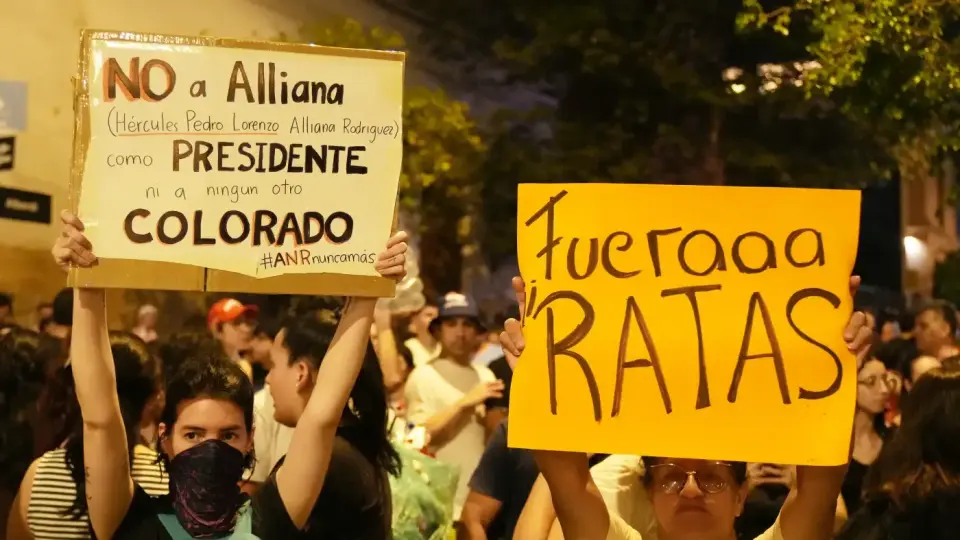
Paraguayan President Santiago Peña was impeached and removed from office on Friday following the collapse of Ueno Bank, which left 2.9 million citizens unable to access their funds. The crisis, triggered by the central bank’s seizure of the insolvent digital lender, exposed deep ties between the former president and the bank’s leadership. Vice President Pedro Alliana was sworn in as his successor, while Peña faces charges of breach of trust and influence peddling.
Key points
- Ueno Bank, which served 60% of Paraguay’s adult population, was seized by the central bank on Tuesday after its solvency ratio fell below legal minimums.
- President Santiago Peña resigned on Thursday but was impeached and removed by the Senate on Friday, with his vice president, Pedro Alliana, assuming office.
- Prosecutors have charged Peña with breach of trust and administration for personal gain; he has pleaded not guilty and is currently held in pretrial detention.
- The collapse froze assets for 2.9 million customers, causing retail sales to drop by up to 80% and triggering widespread protests in Asunción.
- Peña had appointed Ueno’s former CEO, Carlos Carvallo, as head of the central bank in 2023 and retained shares in Ueno’s parent company until March 2025.
Background
Paraguay has been ruled by the Colorado Party for most of the last eight decades, maintaining a reputation for macroeconomic stability and foreign investment. President Peña, a former IMF economist and ally of US President Donald Trump, had promoted Paraguay as a modern, investment-friendly state. The Ueno crisis marks the second impeachment of a Paraguayan president since 1989, following the 2006 removal of Nicanor Duarte Frutos. The current scandal has intensified scrutiny of long-standing issues regarding clientelism and the influence of political dynasties, particularly the relationship between Peña and former president Horacio Cartes.
How outlets are covering it
NPR emphasizes the personal financial losses of ordinary citizens and the broader failure of accountability, highlighting the bank’s aggressive marketing and the freezing of funds needed for basic expenses. The Guardian focuses on the legal proceedings, noting that Peña attempted to resign to retain special jurisdiction but was instead placed under house arrest, and details the specific charges of illicit enrichment and money laundering. The Financial Times frames the event as a crisis for Paraguay’s image as a free-market success story, noting that while the central bank claims the wider financial system is stable, analysts warn of permanent damage to borrowing costs and investor confidence. All sources agree on the timeline of the collapse and impeachment but differ in emphasis: NPR highlights the social unrest, The Guardian details the legal maneuvers, and the Financial Times analyzes the macroeconomic and political fallout.
Why it matters
The collapse of Ueno Bank and the subsequent impeachment of President Peña represent a significant political and economic shock for Paraguay, a country previously viewed as a stable hub for foreign investment in Latin America. The crisis exposes deep-seated corruption and the entanglement of political power with financial institutions, potentially undermining investor confidence and the country’s recent investment-grade credit ratings. Furthermore, the rapid removal of a US-aligned leader signals a shift in regional political dynamics and raises questions about the resilience of Paraguayan democratic institutions in the face of elite power struggles.
What to watch
Vice President Pedro Alliana will serve as president until August 2028, with the immediate priority of compensating the 1.2 million customers who have received advance payments and resolving the remaining frozen accounts. Prosecutors will continue the investigation into Peña and other Ueno executives, including CEO Miguel Vásquez, who are currently in pretrial detention. The political landscape will likely see a reassertion of influence by Horacio Cartes, who backed the impeachment, while opposition groups call for broader institutional reforms and accountability for the political establishment.
- How a bank collapse left millions in limbo and toppled Paraguay's president NPR
- How a Bank Implosion in Paraguay Ensnared a President The New York Times
- How a digital bank’s collapse toppled Paraguay’s president Reuters
- Ousted Paraguay president under house arrest after banking crisis leaves 60% of country unable to access accounts The Guardian
- A bank collapse exposes the dark side of Latin America’s star economy Financial Times
Want the full story? Read the original reporting
Read on NPR