
Rubio Scraps G20 Photo as Allies Reject Lavrov Amid US-Russia Thaw
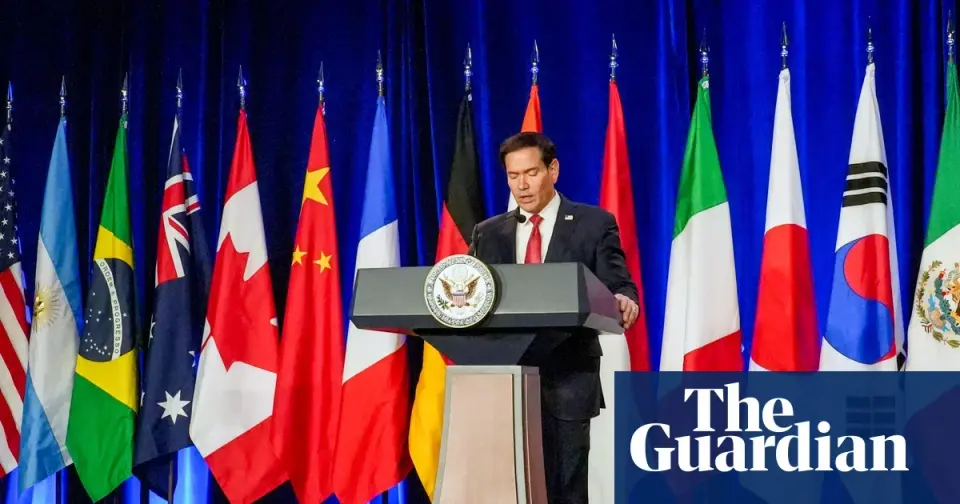
US Secretary of State Marco Rubio cancelled the traditional G20 foreign ministers’ group photo in Atlanta after European, UK, and Australian delegations refused to pose with Russian Foreign Minister Sergei Lavrov. The decision highlights deep fractures within the group as the US seeks to normalize relations with Moscow while allies oppose any engagement that ignores the ongoing war in Ukraine. Participants expect no joint communique, with the US likely publishing a chair’s summary instead, as the group prepares for a leaders’ summit in Florida next month.
Key points
- Rubio cancelled the opening group photo after approximately one-third of participating nations, including the UK and Australia, refused to stand beside Lavrov.
- Germany’s foreign minister stated there is no normality with Russia, while the UK cited a longstanding policy against bilateral engagement with Russian ministers since 2022.
- Australia’s foreign minister condemned Russia’s invasion of Ukraine during the opening session, emphasizing that the war has worsened global food security.
- Ukraine was not invited to the meeting, a deliberate US choice to include only formal G20 members, despite Kyiv’s attendance at previous gatherings.
- South Africa, a founding G20 member, was also excluded from the invitation list due to ongoing disputes with the Trump administration.
- Participants expect no joint communique, with the US likely issuing a chair’s summary to avoid highlighting the lack of consensus.
Background
This incident follows a series of diplomatic tensions between the US and its allies over Russia. Recent US moves to waive sanctions and import Russian diesel have been criticized by Ukraine and European partners as prolonging the war. The G20 foreign ministers’ meeting in Atlanta precedes a leaders’ summit in Florida, where the US aims to maintain dialogue with Moscow despite European opposition.
How outlets are covering it
The Guardian emphasizes the rupture caused by the Trump administration’s attempt to reintegrate Russia, noting that the photo cancellation reflects a broader schism over Ukraine’s exclusion and South Africa’s absence. The BBC highlights the US-Russia thaw, including the diesel deal, and contrasts it with the UK’s firm stance against engaging with Russian ministers. Both outlets agree that the photo cancellation signals deep divisions, but the Guardian focuses on the lack of a joint communique, while the BBC notes the US decision to keep the focus on substantive discussions rather than ceremonial distractions.
Why it matters
The cancellation of the G20 photo underscores the widening gap between US and European approaches to Russia, with potential implications for future sanctions and peace negotiations. The absence of a joint communique may weaken the G20’s ability to present a unified front on global economic and security issues, particularly as the US seeks to lower fuel prices ahead of mid-term elections.
What to watch
The G20 foreign ministers’ meeting will conclude on Saturday, with participants expected to work toward a successful leaders’ summit in Florida next month. The US may publish a chair’s summary instead of a joint communique, while European allies and Ukraine continue to oppose any normalization of relations with Russia.
- US cancels G20 ‘family photo’ after Australia, UK and others refuse to appear with Russia The Guardian
- Distaste for Lavrov Forces U.S. to Cancel G20 Photo Session in Atlanta The New York Times
- European diplomats shun Russia at G20 gathering in the US DW.com
- G20 'family photo' cancelled after protests over presence of Russian minister BBC
- WATCH: Rubio welcomes G20 foreign ministers to Atlanta at 'critical moment' PBS
Want the full story? Read the original reporting
Read on The Guardian