
Veto by Moscow and Beijing Halts UN Panel to Monitor Iran Sanctions
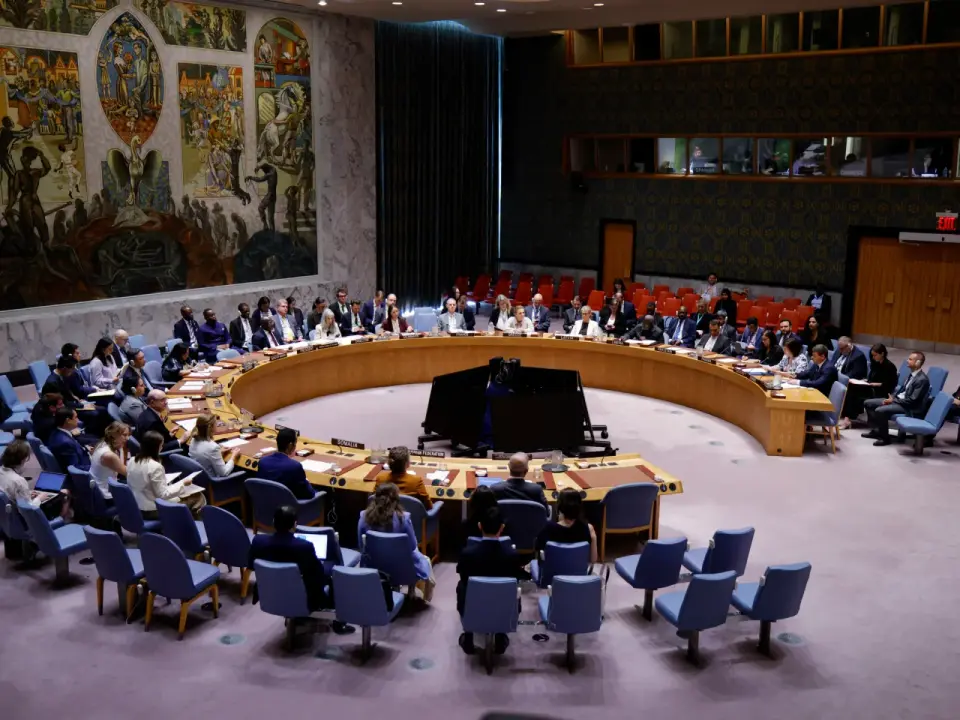
Russia and China vetoed a US-backed UN Security Council resolution on September 17, 2026, blocking the extension of an independent panel tasked with monitoring sanctions on Iran. The vote ended the council’s mandate for oversight, creating a gap in impartial reporting on sanctions violations. While 11 members supported the measure, Pakistan and Somalia abstained. The US argued the move benefits Tehran, while Iran praised the veto as a rejection of political abuse.
Key points
- The UN Security Council failed to extend the mandate for an independent expert panel monitoring Iran sanctions due to vetoes from Russia and China.
- The panel was established in 2025 but never appointed due to disagreements, leading to a lack of consensus among the 15-member council.
- Eleven members voted in favor of extending the mandate, while Pakistan and Somalia abstained from the vote.
- The US argued that without the panel, the council loses its primary source of evidence-based reporting on sanctions violations.
- Iran’s UN mission thanked Russia and China for opposing what it described as a politically motivated US draft resolution.
- The veto follows the reinstatement of UN sanctions in September 2025 via the 'snapback' mechanism by France, Germany, and the UK.
Background
This development follows the reinstatement of UN sanctions against Iran in September 2025, triggered by Western powers accusing Tehran of violating the 2015 nuclear pact. Previous coverage noted that while the council reinstated the mandate for an independent panel in 2025, experts were never appointed due to disagreements. Recent tensions include the US barring Iran’s nuclear chief from an IAEA conference and global efforts to economically isolate Iran, including discussions with China on blocking yuan-to-dollar conversions.
How outlets are covering it
Al Jazeera and Yahoo News both report the veto as a decisive block by Russia and China, emphasizing the resulting monitoring gap. Al Jazeera highlights the US argument that the gap benefits Iran, while noting Iran’s praise for the veto as a rejection of political abuse. Yahoo News focuses on the procedural failure of the resolution, underscoring the lack of consensus among Security Council members. Both sources agree on the vote count (11 in favor, with abstentions from Pakistan and Somalia) but differ in emphasis: Al Jazeera frames the event as a geopolitical standoff, while Yahoo News presents it as a procedural breakdown in the council’s oversight mechanisms.
Why it matters
The veto creates a significant gap in impartial monitoring of Iran sanctions, potentially allowing violations to go unreported. This undermines the enforcement of the 'snapback' sanctions reinstated in 2025 and may embolden Iran to evade measures. The move also signals continued divergence between Western powers and Russia/China on Iran policy, complicating diplomatic efforts to resolve the nuclear crisis.
What to watch
The US and its allies may explore alternative monitoring mechanisms, such as a Western-led panel, to ensure sanctions are enforced. Iran may leverage the monitoring gap to evade sanctions, while Russia and China may continue to block future UN actions against Tehran. Diplomatic efforts to resolve the nuclear crisis may stall, with increased focus on economic pressure and regional tensions.
- Russia, China veto UN mandate to monitor Iran sanctions aljazeera.com
- Russia and China Veto U.S. Bid to Renew U.N. Monitoring of Iran Nuclear Program The New York Times
- Russia, China end mandate for independent monitoring of UN sanctions on Iran Reuters
- UN Security Council fails to adopt US-backed Iran sanctions resolution after Russia and China vetoes Yahoo
- Pakistan abstains in UN vote on Iran sanctions panel Dawn
Want the full story? Read the original reporting
Read on aljazeera.com