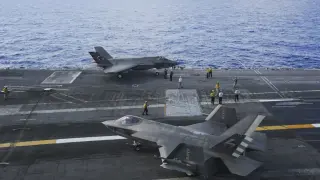
Despite a September 23 U.S. deadline to cut off services to sanctioned Iranian airlines, flight data shows continued operations in Turkey and China. While Washington claims success in the Gulf, gaps remain in NATO ally Turkey and major partner China, prompting calls for stricter enforcement against local service providers.
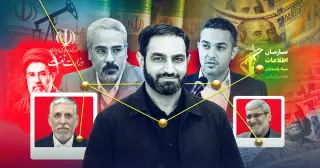
US aviation sanctions have halved Iran’s international flights, forcing costly detours and straining ties with neighbors like Iraq and Turkey. Simultaneously, the rial hit a record low as US Treasury officials warned that Iran’s remaining oil exports to China could be exhausted within two weeks. Domestic political divisions have intensified over allegations that elite networks are profiting from sanctions-bypassing oil sales, while hardliners and moderates clash over diplomatic strategies with Washington.
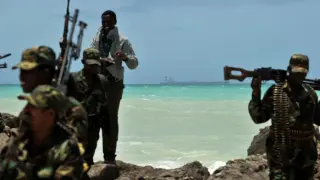
Somali authorities in the semi-autonomous Puntland region confirmed the release of the product tanker Sibu 1, which had been hijacked by pirates in August. While official statements describe a planned counter-piracy operation, conflicting reports suggest a violent gun battle involving tribal militias. The vessel, previously sanctioned by the US for transporting Iranian oil, was one of at least 13 ships attacked in the region this year, signaling a resurgence of piracy as naval resources are diverted elsewhere.
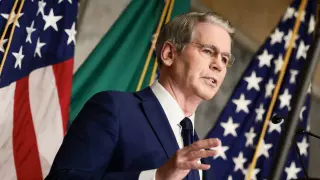
Treasury Secretary Scott Bessent announced that the United States and China have agreed to extend their bilateral trade truce, known as the Busan agreement, from November 10 to January 10. The extension follows recent talks between Bessent and Chinese Vice Premier He Lifeng and precedes a state visit by Chinese President Xi Jinping to Washington. While the trade truce aims to ease economic tensions, the two nations remain sharply divided on artificial intelligence regulation, with the U.S. rejecting global governance frameworks in favor of national sovereignty. Simultaneously, the U.S. Treasury is intensifying economic pressure on Iran through Operation Economic Outcast, with Bessent outlining three potential scenarios for the end of the ongoing conflict.
Federal authorities are investigating Binance for potential violations of US sanctions against Iran. The probe follows recent Treasury actions targeting Iranian crypto infrastructure and a civil forfeiture claim involving funds laundered through the exchange.
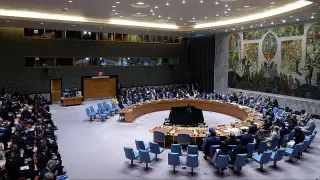
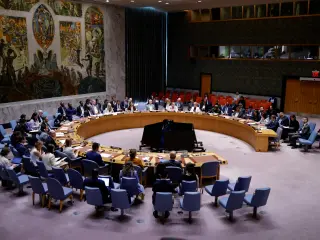
Russia and China vetoed a US-drafted resolution at the UN Security Council on Thursday, blocking the extension of an independent expert panel mandated to monitor compliance with sanctions reimposed on Iran. The vote failed 11-2, with Somalia and Pakistan abstaining. While the underlying sanctions remain in effect, the loss of the monitoring panel creates a significant oversight gap. The US criticized the veto as shielding rogue regimes, while Iran praised the move as a defense of international law against Western political abuse.
Russia and China vetoed a US-backed UN Security Council resolution on September 17, 2026, blocking the extension of an independent panel tasked with monitoring sanctions on Iran. The vote ended the council’s mandate for oversight, creating a gap in impartial reporting on sanctions violations. While 11 members supported the measure, Pakistan and Somalia abstained. The US argued the move benefits Tehran, while Iran praised the veto as a rejection of political abuse.
Russia and China vetoed a US-backed UN Security Council resolution to extend the mandate of an expert panel monitoring sanctions on Iran. The move ends the council’s primary mechanism for impartial, evidence-based reporting on sanctions violations, creating a monitoring gap that benefits Tehran. The panel was authorized in 2025 but never appointed due to disagreements among member states. The US and its allies argue the veto stifles oversight of Iran’s nuclear and military programs, while Moscow and Beijing frame the resolution as a politically motivated attempt to escalate tensions. The veto follows the reinstatement of UN sanctions against Iran in September 2025 via the 'snapback' mechanism by France, Germany, and the UK.
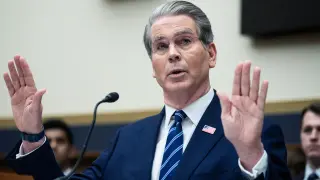
Treasury Secretary Scott Bessent testified before the House Financial Services Committee, defending the administration's Iran war and economic policies while facing scrutiny over rising inflation, high bond yields, and Federal Reserve pressure. The 10-year Treasury yield reached 5.04%, its highest level in 19 years, driven by oil price spikes and debt concerns. Bessent blamed global factors for yield increases and touted wage growth for lower earners, while Democrats pressed on affordability and AI regulation. The hearing coincided with a Federal Reserve meeting where a rate hike is expected, creating tension with President Trump's calls for rate cuts.
The U.S. Department of Justice has filed a civil forfeiture complaint to seize $61 million in cryptocurrency, alleging it represents proceeds from black-market Iranian oil sales. Prosecutors claim Tehran used a network involving Chinese firms and Binance accounts to launder over $1.5 billion in illicit funds to support the Islamic Revolutionary Guard Corps. While Binance denies facilitating sanctioned transactions, the action highlights how crypto is being used to bypass naval blockades and sanctions during the ongoing Iran-U.S. conflict.
Britain announced expanded sanctions on Iran, targeting energy, metals, banking, insurance and shipping to curb Tehran’s nuclear program and other hostile activity. The government will introduce legislation to tighten financial and trade restrictions, broaden powers to sanction ships linked to Iran, and bar Iranian aircraft from landing in the UK with exemptions for certain energy operations. The measures follow Iran’s advancement of its nuclear program, including uranium enriched to 60% and stockpiles over 400 kg, and are aimed at reducing Tehran’s access to the UK financial system while pursuing diplomacy as a long-term solution.
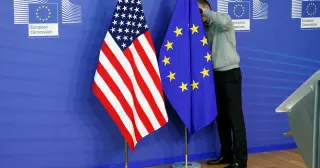
Europe’s once-vaunted “third-way” approach to Iran has largely yielded to Washington’s sanctions-driven strategy, with European governments and many private companies increasingly prioritizing access to the US market and dollar-based finance over Iran ties, even as EU leaders publicly hesitate to endorse all US measures. The shift is shaping diplomacy (e.g., UN/IAEA actions) and Europe’s security calculus while the broader economic war tightens: Iran’s ports and oil exports have fallen under blockade, and Washington is widening financial pressure on foreign banks linked to Tehran. Separately, Starlink’s expanding availability in neighboring Iraq and the UAE could provide a nascent backdoor to the Iranian internet, offering journalists and dissidents a potential workaround, though Tehran remains able to clamp down. Overall, Europe’s alignment with Washington on Iran is real and growing, even if formal rhetoric still preserves some autonomy.)
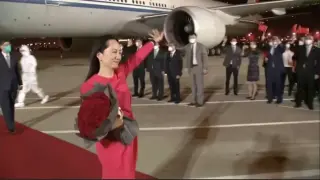
A Brooklyn jury will hear US prosecutors’ case that Huawei operated as a racketeering enterprise over two decades, tying together an Iran sanctions‑evasion scheme, misrepresentations to banks and the theft of a T-Mobile robot arm. Meng Wanzhou is not on trial but looms as a key figure; Huawei denies the charges and argues the case fuses unrelated disputes. If convicted, the company could face large fines and tighter US banking scrutiny, highlighting the broader US‑China tech confrontation surrounding Huawei’s global rise.
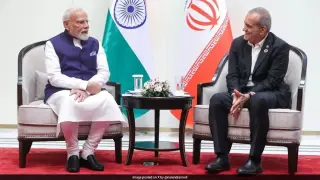
US Secretary of State Marco Rubio dismissed talk of an India-Iran trade deal after Modi-Pezeshkian’s SCO meeting and warned that any country helping Iran evade sanctions or generate revenue could face penalties, as Washington reiterates its goal of blocking Tehran’s nuclear ambitions through economic pressure and the potential for military action if needed.
An Iran International investigation shows Iran’s shadow banking extends far beyond the sanctioned core, using 15 foreign banks in the UAE and China to move billions; most of these banks have not faced U.S. penalties, and enforcement gaps suggest the network’s full scale is much larger than the seven‑month snapshot.