
Lavrov Confirms Closure of Goethe-Institut Centers in Moscow, St. Petersburg, and Yekaterinburg
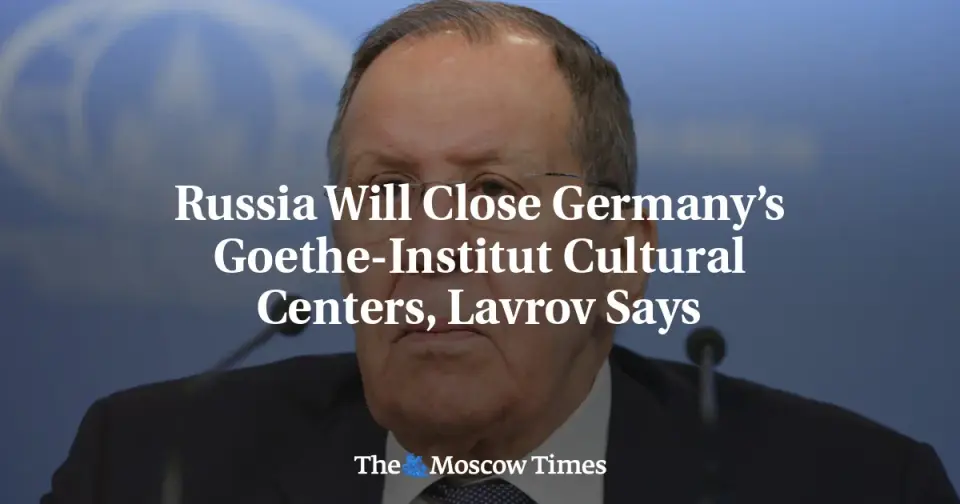
Russian Foreign Minister Sergei Lavrov confirmed on Thursday that Moscow will close German Goethe-Institut cultural centers in Moscow, St. Petersburg, and Yekaterinburg. This move is direct retaliation for Berlin’s recent closure of a Russian cultural center in Berlin and a consulate in Bonn, actions Germany took after attributing an August drone incident at Leipzig/Halle Airport to Moscow. While Lavrov framed the closures as a response to being 'kicked out,' German officials maintain the actions are necessary security measures against hybrid warfare. The incident has intensified diplomatic friction, with the EU preparing new sanctions and Russia denying involvement in the airport attack.
Key points
- Lavrov announced the closure of Goethe-Institut centers in three Russian cities during the Eastern Economic Forum in Vladivostok.
- The decision follows Germany’s order to shut down a Russian cultural center in Berlin and a consulate in Bonn.
- Germany attributed the closure to a drone incident at Leipzig/Halle Airport on August 4, which Moscow denies.
- Lavrov noted the centers had remained open despite previous tensions, calling their closure a direct consequence of Berlin’s actions.
- The first Goethe-Institut in Moscow opened in 1992, shortly after the Soviet Union’s collapse.
Background
This escalation follows a series of diplomatic confrontations in 2026. In early September, Russia had already signaled intentions to shutter these centers, framing it as part of broader cultural-political pressure. Earlier in the year, tensions were high due to NATO’s Arctic expansion and stalled peace negotiations regarding the Ukraine war, where US Secretary of State Marco Rubio had previously discussed potential settlements with Lavrov. The current closure marks a tangible step in the deteriorating relationship between Moscow and Berlin, moving beyond verbal disputes to physical institutional closures.
How outlets are covering it
The Moscow Times reports the closure as a direct retaliatory measure by Lavrov, emphasizing the symbolic nature of closing centers that had survived previous 'Ukrainian complications.' The Guardian highlights the domestic political fallout in Germany, noting that the timing of the dispute, days before a key regional vote, has polarized the political landscape. It points out that the far-right AfD is using the incident to criticize the government’s 'double standard' in security policy, while the far-left Die Linke argues the closures increase the risk of major war. Al Jazeera focuses on the broader European response, detailing EU foreign affairs chief Kaja Kallas’s announcement of new sanctions against 1,600 additional Russian entities and her characterization of the drone incident as 'state-sponsored terrorism.' While The Moscow Times and Al Jazeera present the closure as a factual diplomatic response, The Guardian emphasizes the internal German debate and the potential for further escalation, contrasting the government’s cautious approach with calls from within the CDU to toughen the stance against Moscow.
Why it matters
The closure of Goethe-Institut centers signifies a deepening of the cultural and diplomatic rift between Russia and Germany, moving the conflict from military and economic spheres into cultural institutions. It reflects the broader trend of 'hybrid warfare' and security paranoia in Europe, as described by German Foreign Minister Johann Wadephul. Furthermore, the incident serves as a catalyst for the EU to accelerate its sanctions regime, potentially impacting Russian economic resilience and diplomatic standing within the bloc. The domestic political polarization in Germany, particularly the rise of the AfD, suggests that foreign policy decisions are increasingly influenced by internal electoral pressures, complicating Berlin’s ability to maintain a consistent stance on Russia.
What to watch
The immediate next step is the physical closure of the Goethe-Institut centers in Moscow, St. Petersburg, and Yekaterinburg. The EU is expected to finalize and implement new sanctions targeting 1,600 additional individuals and entities linked to Russia’s military sector, as well as potential bans on former Russian military personnel visiting the EU. In Germany, the political debate will continue, with the upcoming regional vote in Saxony-Anhalt potentially influencing the federal government’s future posture toward Moscow. Russia has warned of further retaliation, and the EU has summoned Russia’s representative, indicating that diplomatic channels remain tense but active.
- Russia Will Close Germany’s Goethe-Institut Cultural Centers, Lavrov Says themoscowtimes.com
- EU to hit back at Russia after drone attack as Germany probes new sabotage cases Reuters
- Russia to close branches of Germany's Goethe-Institut DW.com
- Leipzig airport attack fallout exposes Germany’s deepening divide over Russia The Guardian
- EU eyes more Russia sanctions after failed drone attack in Germany Al Jazeera
Want the full story? Read the original reporting
Read on themoscowtimes.com