
Taiwan’s Deputy FM Warns Carney That Deepening China Ties Risks Economic Coercion
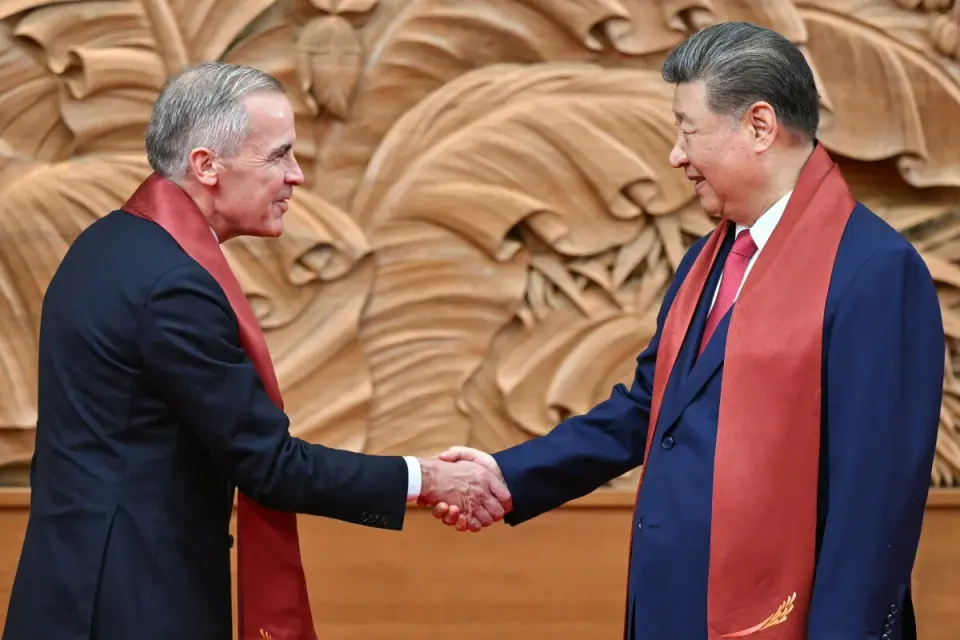
Taiwan’s deputy foreign minister Chen Ming-chi warned Canadian Prime Minister Mark Carney that expanding trade with China could expose Ottawa to the same economic coercion Beijing has used against Taipei. Chen cited Taiwan’s sharp reduction in dependence on China as a cautionary example, while Carney maintains that Canada’s commodity-focused trade differs from sensitive tech sectors.
Key points
- Chen Ming-chi, Taiwan’s deputy foreign minister, stated that deepening ties with China risks exposing Canada to economic coercion, a strategy Beijing has used against Taiwan.
- Chen referenced the 2018 detention of Canadians Michael Kovrig and Michael Spavor as evidence of Beijing’s use of 'hostage diplomacy' to pressure Ottawa.
- Taiwan reduced its outbound investment share to China from over 80% in 2010 to 3.8% last year, and exports to China and Hong Kong fell from nearly 44% to 27% of total exports.
- Carney argued that Canada’s trade with China is distinct from the U.S. relationship because it focuses on agricultural products and energy rather than advanced semiconductors.
- Chen warned that Chinese electric vehicles could pose surveillance risks due to connected technology, even if manufactured in Canada, and criticized the symbolic nature of the recent Shenzhen summit.
Background
This warning follows recent diplomatic shifts where Canada and China agreed to additional tariff reductions in Shenzhen ahead of the APEC summit, including cuts on Canadian pork and Chinese steel. Carney has previously suggested Canada might pivot to Chinese automakers if U.S. trade negotiations fail, a stance that has drawn scrutiny regarding supply chain security. The broader context includes heightened tensions in the Asia-Pacific, such as Japan’s subdued reception at the same summit due to Beijing’s restrictions on rare earth exports and diplomatic friction over Taiwan.
Why it matters
The exchange highlights a strategic divergence between middle powers seeking to diversify trade away from the U.S. and the risks of increased reliance on Beijing. As Canada navigates U.S. threats of 50% tariffs on vehicles, its move toward Chinese economic integration may invite similar coercive tactics that Taiwan has actively worked to mitigate, potentially setting a precedent for how democratic nations manage interdependence with authoritarian powers.
What to watch
Carney is expected to sign a long-delayed trade cooperation arrangement with Taiwan, a move Chen welcomed. Meanwhile, Canada will continue monitoring the impact of Chinese electric vehicle imports and the stability of its agricultural exports as U.S. tariff threats loom over the North American auto sector.
Want the full story? Read the original reporting
Read on AP News