
UAE Official Labels European Protests as Security Threats, Promoting Tolerance Model
A senior UAE official warned that recent street protests in Europe have crossed into national security threats rather than political expression. The UAE is promoting a preventive counter-extremism strategy focused on education and coexistence, contrasting its tolerance-based model with the instability seen in European demonstrations. While the UAE highlights its interfaith initiatives and diplomatic ties with Israel, critics note its restrictive domestic political environment limits the transferability of its model to democracies.
Key points
- Dr. Ali Rashid Al Nuaimi, chairman of the UAE Federal National Council’s Defense, Interior and Foreign Affairs Committee, stated that demonstrations in 11 European cities are not freedom of speech but a threat to national security.
- The UAE’s approach to countering extremism is preventive, focusing on education, family values, and community integration to address radicalization before it turns violent.
- Maqsoud Kruse, chairman of the Abu Dhabi-based Hedayah center, emphasized that radicalization is a process that can be interrupted through international collaboration and holistic social support, not just security measures.
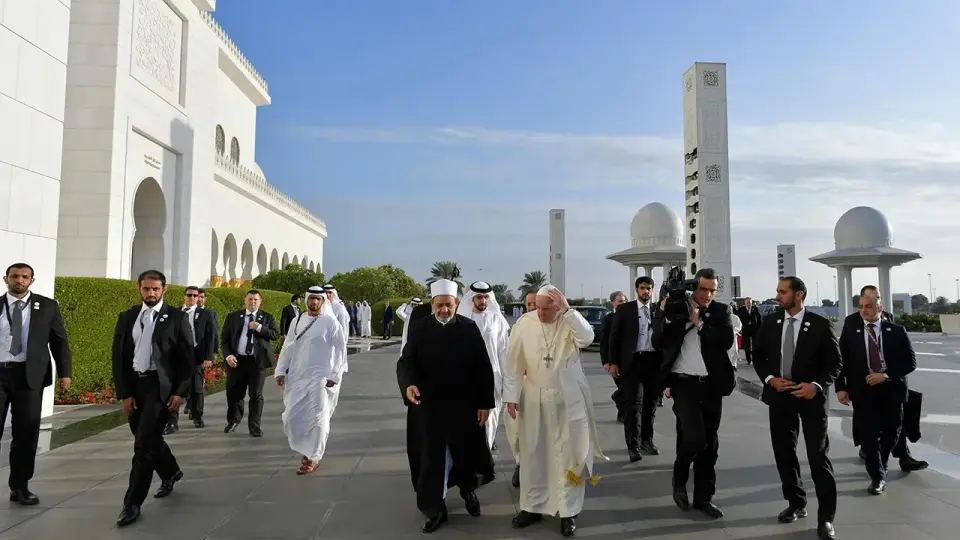
- The UAE points to its 2015 anti-discrimination laws, 2016 tolerance program, and the 2019 Document on Human Fraternity signed with Pope Francis as evidence of its commitment to coexistence.
- The Abrahamic Family House in Abu Dhabi, featuring a mosque, church, and synagogue, was temporarily closed due to an Iranian attack during the recent regional conflict, highlighting the fragility of these peace initiatives.
- Freedom House’s 2026 assessment notes that while the UAE promotes tolerance, it bans political parties and restricts freedom of expression, complicating the application of its model in European democracies.
Background
Recent European unrest, including violent youth protests in Germany in late October 2026 and widespread demonstrations in France, Italy, and Portugal, has prompted international debate on radicalization. Europol reported over 9,000 links to extremist material on social media platforms in November 2026. The UAE has long positioned itself as a hub for counter-extremism efforts, having established the Hedayah center in 2012 and signing the Abraham Accords with Israel in 2020. The current tensions are exacerbated by the ongoing conflict with Iran, which has targeted UAE infrastructure, including the Abrahamic Family House.
Why it matters
The UAE’s stance offers a contrasting model to European democracies, which are grappling with rising extremism and social unrest. By emphasizing prevention through education and interfaith dialogue, the UAE seeks to export its stability model, though its restrictive domestic policies limit its universal applicability. This debate highlights the global challenge of balancing security with civil liberties in the face of radicalization.
What to watch
The UAE will likely continue to promote its counter-extremism programs internationally, potentially through expanded partnerships with European nations. The reopening of the Abrahamic Family House and the sustainability of its tolerance initiatives will be key indicators of the model’s resilience amid regional conflicts. European governments may scrutinize the UAE’s approach as they seek to address their own radicalization challenges.
Want the full story? Read the original reporting
Read on Fox News