
Houthi Missile Program Shifts to Chinese Supply Chains, Defying UN Embargo
Conflict Armament Research (CAR) revealed that Houthi militants in Yemen are manufacturing advanced ballistic missiles using custom components imported from China. The findings, published on October 14, 2026, show the group is producing clones of Iran's Kheibar Shekan missile, which has a range of up to 1,200 miles. This development marks a significant escalation in Houthi capabilities, allowing them to strike targets across Saudi Arabia and Israel while bypassing traditional Iranian supply networks.
Key points
- CAR identified custom-machined metal parts, rocket motor components, and ablative heat shield materials in shipments seized by Yemeni authorities in July 2026.
- The components were sourced from a Chinese precision-metal manufacturer that advertises itself as a specialist in custom aerospace parts, though the specific company was not named.
- The missiles are modeled on Iran's Kheibar Shekan series, which includes variants with ranges exceeding 1,000 kilometers and features designed to evade air defense systems.
- The findings suggest the Houthis are moving beyond reassembling Iranian weapons to independently manufacturing advanced systems, reducing their reliance on Tehran.
- The development coincides with intensified Houthi attacks on Saudi infrastructure and rising tensions in the Red Sea region.
Background
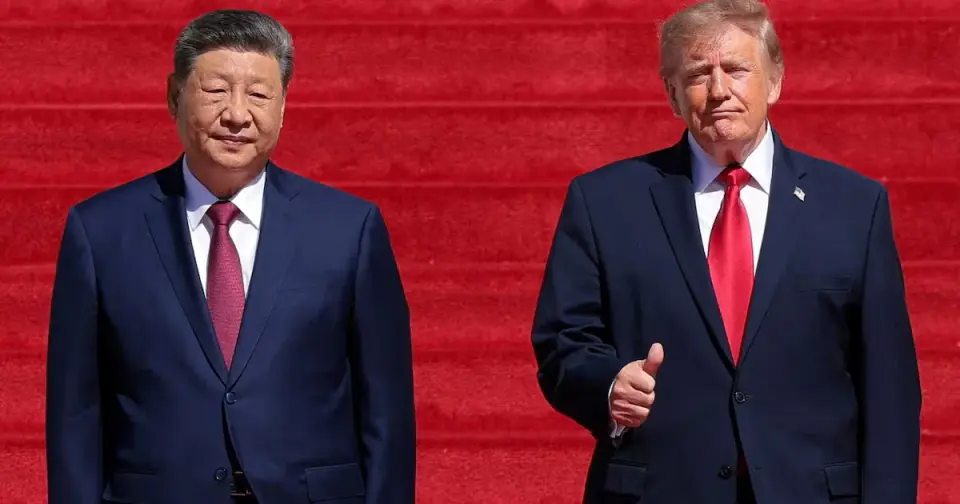
This development follows Xi Jinping's recent state visit to Washington, where he emphasized diplomatic parity with the US, and a separate US condemnation of 'embarrassing' legal actions against Lebanese diplomats. The new missile findings highlight a shift in Houthi procurement strategies, moving away from Iran-centric supply chains toward Chinese commercial networks, despite ongoing UN arms embargoes.
How outlets are covering it
The Daily Beast framed the discovery as a direct contradiction to Trump's public defense of Xi Jinping, emphasizing the 'embarrassing' nature of the intelligence. NDTV focused on the technical capabilities of the Kheibar Shekan missile and its potential to target Saudi Arabia and Israel, noting that Chinese companies are now the largest source of seized goods for the Houthis. CAR's report provided the most detailed technical analysis, confirming that the components were custom-made for missile use and that the Houthis are pursuing independent research and development, including the use of AI tools for missile design.
Why it matters
The shift to Chinese-supplied components undermines the effectiveness of UN arms embargoes and complicates US efforts to contain Houthi military capabilities. It also raises questions about the dual-use nature of Chinese commercial exports and the extent of Beijing's involvement in regional conflict dynamics. The development could lead to further escalation in the Middle East, as the Houthis gain the ability to strike deeper into Saudi Arabia and Israel with precision-guided weapons.
What to watch
Expect increased scrutiny from the UN Security Council and US officials regarding Chinese compliance with arms embargoes. The Houthis may continue to expand their domestic production capabilities, potentially leading to more sophisticated missile systems. Diplomatic efforts to address the issue may intensify, particularly as the US and China navigate their fragile trade truce and AI dialogue frameworks.
- Trump’s Defense of Xi Hit by Embarrassing New Bombshell The Daily Beast
- Exclusive | The Houthis Are Building an Advanced Missile With Chinese Parts WSJ
- Houthi ballistic missile manufacturing ArcGIS StoryMaps
- Houthis Building Missiles With Chinese Parts, Can Target Saudi, Israel: Report NDTV
- Houthis in Yemen attempting to produce advanced ballistic missile using Chinese-delivered parts – report i24NEWS
Want the full story? Read the original reporting
Read on The Daily Beast