
Salvadoran Troops Escalate Haiti Gang War with Airstrikes Amid Human Rights Concerns
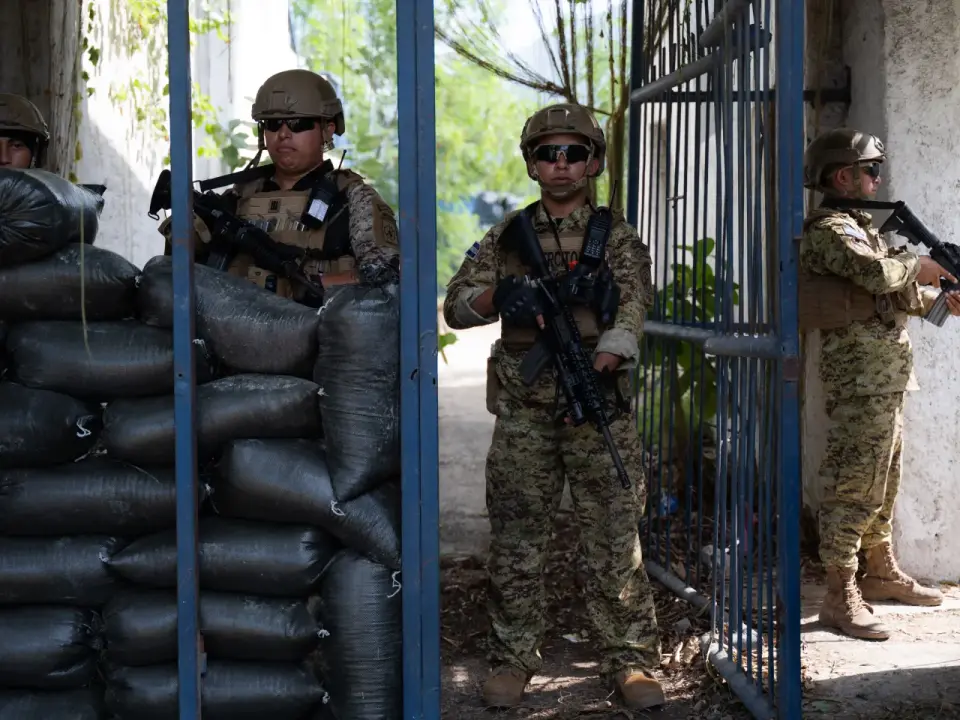
El Salvador has deployed approximately 2,500 troops to Haiti, expanding a rescue mission for four missing technicians into a broad military offensive against armed gangs. While thousands of Haitians have rallied in support of President Nayib Bukele’s forces, experts warn that the operation lacks clear rules of engagement and has already caused significant civilian casualties. The deployment now outnumbers the UN-backed Gang Suppression Force, raising serious concerns about accountability and the erosion of international legal standards.
Key points
- The deployment began on October 18 after four Salvadoran aviation technicians were abducted by gangs near Port-au-Prince; Bukele subsequently sent 2,500 troops, far exceeding the 2,000 personnel of the UN-backed Gang Suppression Force.
- Salvadoran forces have conducted aerial strikes on the homes of gang leaders Jeff Larose and Wilson Joseph, with Bukele framing these attacks as 'gifts' to the Haitian people, though it remains unclear if the leaders were killed.
- ACLED data indicates a 46 percent increase in security clashes and drone strikes since the deployment, resulting in over 100 deaths, including at least 26 civilians, though Haitian officials claim no civilian casualties were reported.
- The terms of the Salvadoran deployment are not public, and most troops operate outside UN oversight mechanisms, leading Amnesty International and legal experts to warn of potential human rights abuses and a lack of accountability.
- Haiti signed a new bilateral security cooperation agreement with El Salvador on November 17, while Bukele’s government stated troops would withdraw once the missing technicians are located, a condition that remains unmet.
Background
This escalation follows a decade of instability in Haiti, worsened by the 2021 assassination of President Jovenel Moise. The current crisis is part of a broader shift away from traditional UN peacekeeping models, such as the failed MINUSTAH mission, toward more militarized, unilateral security operations. Previous archive coverage noted that while some Haitians view Bukele’s intervention as a necessary rescue from gang terror, others fear it will deepen the humanitarian crisis without a sustainable exit strategy.
How outlets are covering it
Al Jazeera and The Haitian Times highlight the massive public support for Bukele, with thousands of Haitians marching in Port-au-Prince to cheer the Salvadoran troops. In contrast, Just Security and AP News emphasize the legal and humanitarian risks, noting that the operation lacks transparency and has already caused civilian harm. While Bukele portrays the strikes as decisive victories, experts like Diego Da Rin from the International Crisis Group argue that these are 'symbolic wins' that do not ensure long-term territorial control, and that the lack of a unified strategy risks further civilian retaliation by gangs.
Why it matters
The Salvadoran deployment represents a significant shift in how international security crises are managed, moving away from multilateral UN frameworks toward unilateral, militarized solutions. This 'security-first' model, which prioritizes kinetic force over legal oversight, risks normalizing the erosion of the rules-based international order and could set a precedent for future interventions in other conflict zones.
What to watch
The immediate focus will be on whether the four missing Salvadoran technicians are found, which is the stated condition for the troops' withdrawal. Additionally, the UN Security Council is expected to review the Gang Suppression Force's mandate in March 2027, with pressure mounting to ensure compliance with international law and human rights oversight mechanisms.
- Why are Bukele’s Salvadoran troops in Haiti and what have they achieved? Al Jazeera
- El Salvador’s president confirms and celebrates attack on home of key Haitian gang leader AP News
- El Salvador Destroys Another Gang Stronghold as ‘Gift’ to Haiti Bloomberg.com
- Bukele’s Troops in Haiti: The Frontlines of an Eroding Rules-Based Global Order? Just Security
- Salvadorans strike another Haitian gang leader’s home, Bukele says The Haitian Times
Want the full story? Read the original reporting
Read on Al Jazeera