
IAEA Refers Iran to UN Security Council Amid Ongoing War and Nuclear Standoff
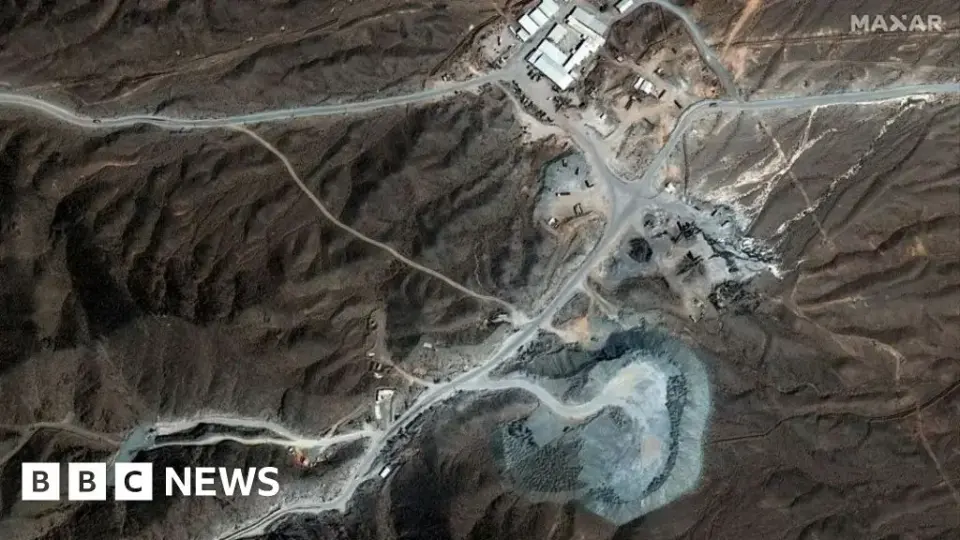
The IAEA Board of Governors has formally referred Iran to the UN Security Council for the first time in 20 years, citing 'non-compliance' with the Nuclear Non-Proliferation Treaty. The resolution, backed by 23 nations, demands Iran restore inspector access to its nuclear facilities, which have been inaccessible since US and Israeli strikes in June 2025 and February 2026. Tehran condemned the move as politically motivated, blaming the conflict for the lack of access, while the US and European allies argue the move is necessary to address proliferation concerns. However, new sanctions are unlikely due to veto powers held by Russia and China.
Key points
- The IAEA Board of Governors passed a resolution referring Iran to the UN Security Council, marking the first such referral in 20 years.
- The resolution, tabled by the US, UK, France, and Germany, was backed by 23 countries, with eight abstentions and three votes against (China, Russia, Niger).
- The IAEA cited a lack of information on Iran's nuclear material and lack of access to facilities as the primary reasons for the referral.
- Iran has not allowed IAEA inspectors access to its nuclear sites since US and Israeli strikes in June 2025 and February 2026.
- Tehran condemned the resolution, calling it 'baseless' and 'politically motivated,' and blamed the US and Israel for disrupting inspections.
- New sanctions are unlikely because Iran's allies, China and Russia, hold veto powers in the UN Security Council.
Background
This referral follows a series of escalating tensions between the US, Israel, and Iran, including a 12-day war in June 2025 and a subsequent conflict in February 2026. The IAEA had previously expressed 'grave concern' over Iran's non-compliance in June 2025, but this is the first formal referral to the Security Council in two decades. The move comes amid ongoing US-Iran hostilities, including a US port blockade and tensions in the Strait of Hormuz.
How outlets are covering it
The US, UK, France, and Germany, who tabled the resolution, argue that Iran's lack of transparency and access to its nuclear facilities is a serious proliferation concern that must be addressed. They view the referral as a necessary step to pressure Iran into negotiations and to signal their unwillingness to accept the status quo. Iran, on the other hand, condemns the resolution as 'baseless' and 'politically motivated,' blaming the US and Israel for disrupting inspections and using that disruption as a pretext for the referral. Tehran argues that it has not stopped or suspended its safeguards obligations, but that performance is currently impossible due to the ongoing conflict. Analysts like Ali Vaez of the International Crisis Group and Darya Dolzikova of the Royal United Service Institute suggest that the referral is unlikely to lead to new sanctions due to the veto powers of Russia and China, but it may serve as a diplomatic tool to pressure Iran and delay major military action until after the US mid-term elections in November.
Why it matters
The IAEA referral to the UN Security Council is a significant diplomatic move that could have far-reaching implications for the ongoing US-Iran war and the broader Middle East conflict. While new sanctions are unlikely due to the veto powers of Russia and China, the referral could serve as a tool to pressure Iran into negotiations and to signal the US and European allies' unwillingness to accept the status quo. The move also highlights the ongoing tensions over Iran's nuclear program and the lack of access to its nuclear facilities, which could have significant implications for global security and the non-proliferation regime.
What to watch
The UN Security Council is expected to receive the referral, but it is unlikely to take any further action due to the veto powers of Russia and China. The US and European allies may use the referral as a tool to pressure Iran into negotiations and to delay major military action until after the US mid-term elections in November. Iran may continue to deny access to its nuclear facilities and may retaliate against the US and its allies. The ongoing US-Iran war and tensions in the Strait of Hormuz are expected to continue, with the potential for further escalation and conflict.
- Iran referred to UN Security Council for nuclear non-compliance BBC
- Cameras disabled, inspectors blocked: Nuclear watchdog asks for help with Iran CNN
- IAEA accuses Iran of ‘noncompliance’ Al Jazeera
- UN nuclear watchdog board reports Iran to the UN Security Council for the first time in 20 years apnews.com
- US moves to ramp up pressure on Iran at UN as Tehran warns of 'recalibrated' military posture Fox News
Want the full story? Read the original reporting
Read on BBC