
Japan’s Defense Minister Visits Yasukuni, Angering Neighbors as PM Takaichi Avoids Shrine
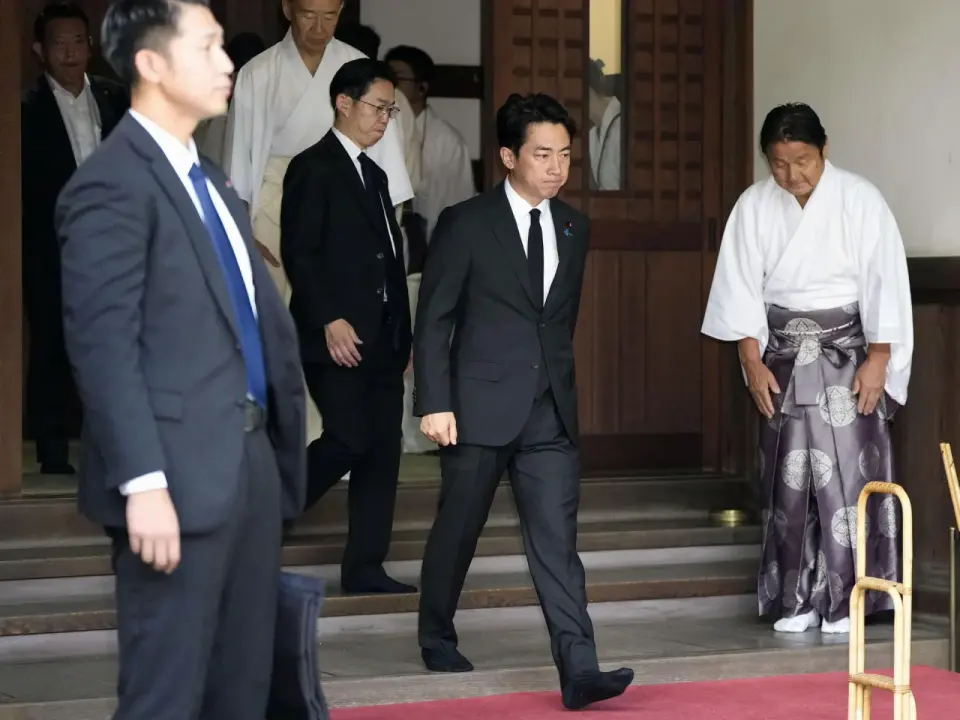
On August 15, 2026, Japanese Defense Minister Shinjiro Koizumi visited the controversial Yasukuni Shrine, drawing sharp protests from China and South Korea. Prime Minister Sanae Takaichi avoided the site to preserve diplomatic ties but sent cash offerings through party officials. While Koizumi reaffirmed Japan’s pacifist path, Beijing accused Tokyo of attempting to revise history and accelerate militarization. Seoul expressed regret but emphasized pragmatic diplomacy, while Emperor Naruhito offered a nuanced address on remorse at a separate memorial service.
Key points
- Defense Minister Shinjiro Koizumi visited Yasukuni Shrine on the 81st anniversary of Japan’s WWII surrender, joining three other Cabinet ministers and party executives.
- Prime Minister Sanae Takaichi did not visit the shrine but sent cash offerings via LDP Secretary-General Shunichi Suzuki, who prayed on her behalf.
- China’s Foreign Ministry lodged strong protests, accusing Japan of trying to cover up war crimes and pave the way for militarization.
- South Korea’s Foreign Ministry called the actions 'anachronistic' but President Lee Jae Myung stressed the importance of pragmatic Korea-Japan cooperation.
- Koizumi stated on social media that he visited to honor the war dead and reaffirm Japan’s commitment to a peaceful postwar path.
Background
Yasukuni Shrine commemorates 2.5 million war dead, including 14 convicted WWII war criminals, a practice that has long angered China and South Korea. Japanese prime ministers have not visited the shrine since Shinzo Abe in 2013, though Takaichi, who took office in October 2025, had previously indicated she might attend. Tensions between Japan and China escalated in November 2025 after Takaichi suggested a Chinese attack on Taiwan could trigger a 'survival-threatening situation' for Japan. Koizumi, son of former PM Junichiro Koizumi who visited in 2006, is the first defense minister to visit since Minoru Kihara in 2024.
How outlets are covering it
Al Jazeera and NBC News focus on the diplomatic fallout, highlighting China’s 'strong condemnation' and South Korea’s 'deep regret.' Politico emphasizes Takaichi’s strategic decision to skip the shrine to avoid straining relations, noting her speech at Nippon Budokan omitted any mention of wartime remorse. All sources agree that Koizumi’s visit is highly contentious given his role in pushing for increased military capability. While Beijing frames the visit as an attempt to 'distort historical facts,' Seoul’s President Lee Jae Myung adopts a more pragmatic tone, prioritizing bilateral cooperation over historical grievances. Takaichi’s refusal to apologize for wartime atrocities, including her denial of coercion against 'comfort women,' is cited across outlets as a key factor in the ongoing diplomatic friction.
Why it matters
The incident underscores the persistent friction between Japan and its Asian neighbors over historical memory and security policy. Koizumi’s visit, combined with Takaichi’s hawkish stance on Taiwan and military expansion, risks further destabilizing regional relations. The diplomatic balancing act—where Takaichi avoids the shrine but sends offerings—highlights the tension between domestic right-wing expectations and international diplomatic necessities. This event may influence future security dialogues and economic cooperation in the Asia-Pacific region.
What to watch
Diplomatic channels will likely remain tense as China and South Korea monitor Japan’s security policies and historical commemorations. Takaichi’s government may face continued pressure from right-wing supporters who view the shrine visit as essential, while diplomatic efforts to maintain relations with Beijing and Seoul will continue. The outcome of these tensions could affect broader regional security frameworks and economic cooperation in the coming months.
- Japanese minister visits shrine to war dead, angering China, South Korea Al Jazeera
- Takaichi skips controversial shrine on 81st anniversary of Japan's World War II surrender Politico
- Japan defence minister visits contentious Yasukuni Shrine to war dead Reuters
- Japanese leader skips controversial shrine visit, avoids mention of remorse on World War II surrender anniversary NBC News
- A look at the history and beliefs behind Japan’s controversial shrine to the war dead AP News
Want the full story? Read the original reporting
Read on Al Jazeera