
Salvadoran Troops Seize Haiti Stadium, Deploy Armed Robot Dogs in Gang Offensive
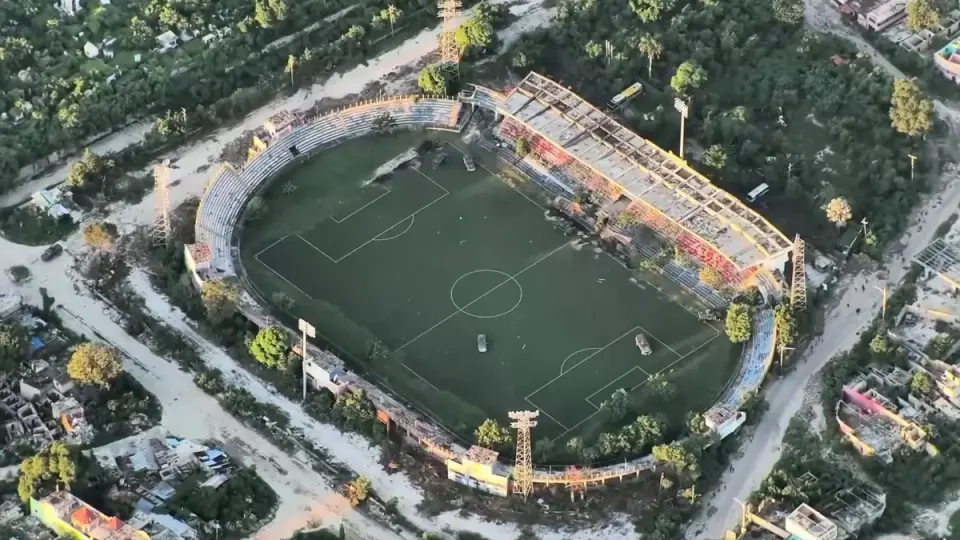
El Salvador’s military has taken control of the Sylvio Cator National Stadium in Port-au-Prince, Haiti, marking a significant escalation in the country’s anti-gang campaign. President Nayib Bukele claimed the operation involved joint forces and featured armed robotic dogs, while Haitian police stated they secured the area before handing it over to Salvadoran troops. The move follows a recent airstrike on a suspected gang headquarters and has raised concerns about the legality of the deployment and the humanitarian impact of intensified violence.
Key points
- Salvadoran forces took control of the Sylvio Cator National Stadium in Port-au-Prince on November 12, 2026, after it was under gang control for two years.
- President Nayib Bukele claimed the operation involved Haitian police, armed forces, and Salvadoran special forces, and featured armed robotic dogs.
- Haitian police stated they secured the stadium first and then handed control to Salvadoran troops, contradicting Bukele’s narrative of a joint seizure.
- Bukele announced the discovery of human skulls inside the stadium and declared it a base for further operations against gangs.
- The deployment of approximately 2,500 Salvadoran troops follows the October 18 abduction of four Salvadoran aviation technicians by gangs.
- Human rights organizations and the UN have raised concerns about the legality of the Salvadoran deployment and the humanitarian impact of the violence.
Background
Haiti has been plagued by gang violence for years, with heavily armed groups controlling large parts of the capital, Port-au-Prince. In October 2026, four Salvadoran aviation technicians working for the UN-backed Gang Suppression Force were abducted by gangs, leading to the deployment of approximately 2,500 Salvadoran troops. The Sylvio Cator National Stadium, named after Haiti’s 1928 Olympic silver medalist in the long jump, had been under gang control for two years, preventing the national soccer team from playing home matches. The stadium’s retaking is part of a broader effort by El Salvador to combat gang violence in Haiti, following a recent airstrike on a suspected gang headquarters.
How outlets are covering it
El Salvador’s President Nayib Bukele claimed the stadium was retaken through a joint operation involving Haitian and Salvadoran forces, and featured armed robotic dogs. He also announced the discovery of human skulls inside the stadium and declared it a base for further operations. Haitian police, however, stated they secured the stadium first and then handed control to Salvadoran troops, contradicting Bukele’s narrative. The UN and human rights organizations have raised concerns about the legality of the Salvadoran deployment and the humanitarian impact of the violence, noting that the deployment operates outside UN oversight. The Miami Herald reported that a member of the Haitian national police was visibly annoyed by Bukele’s claim of credit for the seizure. The BBC reported that the gang’s leader, Wilson 'Lanmò San Jou' Joseph, was not present at the time of the airstrike on the suspected gang headquarters. Newsweek reported that the armed robotic dogs were not shown firing or engaging gang members in the footage released by Bukele.
Why it matters
The retaking of the Sylvio Cator National Stadium marks a significant escalation in El Salvador’s anti-gang campaign in Haiti, raising concerns about the legality of the deployment and the humanitarian impact of the violence. The use of armed robotic dogs in the operation has drawn attention to the potential use of such technology in conflict zones. The deployment of approximately 2,500 Salvadoran troops has also raised questions about the operational legitimacy and legality of their actions in Haiti, with critics arguing that they are not all working within the command structure of the UN-backed Gang Suppression Force. The humanitarian impact of the violence has been significant, with around 2,000 people displaced in the Croix-des-Bouquets district since mid-October, and 4,200 people killed in violence between January and September 2026.
What to watch
El Salvador plans to use the Sylvio Cator National Stadium as a base for further operations against gangs in Haiti. The Salvadoran government has not provided a detailed account of the role of the armed robotic dogs in the operation, and it is unclear whether they were used to fire on targets. The UN and human rights organizations are likely to continue raising concerns about the legality of the Salvadoran deployment and the humanitarian impact of the violence. The Haitian government is expected to continue working with El Salvador and the UN-backed Gang Suppression Force to regain control of the territory and restore state authority.
- Bukele says his forces took back Haiti stadium. But Haiti police say they did it Miami Herald
- El Salvador has built up a military presence in Haiti. What's in it for the Central American country? DW.com
- Haitian PM praises El Salvador after joint strike on alleged home of gang leader BBC
- Machine-Gun-Armed Robot Dogs Appear in El Salvador’s Haiti Offensive Newsweek
- El Salvador’s Presence and a Gang’s Offer Test Haiti’s Security Americas Quarterly
Want the full story? Read the original reporting
Read on Miami Herald