
Turkish Parliament Ratifies Mecca Defence Pact, Binding Ankara to Saudi and Pakistan
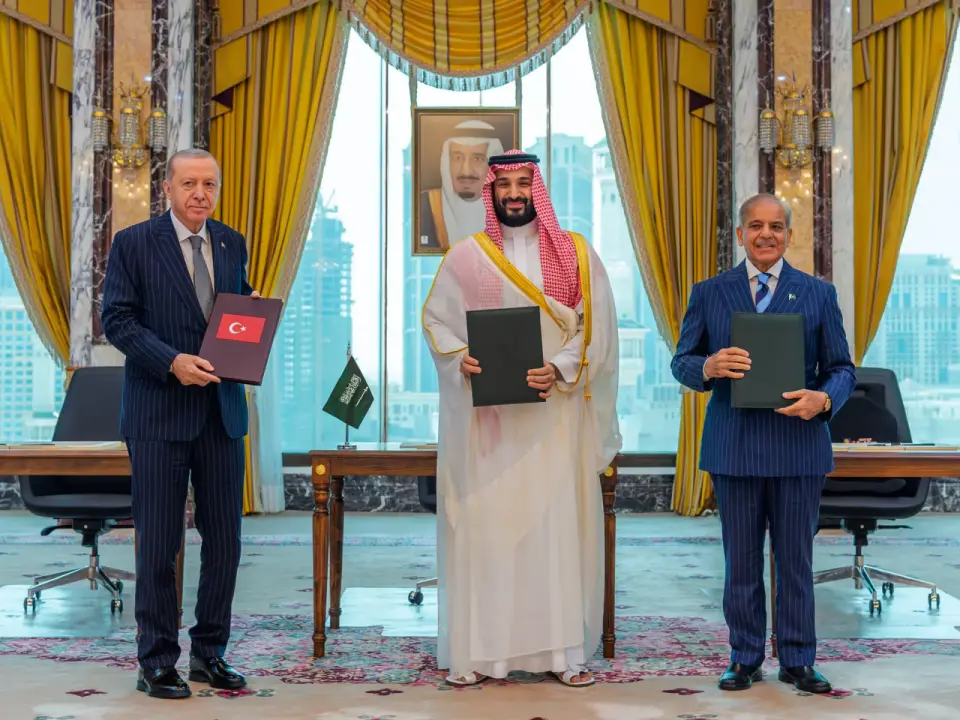
Turkiye’s parliament has ratified the Mecca Joint Defence Agreement, a trilateral pact with Saudi Arabia and Pakistan that includes a collective defence clause similar to NATO’s Article 5. The vote passed 279 to 119, formalizing a commitment to mutual military assistance in the event of an armed attack on any signatory. The ratification follows months of escalating Houthi strikes on Saudi infrastructure and marks the final legislative step for Turkiye to fully activate the alliance, though actual troop deployment remains subject to separate constitutional processes.
Key points
- Turkiye’s parliament approved the ratification of the Mecca Joint Defence Agreement with 279 votes in favor and 119 against, with 398 of 592 lawmakers participating.
- The pact, signed in August 2026 by leaders of Turkiye, Saudi Arabia, and Pakistan, mandates that an armed attack on one member is treated as an attack on all, mirroring NATO’s Article 5.
- The agreement includes provisions for joint training, intelligence sharing, and defence industry cooperation, with a minimum 10-year commitment before withdrawal is permitted.
- Turkiye’s Defence Minister Yasar Guler stated that the goal is to strengthen deterrence rather than engage in direct conflict with the Houthis, noting that troop deployment requires separate legislative approval.
- Syria has expressed interest in joining the pact, and Turkish Foreign Minister Hakan Fidan indicated that other regional nations sharing a vision of peace could also be invited.
Background
The Mecca Joint Defence Agreement was signed in August 2026 by Turkiye, Saudi Arabia, and Pakistan amid rising regional instability. Prior to this ratification, the alliance was activated in October 2026 in response to Houthi attacks on Saudi infrastructure, though Turkiye’s lack of parliamentary approval limited its immediate troop contribution. Syria has also been evaluating entry into the pact, with discussions ongoing at the Manama Dialogue 2026.
How outlets are covering it
While Al Jazeera and ANHA emphasize the formal ratification and the collective defence clause, Pakistan Today highlights the institutional developments, such as the appointment of a Pakistani secretary general to lead the alliance’s secretariat in Riyadh. The Times of India focuses on the potential geopolitical risks, specifically fears that the pact could drag Turkiye into a future India-Pakistan conflict. Opposition lawmakers in Turkiye, as noted by Pakistan Today, raised concerns about the pact’s scope and potential conflicts with other international obligations, while ruling party members stressed that the agreement is aimed at preventing conflicts rather than targeting third countries.
Why it matters
The ratification solidifies a new security architecture in the Middle East, linking NATO’s second-largest military with Saudi Arabia and Pakistan. It provides a formal mechanism for collective deterrence against threats like Houthi attacks, potentially altering regional power dynamics and influencing how future conflicts are managed in the region.
What to watch
The next steps involve the implementation of the pact’s provisions, including joint training and intelligence sharing. Turkiye’s government will determine the scope of support for Saudi Arabia, though any troop deployment requires additional legislative processes. The alliance may also see the addition of new members, such as Syria, if approved by existing signatories.
- Turkiye’s parliament ratifies Mecca defence agreement Al Jazeera
- Türkiye Parliament Approves Joint Defence Pact with Pakistan and Saudi Arabia www.nationpathindia.com
- Turkish Parliament approves “Mecca Agreement” ANHA
- Turkish parliament approves Makkah defence pact with Pak Pakistan Today
- Turkey’s Mecca Pact With Pakistan And Saudi Arabia Sparks Fears Of India War Involvement The Times of India
Want the full story? Read the original reporting
Read on Al Jazeera