
Zelenskyy condemns deadly Zaporizhzhia strikes as 'thanks' for Trump's diesel sanctions lift
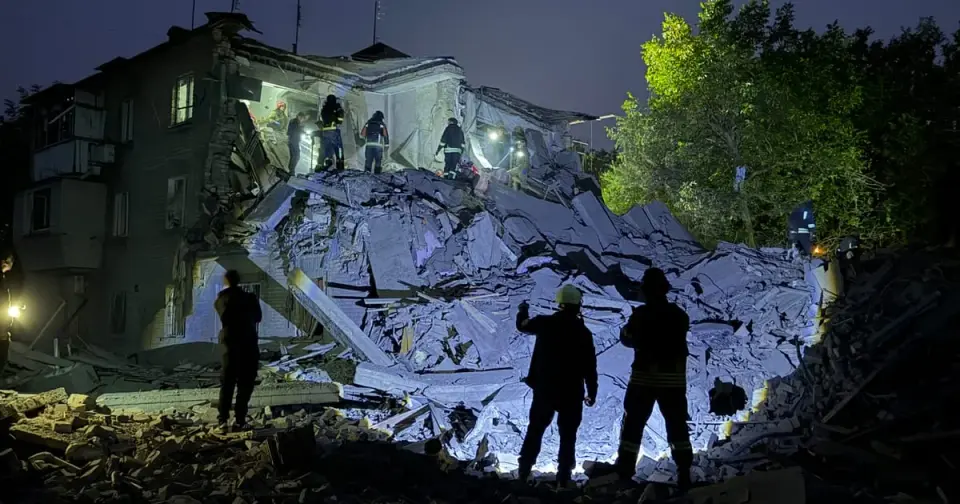
Russian airstrikes killed at least 17 to 20 people in Zaporizhzhia, including children, one day after President Trump lifted sanctions on Russian diesel. Zelenskyy called the attack Moscow's 'thanks' for the deal, while European leaders vowed to maintain pressure on Russia despite the US reversal.
Key points
- Russian glide bombs struck residential buildings in Zaporizhzhia, killing 17 to 20 people and injuring 18, with three children among the dead.
- President Trump announced a deal to lift sanctions on Russian diesel exports to lower US fuel prices, a move Zelenskyy criticized as a 'smokescreen' for peace talks.
- Ukrainian officials left Miami early, stating they had finished discussions, while US envoy Steve Witkoff described the talks as 'productive.'
- EU foreign policy chief Kaja Kallas warned that lifting diesel sanctions provides Moscow with revenue to fund the war, and the EU plans to approve new sanctions on Monday.
- Ukraine struck a major oil facility in Russia's Samara region overnight, continuing its campaign against Russian energy infrastructure despite US objections.
Background
This escalation follows weeks of rising tensions over fuel prices. In September, Trump urged Zelenskyy to halt strikes on Russian refineries, arguing they caused global diesel shortages. Ukraine had previously vowed to intensify attacks on Russian oil hubs in retaliation for Russian aerial bombardments, which had already damaged over 45% of Russian refining capacity. The current strikes occur amid a broader pattern of Russian daytime attacks on civilian infrastructure, including a recent strike on a Kyiv bus stop that killed 30 people.
How outlets are covering it
Outlets differ on the death toll: Politico and Al Jazeera report 17 to 20 killed, while ABC News cites 20. All sources agree on the death of three children. Zelenskyy framed the attack as direct retaliation for the diesel deal, calling it Moscow's 'thanks.' In contrast, US envoy Steve Witkoff described the Miami talks as 'productive' and focused on de-escalation. European leaders, including Kaja Kallas and Swedish PM Ulf Kristersson, expressed dismay at the US deal, emphasizing that energy revenues are central to Russia's war chest. Polish Foreign Minister Radoslaw Sikorski questioned whether Russia could even deliver the promised diesel, citing fuel shortages in Moscow and damaged refining capacity. Trump, meanwhile, blamed Zelenskyy for high diesel prices, a stance ABC News highlighted as a sharp contrast to his recent sanctions law.
Why it matters
The diesel sanctions lift undermines Western efforts to pressure Russia into negotiations by cutting off war revenue. It risks emboldening Moscow to continue attacks, as Zelenskyy argued, and could destabilize global fuel markets. The EU's planned new sanctions package and Ukraine's continued strikes on Russian refineries signal a fragmented response to the US policy shift, potentially complicating peace efforts and prolonging the conflict.
What to watch
The EU is expected to approve a major sanctions package targeting Russia's military-industrial complex on Monday. Ukraine plans to continue striking Russian oil facilities, while Zelenskyy coordinates with European leaders on air defense and F-16 ammunition. The US-Russia diesel deal will proceed, with Russia set to deliver 300,000 tons of diesel immediately, followed by larger shipments in November and beyond.
- Strikes killing 17 are Russia’s ‘thanks’ for US diesel sanctions lift, Zelenskyy says POLITICO.eu
- Trump says 'I think it's time for Ukraine to get a new president' as he blames Zelenskyy for diesel prices ABC News - Breaking News, Latest News and Videos
- After Russian strike wipes out three families, Ukrainian town gathers to mourn The Washington Post
- Russia kills 20 in Ukraine as US hosts ‘productive’ talks to end war Al Jazeera
- Escalating Assaults on Ukrainian Cities Are Taking an Enormous Toll The New York Times
Want the full story? Read the original reporting
Read on POLITICO.eu