
Judge rules Barclays vandalism by Palestine Action activists is not terrorism
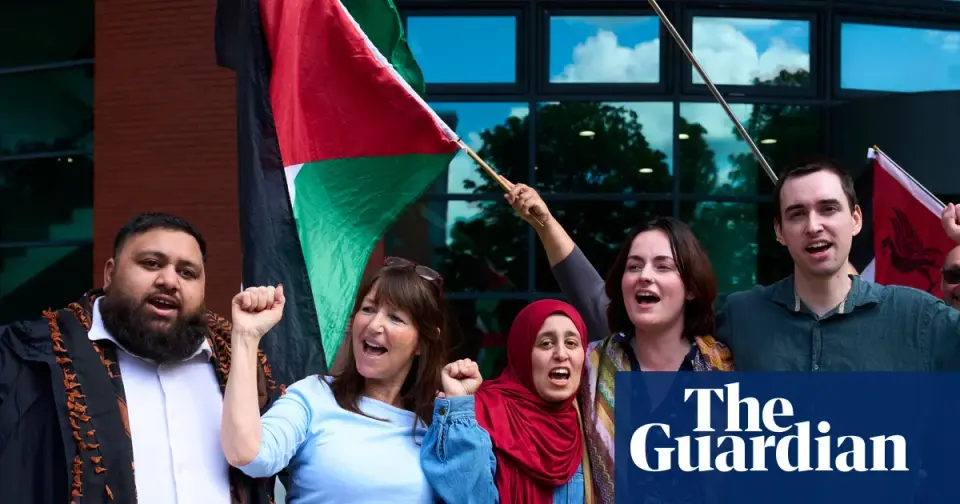
Judge Robert Altham ruled that the 2024 vandalism of a Barclays branch by five Palestine Action activists does not meet the threshold for a terrorist sentencing. Although the group caused £212,000 in damage to protest the bank's links to Israeli weapons maker Elbit Systems, the judge determined the act did not constitute 'serious damage' to a sensitive property. The activists, who were unaware of the potential terror charge during their trial, will face standard criminal damage sentences in September. The ruling contrasts with previous cases where similar actions against Elbit facilities were treated as terrorism, highlighting ongoing debates over the application of counter-terror laws to protest groups.
Key points
- Judge Altham ruled that section 69 of the Sentencing Act, which links criminal damage to terrorism, does not apply to the five Palestine Action activists convicted of damaging a Barclays branch in Burnley in August 2024.
- The activists, including Brendon O’Hagan, Amanda Kelly, Hmeera Atiqnisar, Mohammed Malik, and Alma Yaniv, caused £212,805 in damage by breaking windows and throwing red paint, but the judge found this did not meet the high threshold for 'serious damage' required for a terror connection.
- The defendants and jury were unaware that a terrorism sentencing could be considered until after their June conviction, as Palestine Action was not proscribed as a terrorist group until July 2025, a year after the incident.
- The five will be sentenced on September 4 for criminal damage, facing shorter jail terms than if they had been classified as terrorists, which would have included 15-year notification requirements and loss of automatic early release.
- The ruling contrasts with a May 2026 decision where activists who damaged Elbit Systems' factory in Bristol were sentenced as terrorists, despite similar political motivations and pre-proscription timing.
Background
This ruling follows a series of legal challenges regarding the UK government's proscription of Palestine Action as a terrorist organization in July 2025. The group has been targeted for direct action protests against Elbit Systems, an Israeli weapons manufacturer, with over 3,500 people arrested under the Terrorism Act for supporting the group. The Supreme Court is currently hearing an appeal against the ban, with rights groups arguing it violates civil liberties and due process. The Barclays case is part of a broader pattern where pre-proscription actions are being re-evaluated under counter-terror laws, raising concerns about the chilling effect on protest rights.
How outlets are covering it
The Guardian and BBC emphasize the procedural unfairness of considering a terror charge after the verdict, noting that neither the defendants nor the jury were aware of this possibility. Al Jazeera highlights the activists' relief and the broader context of mass arrests for supporting Palestine Action, framing the ruling as a victory for protest rights. Liberty, a human rights organization, welcomes the decision but criticizes the mere possibility of a terror connection as evidence of flawed UK laws that undermine public trust in counter-terror measures. Amnesty International UK calls for the proscription of Palestine Action to be lifted, arguing that the misuse of terror powers is a tool to protect the Israeli weapons industry. In contrast, the BBC notes that the judge distinguished this case from previous ones involving Elbit facilities, where the damage was deemed more severe and the target more sensitive, suggesting a nuanced application of the law rather than a blanket rejection of terror connections for all Palestine Action actions.
Why it matters
This ruling sets a precedent for how pre-proscription actions by protest groups are treated under UK counter-terror laws. It highlights the tension between protecting public safety and safeguarding the right to protest, with potential implications for future cases involving direct action against corporate targets linked to conflict zones. The decision may influence the Supreme Court's upcoming review of the Palestine Action ban and could shape the government's approach to counter-terror legislation in the context of political protests.
What to watch
The five activists are scheduled to be sentenced on September 4 at Preston Crown Court for criminal damage. The UK Supreme Court is expected to hear an appeal against the proscription of Palestine Action, which could determine whether the group remains designated as a terrorist organization. Rights groups are likely to continue campaigning for the reversal of the ban and the release of those arrested under the Terrorism Act for supporting the group.
- Palestine Action ‘Barclays five’ will not be sentenced as terrorists The Guardian
- Palestine Action activists will not be sentenced as terrorists, judge rules Al Jazeera
- Pro-Palestinian activists who vandalized UK bank won’t be sentenced as terrorists The Times of Israel
- Palestine Action's bank attack 'not terrorism-linked', says judge BBC
- Liberty’s responds to terror connection not being applied to Barclays five libertyhumanrights.org.uk
Want the full story? Read the original reporting
Read on The Guardian