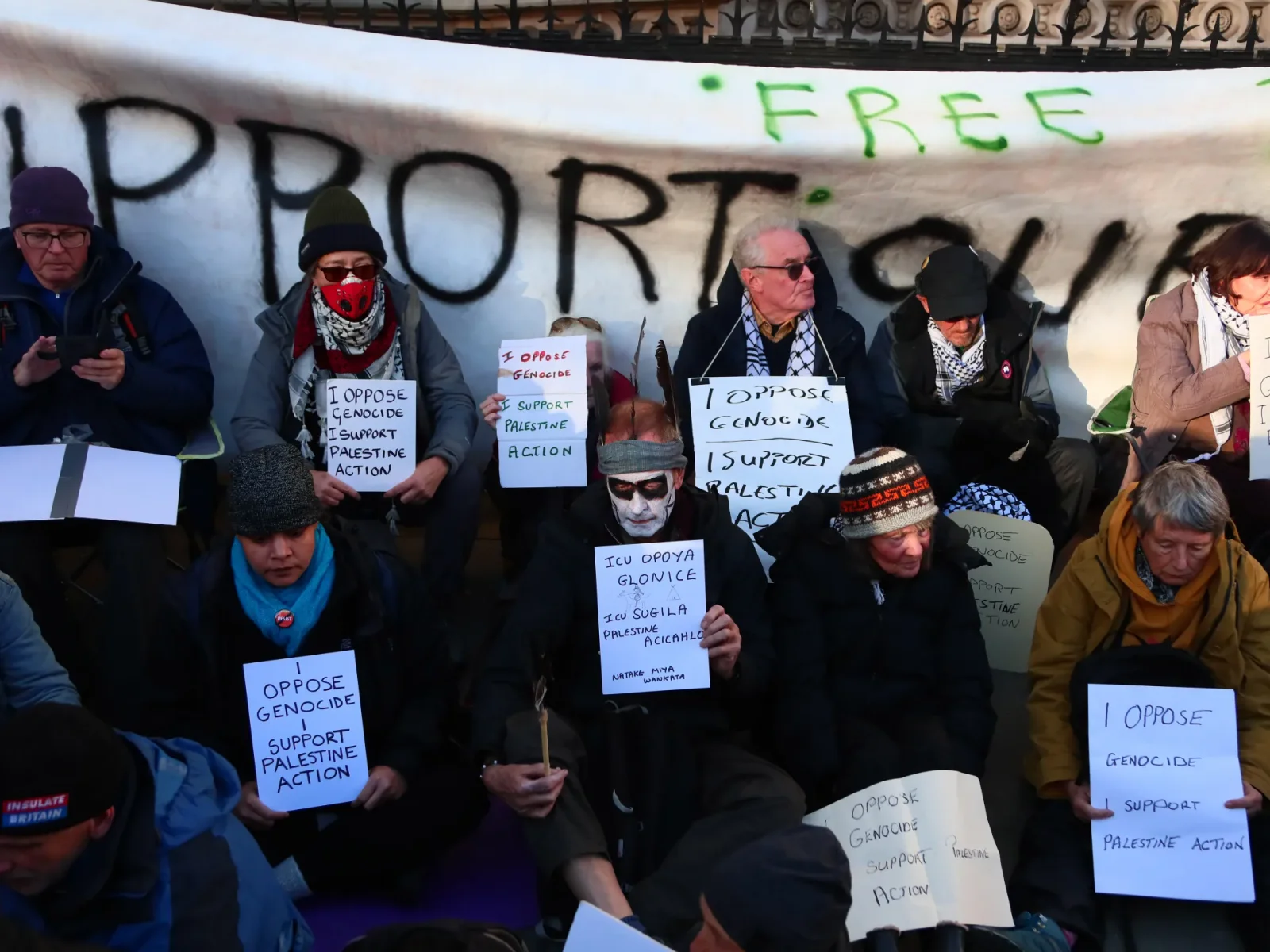
James Chambers, a US philanthropist and heir to the Cox family, faces a Spanish court hearing on US extradition requests. He denies terrorism charges, claiming funds supported a Tunisian football club, while defense lawyers accuse the US of altering translations to exaggerate his alleged involvement in 2023 protests.
AfD candidate Ulrich Siegmund sparked outrage by linking arms production to his party's deportation plans, drawing sharp criticism from rivals and raising questions about the party's governing intentions.
Ulrich Siegmund, the likely leader of Saxony-Anhalt, stated that the Alternative for Germany (AfD) supports domestic arms production to facilitate its planned mass deportation campaigns. This stance contradicts the party’s traditional anti-military posture and has sparked intense backlash from rival parties, including the BSW, which is the only group currently open to coalition talks with the AfD. The controversy centers on a potential investment by Israeli defense firm Elbit Systems in the city of Sangerhausen, which could create up to 400 jobs but risks entangling the state in foreign conflicts.
Judge Robert Altham ruled that the 2024 vandalism of a Barclays branch by five Palestine Action activists does not meet the threshold for a terrorist sentencing. Although the group caused £212,000 in damage to protest the bank's links to Israeli weapons maker Elbit Systems, the judge determined the act did not constitute 'serious damage' to a sensitive property. The activists, who were unaware of the potential terror charge during their trial, will face standard criminal damage sentences in September. The ruling contrasts with previous cases where similar actions against Elbit facilities were treated as terrorism, highlighting ongoing debates over the application of counter-terror laws to protest groups.
A UK judge ruled that the vandalism of a Barclays branch by five Palestine Action activists does not meet the legal threshold for a terrorism sentence, despite the group’s subsequent proscription. The activists, convicted in June 2026 for causing £212,000 in damage, will face standard criminal damage sentences in September rather than enhanced terrorism penalties. This decision follows a controversial post-verdict move by the trial judge to consider a 'terrorist connection,' which neither the defendants nor the jury were aware of during the trial. The ruling highlights tensions between counter-terrorism laws and direct action protests, with rights groups calling for the proscription of Palestine Action to be lifted.
Ireland’s new $61 million government jet, a Dassault Falcon 6X, was delivered without the FalconEye landing system because it is co-developed by Israeli firm Elbit Systems. This omission stems from a 2024 pledge by Taoiseach Micheál Martin to avoid Israeli products, despite the system being crucial for landing in foggy weather common in Ireland. While the Defense Department claims no operational limits, sources indicate the absence restricts pilot options, and similar Israeli components remain in Irish helicopters and patrol craft where alternatives are unavailable.
A Jerusalem Post tour of Elbit’s laser labs explains how the Iron Beam, built by Elbit and integrated with Rafael’s air-defense system, uses fiber lasers and Coherent Beam Combining to shoot down drones from aircraft, outlines airborne laser advantages and challenges (stability, cooling, weather), and discusses potential future deployments on fighters and helicopters with unclear timelines and costs.
Britain’s Court of Appeal has upheld the Home Office’s ban on Palestine Action as a terrorist organisation, overturning a High Court ruling that the move was unlawful. Judges said the group’s core aim is to damage property of Elbit Systems and other UK-trading firms, not merely peaceful protest. The decision follows prosecutions and arrests linked to Palestine Action, including four activists who were sentenced as terrorists for a 2024 Elbit Systems break-in, with the Home Secretary defending the measure as necessary for national security while emphasising that lawful protest remains possible.
Four Palestine Action activists were jailed after a retrial for breaking into the Elbit Systems factory near Bristol, causing about £1.2m in damage and injuring a police officer. Samuel Corner received seven years eight months for criminal damage and grievous bodily harm; Charlotte Head got five years for driving a prison van into the compound; Leona Kamio also received five years; Fatema Rajwani was sentenced to four years eight months. The judge said the acts were designed to influence the government, and the case is noted as a terrorism-connected criminal damage conviction. The raid was livestreamed, protests occurred outside the court, and Palestine Action has been proscribed as a terrorist organisation, though the High Court later ruled the proscription unlawful.
A Woolwich Crown Court in the UK jailed four Palestine Action activists for five to eight years after some were convicted of criminal damage and GBH in a 2024 raid on the Israeli arms maker Elbit Systems; the judge described the act as terrorism, a label supporters dispute, arguing the protest aimed to stop weapons used in Gaza, as debates over Palestine Action’s ban and government policy continue outside the court.
A UK judge for the first time added a terrorism connection to the criminal-damage convictions of four Palestine Action activists who raided an Elbit Systems UK plant, sentencing Leona Kamio and Charlotte Head to six years, Fatema Rajwani to five years eight months, and Samuel Corner to eight years eight months. Jurors had convicted them only of criminal damage, not terrorism. Justice Jeremy Johnson said the acts were intended to intimidate the UK government and public to advance a political cause, allowing a sentencing boost under section 69 of the Sentencing Act. The ruling followed a forensic report estimating about £1.2 million in damage, a report whose timing and reliability were questioned by the defence. Two co-defendants were cleared, and protests gathered outside the court.
Four Palestine Action activists were found guilty of criminal damage for an August 2024 break-in at an Elbit Systems factory near Bristol, where they damaged equipment including drones; Samuel Corner was also convicted of grievous bodily harm for striking a police sergeant with a sledgehammer. Two co-defendants were acquitted. The raid caused about £1m in damage. Sentencing is set for 12 June; the group had been proscribed by the government on 5 July 2025. The defendants argued their actions were justified, while authorities condemned the violence.
Activists from People Against Genocide abseiled into UAV Tactical Systems, a UK subsidiary of Elbit Systems, in Leicester, occupied the roof, drilled through it and breached the clean room used for drone components, potentially halting production. They accuse Elbit and the UK government of enabling what they call genocide in Gaza; Elbit is a major drone supplier and runs parts of the MoD's Project Vulcan, making it a frequent target of anti-war activism.
Six Palestine Action activists accused of involvement in a break-in at Elbit Systems’ Filton site near Bristol will be retried on charges including criminal damage and violent disorder; after the first trial, some counts were undecided and 18 co-defendants had aggravated burglary charges dropped. Samuel Corner previously faced a grievous bodily harm with intent charge. The retrial for Head, Corner, Kamio, Rajwani, Rogers and Devlin is planned for 16 February 2027, with most defendants on bail after about 18 months in custody.
Three Palestine Action hunger-strikers in the UK ended their weeks-long fast after reports that Elbit Systems UK failed to win a UK government contract to train soldiers, a development the group hailed as a victory and a spotlight on arms links to Israel's war; seven activists have resumed eating, with ongoing pressure on authorities over Palestine-related issues.