
Houthi Strikes on Riyadh Airport Force Saudi Arabia to Rethink Its War Strategy
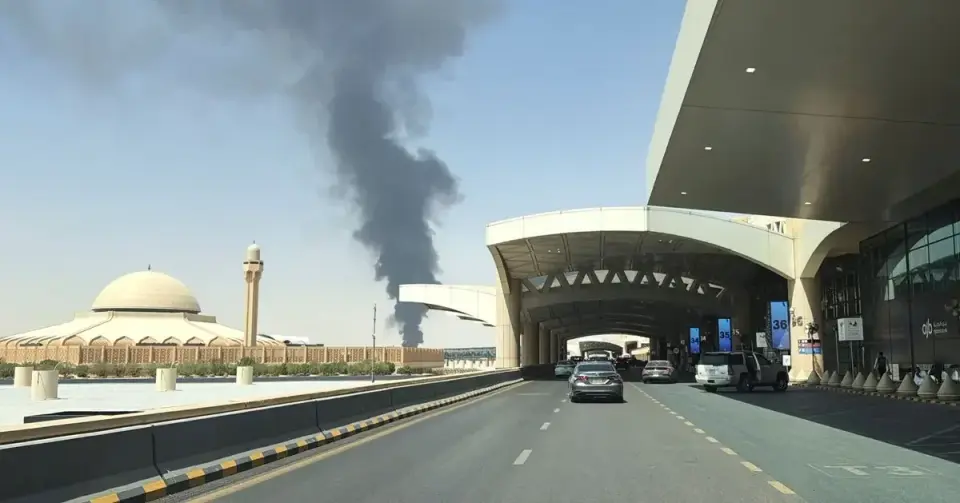
Saudi Arabia faces its most severe security crisis since the 1991 Gulf War as Iran-backed Houthis escalate attacks on Riyadh, including a strike on King Khalid Airport that killed three people and grounded hundreds of flights. The kingdom is now hosting major economic summits under threat, while US President Donald Trump has refused direct military intervention, forcing Riyadh to rely on limited support from Pakistan, Turkey, and France. The conflict has upended the 2022 Yemen ceasefire and threatens Saudi Arabia's Vision 2030 economic ambitions.
Key points
- Houthi attacks on Riyadh airport killed three people and left a Saudia Airlines plane in flames, causing hundreds of flight cancellations and evacuations of offices and schools.
- The US has refused direct military support, offering only intelligence assistance, which has eroded Saudi confidence in Washington's security guarantees despite recent nuclear and F-35 deals.
- Pakistan and Turkey have committed troops under the Mecca Joint Defense Agreement, but both nations clarified their forces will play supportive rather than active combat roles.
- Saudi Arabia is hosting the World Petroleum Congress and Future Investment Initiative amid the crisis, with security teams assessing risks for global business leaders.
- The conflict has disrupted the 2022 ceasefire and threatens Saudi Arabia's alternative oil export route via the Bab al-Mandeb Strait, compounding economic pressures from the Strait of Hormuz closure.
Background
This escalation follows a series of Houthi attacks on Saudi cities and energy infrastructure in September 2026, including a missile strike on Riyadh and a security alert in Mecca. The conflict began after the Houthis seized the coastal city of Mokha in September 2026, gaining control of the Bab al-Mandeb Strait, which Saudi Arabia had been using as an alternative route to the blocked Strait of Hormuz. Previous US bombing campaigns in 2025 failed to defeat the Houthis militarily, setting the stage for the current diplomatic and military stalemate.
How outlets are covering it
Semafor emphasizes the jarring reversal of Saudi Arabia's previous 'business-as-usual' posture, noting that Western governments are now advising against travel to Riyadh and that the kingdom's image as a stable Gulf hub is crumbling. The New York Times highlights the vulnerability exposed by the attacks, noting that Saudi Arabia has no easy options to curtail the increasingly sophisticated strikes. The Jerusalem Post frames the conflict as part of a broader Iranian strategy to control global maritime straits, arguing that the US and its allies must prove that closing straits to influence the global economy will not succeed. The Arab Center Washington DC focuses on the diplomatic fallout, noting that the US refusal to intervene is eroding Saudi confidence in Washington's security guarantees and forcing Riyadh to seek limited support from Pakistan, Turkey, and France, while also attempting to repair its alliance with the UAE.
Why it matters
The crisis threatens Saudi Arabia's Vision 2030 economic transformation and its position as a regional power broker. The disruption of oil routes and the potential for wider regional conflict could have global economic implications, particularly for energy markets and shipping costs. The US refusal to intervene directly may embolden other adversaries and undermine US deterrence in the region, while Saudi Arabia's limited options could force it into a prolonged and costly war of attrition.
What to watch
Saudi Arabia is expected to continue its military offensive to retake Bab al-Mandeb from the Houthis, while seeking additional allies to support the conflict. The kingdom may also attempt to repair its alliance with the UAE to obtain further military support. The US is likely to continue offering limited intelligence support while avoiding direct military involvement, potentially leading to further erosion of Saudi confidence in Washington's security guarantees. The conflict may escalate into a wider regional confrontation if Iran retaliates against Saudi Arabia's economic pressure on Tehran.
- View / Saudi Arabia faces its toughest moment of war Semafor
- Days of Deadly Houthi Attacks Show Saudi Arabia’s Vulnerabilities The New York Times
- NEWSLETTER: The war's explosive new front Reuters
- The global community must not submit to the Islamic regime The Jerusalem Post
- Saudi Arabia’s Search for Allies in Yemen Arab Center Washington DC
Want the full story? Read the original reporting
Read on Semafor