
Hormuz Attacks Spike to Wartime High as US-Iran Peace Talks Stall
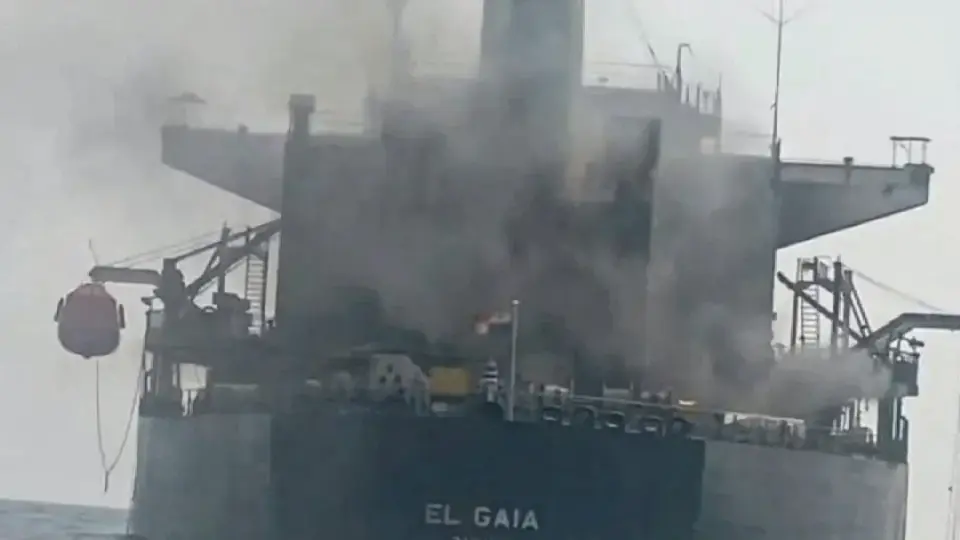
Maritime violence in the Strait of Hormuz has escalated sharply, with the highest number of ship attacks recorded since the US-Israel war on Iran began in February. While the US enforces a naval blockade to prevent Iranian oil exports, Iran’s IRGC is striking tankers using unauthorised routes. Diplomatic efforts to end the conflict remain deadlocked ahead of the US midterm elections and Israeli elections, with both sides maintaining military readiness despite ongoing mediated talks.
Key points
- At least 11 tankers were attacked in the week ending October 4, the highest number since the war began, according to the International Maritime Organization.
- The US Central Command disabled a Panama-flagged cargo vessel, the M/V Ocean Molica, to enforce its naval blockade of Iranian ports.
- Iran’s IRGC claimed a supertanker hit a naval mine and caught fire after using an unauthorised route with navigation systems off.
- Crude oil flows through the strait dropped to 8.5 million barrels per day, roughly 40% below normal levels, due to increased maritime risk.
- Diplomatic talks are stalled, with Iran demanding a return to a collapsed June memorandum and US backing for an Iran-Oman transit deal.
Background
This escalation follows a period of stalled diplomacy and military buildup. In early October, the US deployed a third aircraft carrier strike group and 10,000 additional troops to the region, bringing total forces to approximately 60,000. Analysts previously noted that the conflict was likely to remain unresolved until after the November 2026 US midterm elections, with both sides constrained by political and military factors.
How outlets are covering it
Al Jazeera emphasizes the diplomatic deadlock, noting that Iran demands a return to a collapsed June memorandum and US backing for an Iran-Oman deal, while US Vice President JD Vance has signalled a potential easing of the zero-enrichment demand. CNBC focuses on the economic impact, highlighting that crude flows have dropped 40% below normal levels despite US military escorts, and notes that 12 Indian sailors were injured in a recent strike. The New York Post highlights the immediate tactical exchange, detailing the US strike on the M/V Ocean Molica and the IRGC’s claim that a supertanker hit a naval mine, framing the events as a direct confrontation between US blockade enforcement and Iranian maritime aggression.
Why it matters
The surge in attacks threatens global energy security, as the Strait of Hormuz carries one-fifth of the world’s oil and gas in peacetime. The escalation could further destabilise oil markets and prolong the conflict, with significant implications for global inflation and geopolitical stability. The stalemate ahead of key elections in the US and Israel suggests that a resolution is unlikely in the near term, potentially leading to further military escalation.
What to watch
Diplomatic messages continue to be exchanged through mediators, but no breakthrough is expected before the US midterm elections on November 3 and Israel’s election on October 27. Iran has stated it will pursue its interests through both diplomatic and military avenues, while the US maintains its naval blockade. The situation remains volatile, with the potential for further strikes on commercial vessels and military assets.
- Hormuz attacks intensify as efforts to end war on Iran stall Al Jazeera
- Tanker attacks in Strait of Hormuz surge to wartime high as Iran tries to choke off oil exports CNBC
- Vessel struck by unknown projectile off UAE coast amid surge in attacks, UKMTO says Reuters
- Iran sets supertanker ablaze after US takes out ship breaking blockade New York Post
- Tanker damaged after being hit in Strait of Hormuz, marine agency says The Times of Israel
Want the full story? Read the original reporting
Read on Al Jazeera