
Ukraine Formalizes Drone-Infantry Hybrid Doctrine to Minimize Casualties
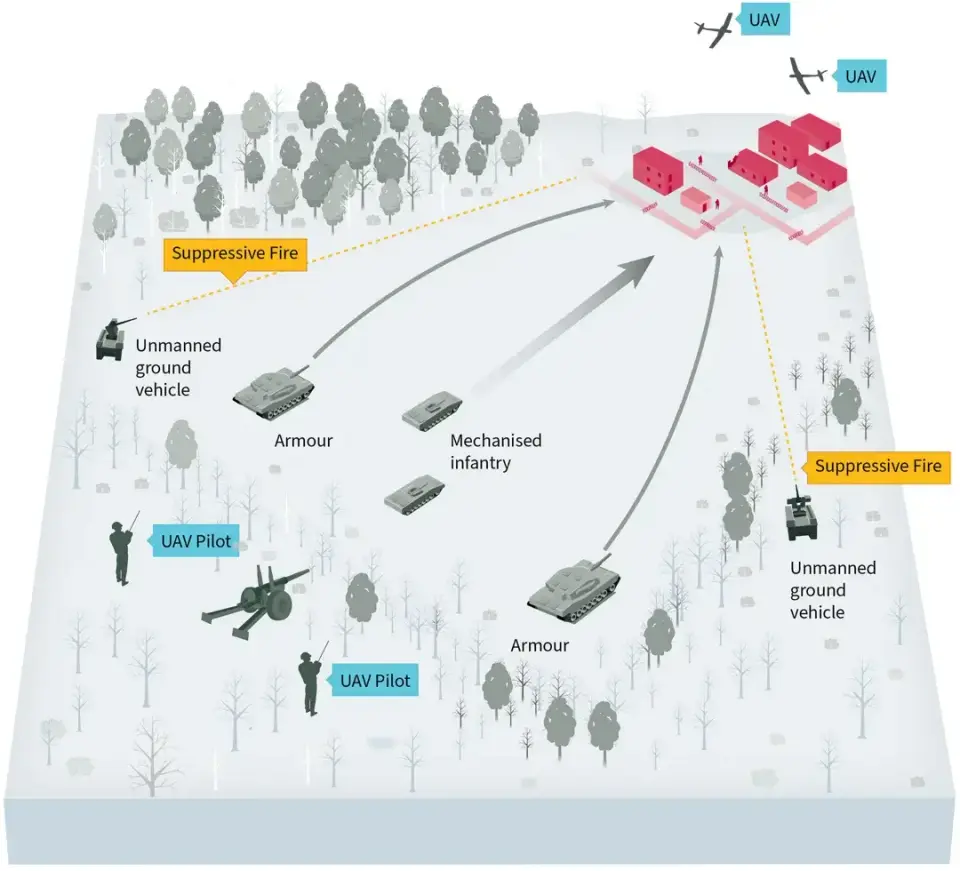
Ukraine’s Ministry of Defense adopted a new 'drone-assault' doctrine in April 2026, integrating aerial drones, ground robots, and infantry into unified units. This strategy shifts the initial breach and suppression roles to unmanned systems, allowing human soldiers to secure territory with reduced casualties. Recent operations in the Lyman, Kharkiv, and Kupiansk sectors have demonstrated success, recapturing significant territory and forcing Russian retreats.
Key points
- The new doctrine, adopted in April 2026, combines aerial reconnaissance, UGV suppression, and FPV strikes with infantry consolidation.
- Ukrainian forces have recaptured approximately 200 square kilometers near Lyman and over 745 square kilometers in the Oleksandrivka front using this method.
- Fiber-optic drones are being used for deceptive ambush tactics, exploiting their resistance to electronic warfare jamming.
- The 2nd Army Corps and 3rd Army Corps have successfully dislodged Russian forces in Kharkiv and Lyman sectors, respectively, with minimal losses to unmanned systems from enemy fire.
Background
This development follows earlier reports of Ukraine’s rapid adoption of ground robots like the Murakha for logistics and combat support, as well as warnings from former officials about the need for a unified technology strategy. The formalization of this doctrine represents a shift from ad-hoc unit-level innovations to a standardized national military approach.
How outlets are covering it
Daily Kos emphasizes the strategic success of the new doctrine, highlighting specific territorial gains and the psychological impact of robots on Russian troops. Business Insider focuses on the tactical evolution of fiber-optic drones, noting their use in ambush tactics and the challenges posed by electronic warfare. International Business Times, while primarily covering the drone industry's engineering talent, indirectly supports the narrative of a robust domestic drone ecosystem enabling these tactics. The outlets agree on the effectiveness of unmanned systems but differ in focus: Daily Kos highlights the integrated doctrine, while Business Insider details specific drone types and their vulnerabilities.
Why it matters
This doctrine change could significantly alter the balance of power on the Eastern front by reducing Ukrainian casualties and increasing the efficiency of offensive operations. It also signals a broader shift in modern warfare toward human-machine teaming, potentially influencing military strategies globally. The success of these tactics may force Russia to adapt its defensive strategies, potentially leading to further territorial shifts.
What to watch
Expect continued expansion of drone-assault units across other fronts. Russia may develop countermeasures against fiber-optic drones and integrated drone systems. Ukraine will likely continue to refine these tactics and invest in the engineering talent needed to sustain the drone industry.
- ADAPTIVE INDOMITABLE UKRAINE’s Emerging Assault Doctrine: Aerial Drones, Ground Robots & Infantry As Unified Team Daily Kos
- Term : robert brovdi magyar The Baltic Sentinel
- Six interceptors vs. one Gerbera drone Technology Org
- How Ukraine Is Building the Engineering Talent Behind Its Wartime Drone Industry International Business Times
- Ukrainian soldiers are finding deceptive uses for their unjammable fiber-optic drones as ambush tactics spread Business Insider
Want the full story? Read the original reporting
Read on Daily Kos