
Ukraine’s First Drone Airlift Rescues Soldier Stranded for 18 Months
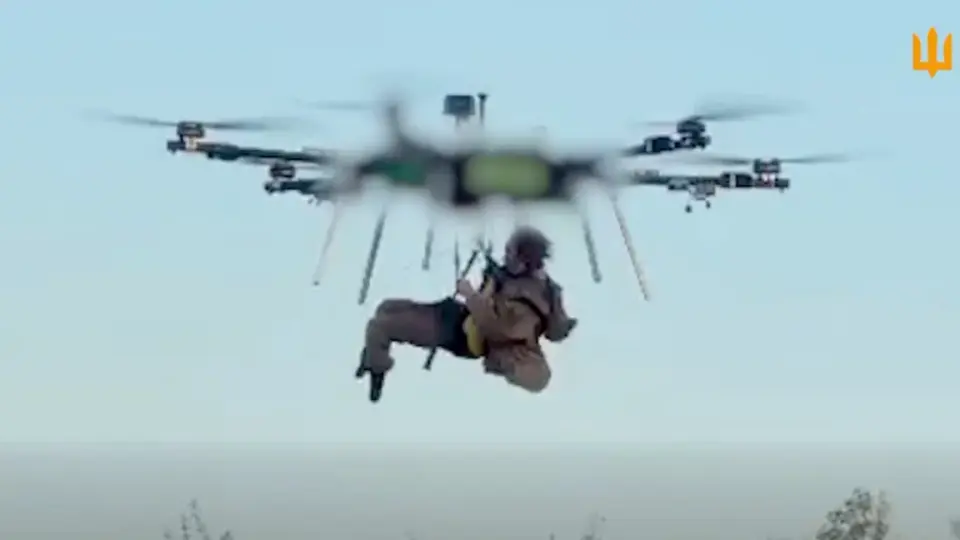
Ukraine’s 92nd Separate Assault Brigade successfully executed the world’s first frontline aerial evacuation of a wounded soldier using a heavy hexacopter drone. The operation, which took 74 minutes to cover 39 miles, rescued a serviceman from the 30th Mechanized Brigade who had been stranded for nearly 500 days due to Russian drone threats and landmines. This marks a shift from ground-based rescue attempts to aerial logistics, though experts warn it remains a high-risk last resort.
Key points
- The 92nd Separate Assault Brigade used a Gurzuf Defence Heavy Shot AYUDAG 6 hexacopter to extract a wounded soldier from the 30th Mechanized Brigade.
- The soldier had been stranded at a frontline position for nearly 500 days, relying on drone deliveries for supplies before the rescue.
- The evacuation flight lasted 1 hour and 14 minutes, covering a distance of 39 miles (62 kilometers).
- The drone, capable of carrying up to 200 pounds, was equipped with a winch and carabiners for the soldier to secure himself in a harness.
- The operation was deemed necessary because Russian drones and landmines made wheeled ground robots or traditional rescue teams impractical.
- Pavlo Feldblium, cofounder of Gurzuf Defence, stated that such drone evacuations are risky and should only be used as a last resort.
Background
Ukraine’s military has increasingly relied on unmanned systems for logistics and combat due to the dangers posed by Russian drone surveillance and strikes. Previous attempts to evacuate casualties often resulted in soldiers dying or being listed as missing in action because ground rescue was too risky. The US military has experimented with uncrewed casualty evacuation for decades but has not deployed them operationally, largely because it maintains aerial superiority in its theaters. Ukraine’s current conflict, characterized by intense drone warfare and landmine saturation, has forced a rapid adoption of aerial rescue methods that were previously theoretical. The recent throttling of Starlink services in Ukraine has also prompted the development of proprietary communication backups for critical drones like the SkyFall StarGate.
Why it matters
This operation demonstrates a critical evolution in battlefield logistics, moving from ground-based robotic rescue to aerial extraction. It highlights the extreme conditions faced by Ukrainian soldiers, who often remain stranded for months due to enemy drone activity. While the success of the drone airlift offers a new option for saving lives, it also underscores the limitations of current rescue methods and the need for further development in autonomous and remote-controlled medical evacuation systems. The incident may provide valuable lessons for other militaries, including the US, as they consider the integration of uncrewed aircraft for casualty evacuation in contested environments.
What to watch
Ukraine’s 92nd Separate Assault Brigade plans to begin systematic work to make drone evacuations a regular operation rather than a one-time event. The SkyFall StarGate drone, which was sent to a Ukrainian brigade for frontline testing in October, will likely be evaluated for its effectiveness in carrying wounded soldiers using a stretcher-based container. Further developments may include improved communication systems and AI capabilities to ensure drones can return to safe areas if they lose contact, especially given the recent issues with Starlink services.
Want the full story? Read the original reporting
Read on Ars Technica