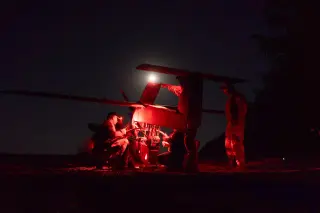
An Iranian Fateh-110 ballistic missile struck Ali Al Salem air base in Kuwait, injuring several Americans and seriously damaging two MQ-9 Reaper drones, as the U.S. weighs extending a fragile ceasefire amid ongoing regional tensions.
IDF Chief of Staff Lt.-Gen. Eyal Zamir announced that operational and technological solutions to counter Hezbollah's FPV drones are already in development and being rapidly integrated on the battlefield, following an assessment of IDF posts overlooking Lebanon. He urged ongoing pursuit of drone launch squads and warned that every threat will be struck, linking progress against Hezbollah to undermining Iran's regional axis. Zamir noted the drones' reliance on fiber-optic links to evade jamming and said the IDF has killed thousands of terrorists since the war began.
Ukraine's HUR says it has disrupted the Crimea–Donbas land corridor by targeting supply lines and equipment with unmanned systems, claiming sections between Berdyansk, Melitopol, and Dzhankoi are effectively under fire control and that strikes have damaged fuel and transport assets, hindering Russian logistics in occupied southern Ukraine.
U.S. DIA and ISW assessments suggest Russia is losing ground and slowing its advance in 2026, with Ukraine claiming about 400 sq km retaken near Dnipro. Kyiv cites high Russian casualties this year and credits its drone/artillery strategy and a ‘Logistical Lockdown’ to disrupt Russian logistics. Russia’s finances appear strained as it sells gold reserves, while Western support grows, including Sweden’s pledge of 16 Gripen jets to Kyiv.
Zelenskyy told CBS’s Face the Nation that Ukraine is bracing for a “big” Russian attack within 24 hours, likely involving drones and missiles, and urged continued Western defense support including more Patriot systems. He framed the strikes as pressure on Ukraine’s partners and a test of NATO air defenses, noting incidents near NATO borders and related responses.
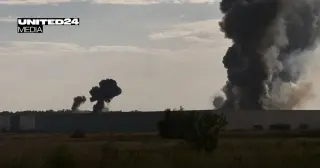
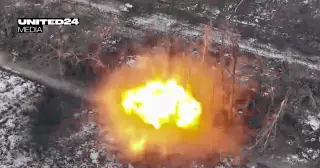
Ukraine is using mid-range drones to hit the Russian land corridor to Crimea, targeting trucks on the P-280 route from Mariupol to Simferopol and disrupting supply lines behind front lines. Kyiv says the intensified drone campaign — enabled by broader drone production and reduced air-defense constraints — is creating a logistical lockdown that slows Moscow’s offensive and degrades Russian combat power in occupied territories.
Over two days Russia launched about 600 drones and 90 missiles at Ukraine in a campaign costing roughly $411 million; one of the two Oreshnik hypersonic missiles reportedly fell short into Russian-held territory near Adviivka, marking a reliability setback for Moscow’s Mach-10 system, which has now seen four missiles fired with a 25% failure rate. The strikes damaged Kyiv landmarks and caused civilian casualties (four killed, about 100 injured), underscoring the high cost and uncertain effectiveness of Moscow’s latest weapon.
The U.S. government is reportedly planning to invest in the drone industry, a move that has Wall Street investors eyeing drone-related stocks and highlighting favored plays in the sector.
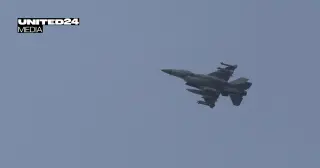
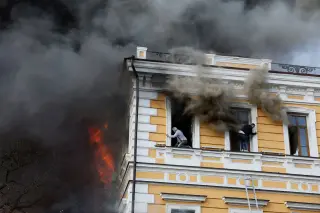
A Russian drone breached Romanian airspace and hit an apartment building in Galati near the Ukrainian border, injuring two people and sparking a fire that led to evacuations; Romania condemned the attack as an 'irresponsible escalation' and two F-16s were scrambled as drone incursions continue in the region.
The U.S. says it carried out defensive strikes on Iran, shooting down four drones and hitting a Bandar Abbas ground-control station to prevent a fifth near the Strait of Hormuz, in a move framed as protecting the ceasefire. Iran retaliated with fire at an American base and launched a ballistic missile toward Kuwait (shot down by Kuwaiti forces) with no reported hits on U.S. facilities. The clashes occur as discussions for a broader U.S.–Iran deal continue, involving steps like reopening Hormuz and curbing Iran’s nuclear program, though details remain unsettled and uncertain.
A Russian drone breached Romanian airspace and crashed onto the roof of an apartment building in Galati, wounding two residents and triggering a fire as two F-16s were scrambled; the incident marks the first reported drone strike on Romanian civilian property amid broader near-border drone activity tied to the Ukraine war.
Three oil tankers—James II, Altura, and Velora—belonging to Russia’s shadow fleet were attacked by drones about 50 miles (80 kilometers) off northern Turkey’s Black Sea coast, with no crew injuries reported. These aging vessels are used to bypass international sanctions on Russia’s oil trade, a network that Western officials say extends to espionage and other hybrid activities. France, Belgium, and the UK have taken actions targeting the shadow fleet in recent months, while Ukraine has previously targeted these vessels in the region. Ukraine has urged partners to strengthen laws to seize such ships and redirect their oil to support European security.
An opinion piece arguing that cheap, widespread drones are redefining warfare and eroding the U.S.-led global order, with Iran’s drone program and Ukraine’s use of drones illustrating the shift, while criticizing Trump for embracing costly, outdated military tech and failing to adapt to the drone revolution.
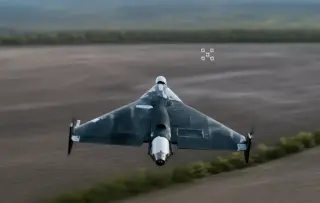
Ukraine has turned drone technology into a massive, reusable arsenal, reportedly producing millions of drones in 2025 with plans for 2026, and deploying a wide range of systems—from AI-enabled FPV swarms and jet-powered long-range strike drones to sea-based drone carriers—that use parachute recovery to extend lifecycles and reduce losses. The article catalogs 17 systems (from P1-SUN interceptors and Hornet to motherships, RS-1 Bars, MAGURA V5, and more) illustrating how Kyiv is shaping trench warfare, deep strikes, electronic warfare resistance, and Black Sea operations, signaling a shift toward reusable drones alongside disposable kamikaze units.
European Commission President Ursula von der Leyen said Ukraine will be fully integrated into Europe’s air-defense, drone and counter-drone efforts, backed by a €28.3 billion loan this year to support Kyiv’s military needs, signaling deeper long-term security cooperation as Ukraine pursues EU membership.