
Peru's Constitutional Court Nullifies Ollanta Humala's 15-Year Corruption Conviction
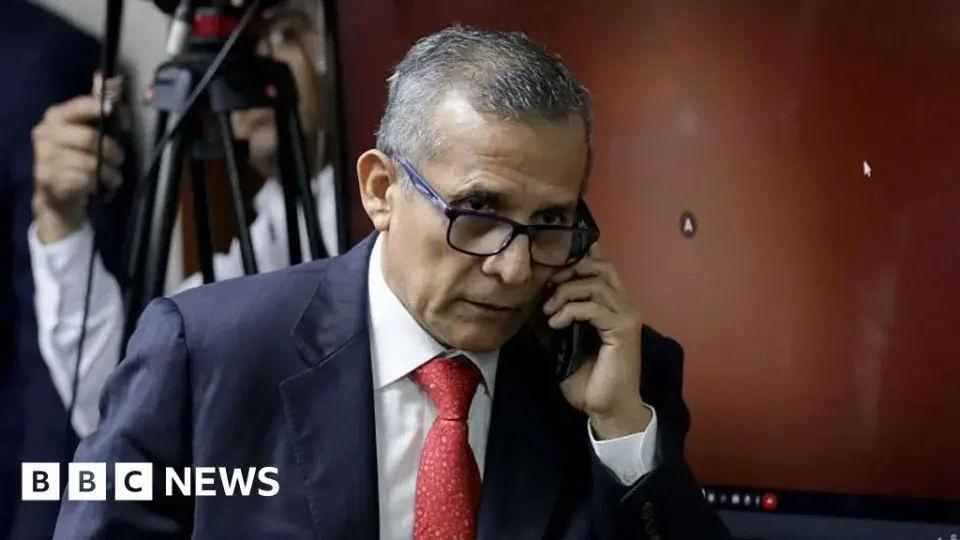
Peru's constitutional court has voided the 15-year prison sentence of former president Ollanta Humala, ruling that his criminal proceedings were invalid. The court determined that the alleged illegal campaign contributions from Venezuela and the construction firm Odebrecht did not constitute money laundering. Humala, who served time in Lima's Barbadillo Prison, is expected to be released immediately. His wife, Nadine Heredia, who received the same sentence but fled to Brazil, remains outside the country. This ruling marks a significant reversal in the Odebrecht scandal, which has implicated multiple Peruvian leaders, including Alejandro Toledo, who remains imprisoned for bribery.
Key points
- Peru's constitutional court declared the entire criminal case against former president Ollanta Humala null and void, overturning his 15-year sentence for corruption.
- The court ruled that the funds Humala received for his 2006 and 2011 election campaigns did not meet the legal definition of money laundering.
- Humala, who led Peru from 2011 to 2016, was convicted in 2025 of accepting $3 million from Odebrecht and $200,000 from Venezuelan leader Hugo Chávez.
- His wife, Nadine Heredia, was also sentenced to 15 years but was granted safe passage to Brazil and remains in exile.
- Humala’s lawyer, Julio Espinoza Goyena, stated that the Criminal Chamber must now order the definitive dismissal of the case and Humala's release.
- This decision contrasts with the ongoing imprisonment of former president Alejandro Toledo, who was sentenced to over 20 years in 2025 for taking $35 million in bribes from Odebrecht.
Background
The Odebrecht scandal has been a major political crisis in Peru, leading to the investigation of four former presidents. Alan García died by suicide in 2019 while facing arrest, and Pedro Pablo Kuczynski faced impeachment. Humala was the first of these leaders to be convicted, serving time in pre-trial detention before his 2025 verdict. The current political landscape in Peru includes a new female president who has emphasized military involvement in crime operations, highlighting the continued focus on security and justice in the region.
Why it matters
The overturning of Humala's sentence raises questions about the consistency and fairness of Peru's judicial system in handling high-profile corruption cases. It may influence public trust in the Odebrecht investigations and could set a precedent for other cases involving political funding. The disparity between Humala's release and the continued imprisonment of Alejandro Toledo highlights potential inconsistencies in how similar allegations are adjudicated, potentially affecting the political stability and rule of law in Peru.
What to watch
Humala is expected to be released from Barbadillo Prison in Lima. The Criminal Chamber is required to formally dismiss the case. The legal status of Nadine Heredia in Brazil remains unchanged, and the broader Odebrecht investigation continues, particularly regarding other implicated officials. The ruling may prompt further legal challenges or appeals in related cases, and it could influence public opinion on the integrity of Peru's anti-corruption efforts.
Want the full story? Read the original reporting
Read on BBC