
UK Supreme Court to Hear Appeal Against Palestine Action Ban Amid Mass Arrests
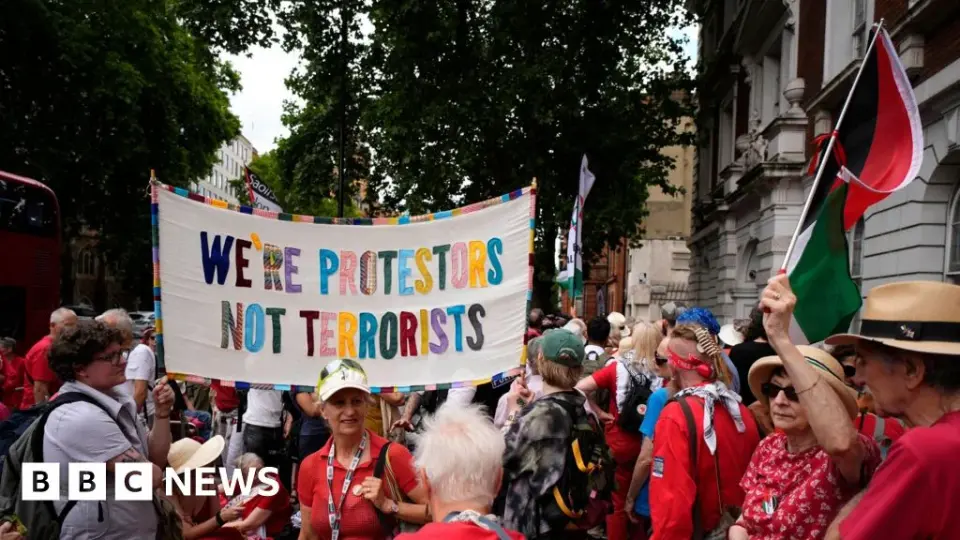
The UK Supreme Court has granted permission for Huda Ammori, co-founder of Palestine Action, to appeal the group's proscription as a terrorist organization. The ban, enacted in July 2025, has led to over 3,500 arrests for expressing support, with 117 detained during recent demonstrations outside Westminster Magistrates' Court. While the Court of Appeal upheld the ban in June 2026, the Supreme Court will hear the case between October and December 2026. All related criminal cases are paused pending the ruling. Home Secretary Shabana Mahmood stated the government will 'robustly defend' the proscription, while critics argue it violates free speech and assembly rights under the European Convention on Human Rights.
Key points
- The Supreme Court confirmed it will hear an appeal against the proscription of Palestine Action, scheduled for the final quarter of 2026.
- Over 3,500 people have been arrested since the ban took effect, with 117 detained during recent protests outside Westminster Magistrates' Court.
- The Court of Appeal previously ruled the ban lawful, reversing a High Court decision that found it unlawful in February 2026.
- All criminal cases related to supporting Palestine Action are on hold until the Supreme Court delivers its judgment.
- The ban carries a maximum penalty of 14 years in prison for membership or support of the group.
Background
Palestine Action was proscribed in July 2025 following break-ins targeting Elbit, an Israeli-owned defense firm, which caused over £1 million in damage. The group had previously faced legal challenges, including a High Court ruling in February 2026 that deemed the ban unlawful, which was subsequently overturned by the Court of Appeal in June 2026. The current Supreme Court appeal represents the final domestic legal step before potential referral to the European Court of Human Rights.
How outlets are covering it
BBC and The Guardian emphasize the legal significance of the Supreme Court hearing and the human rights arguments raised by Huda Ammori. AP News highlights the scale of arrests, noting over 3,000 detentions and 1,200 charges under the Terrorism Act, while stressing that no convictions have yet occurred. Al Jazeera frames the arrests as part of a broader crackdown on Palestinian solidarity, criticizing the UK government's foreign policy stance. The Home Office, represented by Shabana Mahmood, maintains that the ban targets criminal damage and violence, not lawful protest, and asserts that the group's actions are inconsistent with democratic values.
Why it matters
The Supreme Court's decision will determine whether the UK government can use terrorism legislation to ban protest groups based on criminal damage and ideological motives. The outcome will set a precedent for the balance between national security and freedom of expression, potentially affecting future proscriptions and the legal status of civil disobedience in the UK. The case also highlights tensions between domestic law and international human rights standards, with implications for democratic norms and protest rights.
What to watch
The Supreme Court will hear the appeal between October and December 2026. If the ban is upheld, Huda Ammori has indicated she will take the case to the European Court of Human Rights. All criminal cases related to supporting Palestine Action remain on hold until the Supreme Court's ruling. The government has stated it will continue to defend the proscription, while civil liberties groups and opposition politicians, including Green Party leader Zack Polanski, are calling for the ban to be reversed.
- Palestine Action ban to be reviewed by Supreme Court BBC
- Police arrest dozens at London rally supporting Palestine Action Al Jazeera
- UK police arrests dozens at protest supporting banned group Palestine Action AP News
- Palestine Action terror ban to go to Supreme Court as 117 arrested at protest Sky News
- Supreme court says Palestine Action co-founder can challenge ban on group The Guardian
Want the full story? Read the original reporting
Read on BBC