
France Deploys 70,000 Officers for Halloween as Youth Unrest Spreads Across Europe
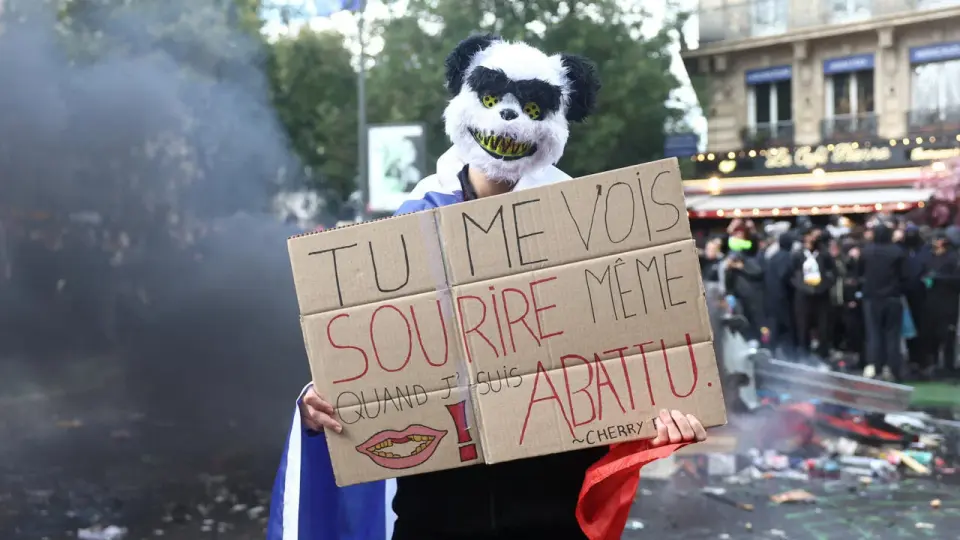
French Interior Minister Laurent Nuñez has deployed approximately 70,000 police officers and gendarmes for Saturday, October 31, citing a 'very high risk of public disorder' following the violent unrest of October 17. While mainstream demonstrations are permitted, authorities have banned marches in city centers and targeted radical left and Yellow Vest calls for evening 'revolution' gatherings. The crisis is part of a broader European youth movement protesting cost of living, education, and housing, with significant rallies planned in Germany and ongoing tensions in Italy, Spain, and Belgium. Political polarization is intensifying, with far-right leader Marine Le Pen leading polls as the 2027 presidential election approaches.
Key points
- Interior Minister Laurent Nuñez announced the deployment of 70,000 security personnel for October 31, matching the force mobilized during the violent riots of October 17.
- Authorities have banned two separate marches in Paris city centers, authorizing only a single route in the far south-east, while promising an 'extremely firm' response to any excesses.
- Nuñez stated that social media calls for 'revolution' by radical left and radicalized Yellow Vest groups are being monitored, with specific evening gatherings expected to be prohibited.
- The protests are part of a wider European wave, with 'Gen Z regelt' organizing demonstrations in over 30 German cities, including Berlin, where 10,000 participants are expected.
- Student unions and youth groups criticized a recent meeting with Nuñez as a 'dialogue of the deaf,' accusing the minister of refusing to acknowledge police violence against protesters.
- The unrest is occurring six months before the 2027 presidential election, with far-right leader Marine Le Pen currently leading opinion polls amid the political instability.
Background
This latest escalation follows a series of violent protests in France beginning in September, triggered by student grievances over poor school conditions and rising living costs. Previous incidents, including the October 17 riots and the suspension of stun grenade use after teenagers suffered severe injuries, have intensified tensions between the government and protesters. The current situation is viewed as part of a broader European crisis of youth disillusionment, where cascading economic and social issues have led to widespread street demonstrations across multiple countries.
How outlets are covering it
France 24 emphasizes the security dimension, highlighting the massive police deployment and the government's zero-tolerance stance toward radical groups and potential looting. The Guardian provides a comparative European perspective, noting that while France faces high risks of violence, German authorities like Berlin’s police chief express less fear of coordinated attacks, though they are deploying additional officers. The Dispatch frames the events as an 'unfinished revolt' rooted in long-standing discontent since the 2018 Yellow Vest movement. BBC offers a sociological analysis, describing the protests as a 'TikTokisation' of dissent driven by young people feeling locked out of the future, while noting that intelligence services in France and Belgium distinguish between opportunistic looting and intentional radical violence. Outlets also differ on the political implications, with BBC and The Guardian noting that the unrest is boosting support for both far-right and far-left candidates, while France 24 focuses on the immediate security threat posed by radicalized factions.
Why it matters
The situation highlights a deepening crisis of legitimacy for European governments, as youth-led protests challenge the social contract over education, housing, and economic stability. The heavy-handed police response and the potential for further violence could exacerbate political polarization, potentially influencing the 2027 French presidential election and other upcoming European votes. The spread of these protests across multiple countries indicates a synchronized generational discontent that may reshape political landscapes and policy priorities across the continent.
What to watch
Authorities will monitor the October 31 demonstrations closely, with a focus on preventing violence after mainstream rallies end. Organizers in France and Germany are calling for peaceful protests, but tensions remain high. A nationwide strike is scheduled for November 5 in France, and further demonstrations are planned in Italy and other European cities. The outcome of these protests will likely influence the political discourse ahead of the 2027 French presidential election and other key European elections.
- French minister warns of 'very high' violence risk as country braces for Halloween protests France 24
- Cost of living protests to spread to Germany and reignite in France on Halloween The Guardian
- France’s Unfinished Revolt The Dispatch
- Europe's youth are protesting - and feeling locked out of a future BBC
- A Day After Renewed Street Clashes in France, Relief and Anxiety Mix The New York Times
Want the full story? Read the original reporting
Read on France 24