
Officials Link Far-Right Vigilantes to Escalating Violence in France’s Ongoing Unrest
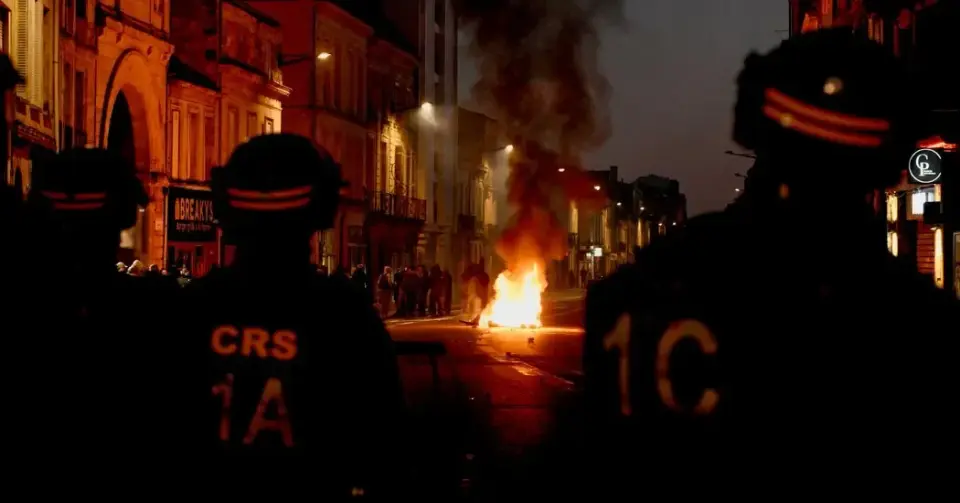
French officials attribute the intensification of civil unrest to far-right vigilantes who have inflamed tensions during the ongoing 'autumn of discontent.' A violent clash in Rouen on October 17, where far-right groups fought masked demonstrators, went largely unnoticed amid broader national chaos. As new antigovernment protests are scheduled for November 28, authorities highlight the role of extremist groups in transforming mass demonstrations into widespread violence.
Key points
- French officials state that far-right vigilantes have inflamed the country’s unrest, according to The New York Times.
- A violent clash occurred in Rouen on October 17, involving far-right chanters and masked demonstrators with left-wing slogans, resulting in punches and projectile throwing.
- The October 17 incident was overshadowed by mass demonstrations that mutated into arson and looting in Paris and other cities, marking a turning point in the unrest.
- Antigovernment protests are planned for Saturday, November 28, across France, indicating the unrest is expected to continue.
- The New York Times notes that the specific mechanics of how the Rouen clash started were not depicted in available footage.
Background
The current unrest stems from a broader 'autumn of discontent' that began in September 2026 with teacher strikes in Créteil, expanding to include cost-of-living grievances and trade union actions. Previous waves of protests in October saw significant violence, including the ransacking of a Paris synagogue and damage to small businesses, though authorities often attributed such incidents to opportunistic crime rather than specific ideological motives. Far-right groups, including the identitarian movement 'Les Normaux,' have been active in cities like Rouen, Nice, and Montpellier, attacking protesters and trade unionists. The unrest occurs ahead of the April 2027 presidential election, with analysts noting that the chaos may benefit extreme parties on both the far right and far left.
Why it matters
The involvement of far-right vigilantes in the unrest signals a shift from purely economic or political grievances to ideological street violence, complicating the government's ability to maintain order. This dynamic risks polarizing the electorate ahead of the 2027 presidential election, potentially empowering extremist parties that leverage law-and-order narratives. The failure to address such clashes, as seen in Rouen where no arrests were made despite police presence, may embolden extremist groups and deepen societal divisions.
What to watch
Antigovernment protests are scheduled for Saturday, November 28, across France, with expectations of continued unrest. Student protesters have vowed to stage new blockades in high schools and universities, and to join a November 5 demonstration called by trade unions, though the latter date has passed. Authorities are likely to deploy significant security resources, as seen in previous waves where Interior Minister Laurent Nuñez deployed 70,000 police and gendarmes. The outcome of these protests will determine whether the unrest escalates further or begins to subside, with ongoing monitoring of far-right and far-left activities expected.
Want the full story? Read the original reporting
Read on The New York Times