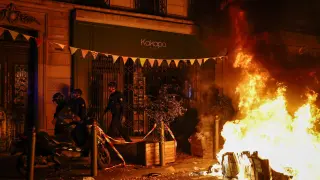
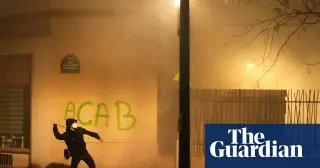
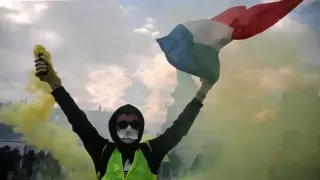
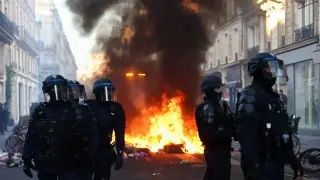
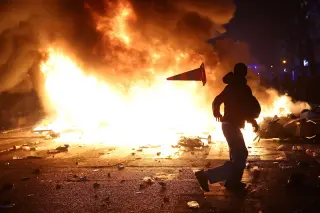
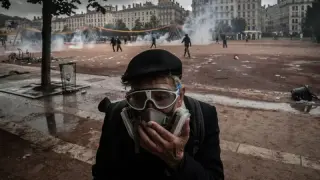
The French Senate passed a bill requiring protesters to pay up to 10,000 euros for damage caused during demonstrations, following violent unrest in October. The law, which allows seizure of welfare benefits, faces criticism for potentially chilling the right to protest, while supporters argue it is necessary to hold vandals accountable.
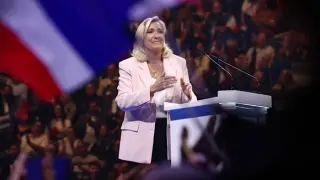
The French government is fast-tracking a controversial bill that would hold protesters liable for up to €10,000 in damages caused by others during demonstrations. While the interior ministry reports a significant drop in violence compared to the previous week, trade unions and left-wing parties argue the law threatens the fundamental right to protest. Meanwhile, far-right leader Marine Le Pen has launched her presidential campaign, claiming the bill as her own policy to restore order.
Marine Le Pen launched her 2027 presidential campaign in Orléans, positioning herself as the sole candidate capable of restoring order amidst ongoing civil unrest. The rally, attended by thousands, occurred under heavy security following violent protests and a deadly attack near Paris. While Le Pen leads the polls, her rivals remain competitive, and the event was met with significant counter-protests and security concerns.
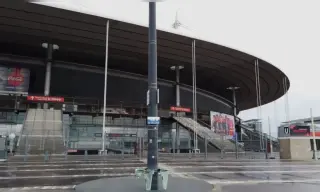
The NFL has canceled or postponed all major fan events in Paris ahead of its first regular-season game in France due to ongoing civil unrest. While the league insists the Sunday match between the Steelers and Saints will proceed at the Stade de France, the U.S. State Department has issued a security alert for Americans in the city. Critics argue the league should relocate the game to London to avoid potential safety risks, but officials maintain that enhanced security measures are sufficient to protect attendees.
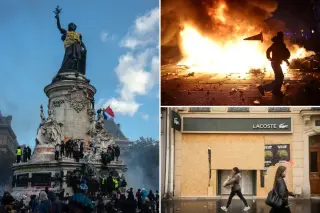
France is deploying 70,000 police officers and closing major museums, including the Louvre, to prevent renewed violence during Saturday protests over the cost of living. Authorities are responding to social media calls for looting and vandalism following a week of severe unrest that damaged historic buildings and sparked a national debate on public order.
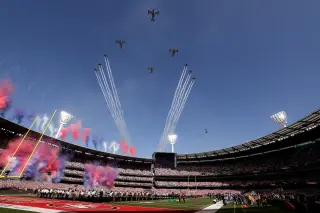
Defense Secretary Pete Hegseth’s staff initially attempted to block U.S. military personnel from participating in a pregame ceremony for the NFL’s first game in Paris, citing security concerns amid ongoing civil unrest in France. The State Department intervened, allowing a limited number of troops to attend. Meanwhile, the Pittsburgh Steelers and New Orleans Saints proceeded with the match despite bad weather and protests, with players expressing mixed feelings about international travel.
The NFL has canceled a planned Steelers Fan House in Paris due to ongoing civil unrest, but the league insists the regular-season game against the New Orleans Saints will proceed as scheduled. While security resources are being diverted to the stadium, critics argue this creates risks for fans traveling to the venue.
The Pittsburgh Steelers have canceled a planned fan event in Paris due to civil unrest, while the NFL maintains that the Sunday game against the New Orleans Saints will proceed as scheduled. J.J. Watt defended the Steelers' late travel strategy, arguing that arriving just before the game is sufficient to manage jet lag. Meanwhile, league officials and government representatives have assured the public that security measures are adequate despite ongoing protests in France.
Violent protests in France have escalated from student grievances to widespread looting and vandalism of national monuments, including the Louvre and the Limoges town hall. While the unrest began in September over school conditions, it has intensified into a broader anti-state movement. Far-left leader Jean-Luc Mélenchon is accused of encouraging the chaos to destabilize the Fifth Republic ahead of the 2027 presidential election, where he faces Marine Le Pen. President Emmanuel Macron has faced criticism for appearing out of touch, while the government struggles to contain the violence that threatens the nation’s stability.
French authorities extended curfews in major cities after a calm night followed days of riots and looting, while US President Donald Trump and allies leveraged the unrest to attack Democrats ahead of midterms. The crisis, which began over education grievances, has escalated into nationwide violence, prompting a massive police deployment and military reinforcement for upcoming demonstrations. While US officials blame immigration, French leaders and analysts cite economic stagnation and poor public services as the primary drivers.
A temporary synagogue in Paris was ransacked during widespread riots, but authorities and community leaders indicate the incident was likely a burglary rather than an antisemitic attack. The violence, sparked by cost-of-living protests, has caused significant damage to Jewish-owned businesses in Marseille, prompting security warnings for the Jewish community.
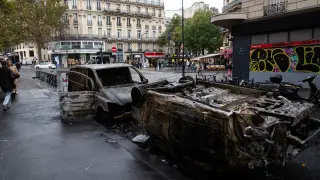
France experienced its most violent unrest in years on Saturday, October 17, 2026, as protests over rising living costs and school conditions escalated into widespread riots. Over 2,000 people were detained, and historic buildings, including the Limoges town hall, were burned. President Emmanuel Macron vowed to hold those responsible for the chaos accountable, while political leaders blamed each other for the failure to prevent the violence.
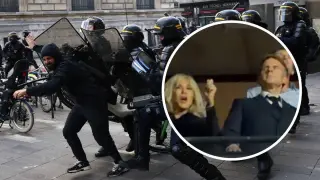
French President Emmanuel Macron and his wife Brigitte faced intense criticism for attending a Celine Dion concert in Nanterre on Friday night, just hours before violent riots erupted across the country. The unrest, which began as student protests over school conditions and expanded to include Yellow Vest activists, resulted in approximately 1,800 arrests and over 500 injuries to emergency personnel. While Macron condemned the violence and promised prosecutions, critics compared the couple to Marie Antoinette and Louis XVI, accusing them of being out of touch with the public's suffering. Macron is scheduled to address the nation on Sunday evening to address the crisis.
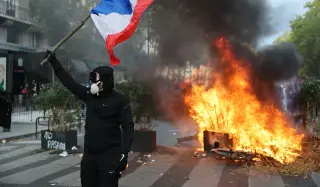
Approximately 550,000 people demonstrated across France on October 17, 2026, in a major escalation of youth-led unrest. While organizers estimated higher turnout, Interior Minister Laurent Nunez confirmed 110,000 protesters in Paris alone. The demonstrations, which began as student rallies against school funding cuts and high living costs, turned violent in several cities. Protesters looted luxury stores, set fire to barricades, and attacked government buildings in Marseille, Lille, and Limoges. President Emmanuel Macron condemned the violence, vowing to prosecute those who damaged public property, while far-left leader Jean-Luc Mélenchon argued that the majority of the crowd remained peaceful. At least 195 people were detained, and injuries included a protester losing a hand in Saint-Étienne and a 14-year-old suffering a fractured jaw earlier in the week.
Mauritius imposed an overnight curfew after peaceful protests over water shortages and high living costs escalated into violent riots following a police shooting. Prime Minister Navin Ramgoolam ordered the measure to quell the worst unrest in decades, while police arrested the officer involved and suspended three others for failing to assist the victim.