
Albanian Parliament Chaos Erupts as Student Protests Demand Rama's Resignation
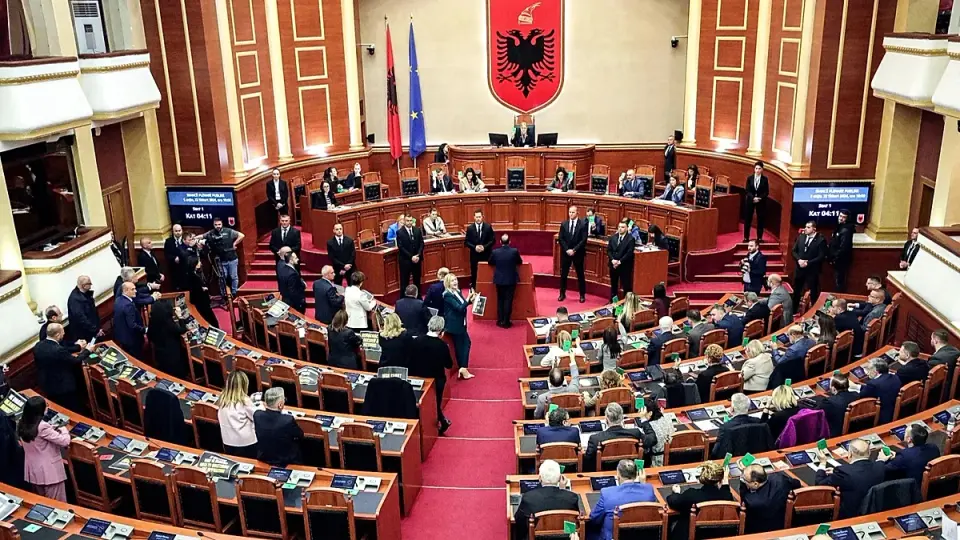
Violence has erupted in Tirana as student-led protests against Prime Minister Edi Rama enter their tenth day, culminating in a physical scuffle between ruling and opposition lawmakers in parliament. Demonstrators, demanding lower tuition, anti-corruption measures, and Rama's resignation, have clashed with police using firebombs and rocks, while authorities respond with tear gas and water cannons. The unrest stems from the 'Flamingo Revolution,' initially sparked by opposition to a luxury resort deal linked to Jared Kushner, and has escalated into a broader anti-government movement. While Rama vows to resist what he calls a violent coup attempt, critics argue the government's refusal to engage has transformed peaceful dissent into a volatile confrontation with potential for further instability.
Key points
- Parliamentary sessions were disrupted by opposition MPs blocking the podium and holding photos of injured students after leadership rejected demands to debate the ongoing protests.
- Student demonstrators have clashed with police for ten consecutive days in Tirana, using rocks, flares, and firebombs, while police deployed batons, water cannons, and tear gas.
- Protesters demand lower tuition fees, increased state investment in education, and the resignation of Prime Minister Edi Rama, whom they accuse of corruption and authoritarianism.
- The unrest evolved from the 'Flamingo Revolution,' which opposed a €1.4bn luxury resort project on the Zvernec coast linked to Jared Kushner's Atlantic Incubation Partners LLC.
- Rama has vowed to resist the protests, labeling them an attempt to overthrow the government through violence, while critics argue the government's derision and heavy-handed police response escalated the conflict.
Background
The current crisis follows months of peaceful demonstrations in Tirana beginning in May 2026, known as the 'Flamingo Revolution,' which initially targeted a luxury tourism development on Albania's southern Adriatic coast. This project, linked to Jared Kushner, the son-in-law of US President Donald Trump, was approved by Rama's Strategic Investments Committee in December 2024. The movement gained momentum as it became a symbol of broader grievances regarding corruption, low wages, and emigration, with over 600,000 Albanians leaving the country between 2011 and 2023. Recent weeks have seen the protests turn violent, with clashes at the Education Ministry and widespread unrest in the capital.
How outlets are covering it
Euronews reports that the parliamentary scuffle occurred after leadership rejected opposition demands to debate the student demonstrations, highlighting the immediate legislative disruption. Middle East Eye emphasizes the structural roots of the unrest, linking the current violence to the Kushner-linked resort deal and Rama's close ties with Israel, which critics view as evidence of a 'criminal economy' capturing the state. UnHerd provides a ground-level perspective, describing a shift from peaceful summer protests to 'visceral hatred,' with demonstrators now aiming to install a caretaker government. UnHerd notes that the government's refusal to engage, combined with heavy police force, has radicalized the movement, while a Socialist Party insider expressed fear that the rhetoric could spiral out of control. The outlets agree on the intensity of the clashes but differ on the primary driver: Euronews focuses on the parliamentary breakdown, Middle East Eye on the geopolitical and economic corruption, and UnHerd on the social and political radicalization of the youth.
Why it matters
The escalation in Albania signals a potential collapse of democratic norms in the Balkans, with risks of a police state or prolonged instability. The involvement of international figures like Jared Kushner and close ties with Israel have drawn scrutiny from the European Commission and US embassy, which have called for restraint and proportionate responses. If Rama refuses to step down, the country faces a crossroads between authoritarian consolidation and a democratic transition, with potential spillover effects on regional stability and EU membership prospects.
What to watch
Analysts predict the situation will be resolved in a short timeframe, either through Rama's resignation or a decisive government crackdown. The European Commission has demanded a lawful response and investigations into police violence, while the US embassy has urged peaceful demonstrations. If the government fails to address the core grievances, the protests may continue to escalate, potentially leading to further violence or a political crisis that could force a transition to a caretaker government.
- Albanian parliament descends into chaos as opposition backs protests Euronews.com
- As Albania's anti-corruption protests grow, the prime minister blames 'antifa' for dissent DW.com
- Albania’s revolt: How Rama’s Kushner resort deal became a threat to his leadership Middle East Eye
- Flamingo Revolution: Albania Protests Escalate over Corruption & Kushner/Trump Luxury Resort Democracy Now!
- The revolution arrives in Albania This is Europe’s autumn of discontent UnHerd
Want the full story? Read the original reporting
Read on Euronews.com