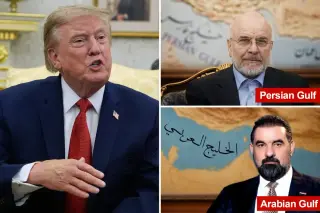
Iran's and Iraq's parliament speakers traded map-based jabs over whether the southern body of water should be called the Persian Gulf or Arabian Gulf, after a Trump post labeled the Strait of Hormuz as 'new U.S. territory,' a dispute that highlights ongoing US-Iran tensions and Iraq's oil-export concerns.
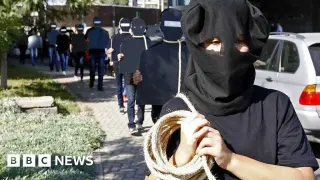
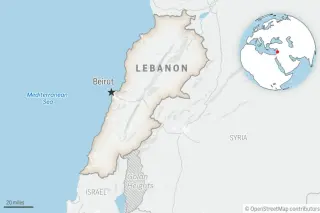
Lebanon’s parliament voted to abolish the death penalty, replacing it with life imprisonment with hard labour; the measure now goes to the cabinet and then the president for signing, with government support though Hezbollah opposed. Lebanon has not executed anyone since 2004, but more than 78 people remain on death row. The reform follows decades of civil-society campaigning and comes amid broader regional debates on capital punishment, though enforcement details remain to be set.
Lebanon's parliament voted to abolish the death penalty, replacing it with long-term prison terms, in a historic step toward human rights and legal reform.
Hungary's parliament will elect former Supreme Court chief András Baka as president, a largely ceremonial role, as Prime Minister Péter Magyar seeks to reshape power away from Viktor Orbán and lay the groundwork for a new constitutional order; Baka, previously dismissed in 2011 amid criticism of Orbán's government, is described as a defender of judicial independence, while the presidency remains limited and may last up to five years or until a new constitution takes effect.
New Zealand’s parliament passed a bill designating English as the country’s third official language, joining Māori and sign language, a move supporters say formalizes a long-standing reality despite critics calling it unnecessary given English’s dominance.
Lawmakers in New Zealand approved a bill to make English an official language alongside Māori and New Zealand Sign Language, clarifying its use in legal, political and government settings without creating new rights. The move, backed by the governing Labour coalition and NZ First but criticized by opponents who call it wasteful, reflects English’s long-standing role in the country; government data show English is spoken by over 95% of the population, with Māori and sign language used by smaller shares.
Chess legend Judit Polgár declined Prime Minister Péter Magyar’s offer to become Hungary’s president, saying she lacks the strength to unite a divided nation and will instead back a future independent, respected president. Her nomination drew criticism over lack of broad public consultation as Hungary moves toward a direct-election presidency during a transitional period after a constitutional amendment ended the previous president’s term, with Parliament required to elect a new president within 30 days.
Prime Minister Péter Magyar says he will invite Judit Polgár to serve as Hungary's interim president until the new constitution takes effect; Parliament must elect a new head of state within 30 days after President Sulyok's term ends, with Polgár backed by 16 prominent figures for her apolitical, internationally renowned profile.
Thousands of Gen Z protesters in New Delhi plan a march to Parliament to demand the resignations of Prime Minister Modi and Education Minister Pradhan after police forcibly removed hunger-striking activist Sonam Wangchuk from Jantar Mantar, amid anger over repeated exam leaks and student suicides.
Russia intensified its crackdown on dissent: blogger Ilya Remeslo was remanded for two months on charges of spreading false information about the military, while former anti-war politician Boris Nadezhdin was convicted of extremist-symbol offences, barring him from collecting signatures for September’s parliamentary elections.
Italy's lower house approved PM Giorgia Meloni's plan to switch to a fully proportional electoral system, guaranteeing a governing majority for coalitions winning more than 42% of the vote; the bill moves to the Senate after the summer recess, as critics label it a power grab and the government eyes passage ahead of the next general election, potentially as early as next April.
France’s National Assembly approved a bill legalizing assisted dying for adults with a serious, incurable illness and unbearable suffering, under tight safeguards. The patient must freely express intent to a doctor, with a two‑day reflection period, and then self-administer within 15 days (or have a doctor/nurse administer if unable). The measure now goes to the Constitutional Council for review before becoming law. The proposal has long polarized politics and faced opposition from the Catholic Church and parts of the medical field, but polls show broad public support; the government will scrutinize provisions on the reflection period, consent for those under protection, and the role of care facilities in providing services.
A Labour-backed committee proposes phasing in an 80-year retirement age for all Lords and raising the attendance requirement to 20% of sitting days (averaged over two sessions), with a gradual rollout to avoid a mass departure and allowances for emergencies; the government will consider the recommendations and respond later this year.
Facing a shrinking male-only Imperial line, Japan is weighing a plan to revive former collateral branches to widen the pool of male successors, while a push to let a female emperor faces stiff opposition from the ruling party and traditionalists—even as polls show many Japanese support gender-inclusive leadership.
Syria’s newly elected People’s Assembly held its first session since the ouster of Bashar al-Assad, electing Abdul Hamid al-Awak as speaker and setting a 30‑month term as it begins drafting new laws; two-thirds of members were elected by electoral colleges and one‑third appointed by interim president Ahmed al-Sharaa, signaling a fresh stage after decades of autocratic rule and civil war.