
Arab voters hold the key to Israel's Oct. 27 election deadlock
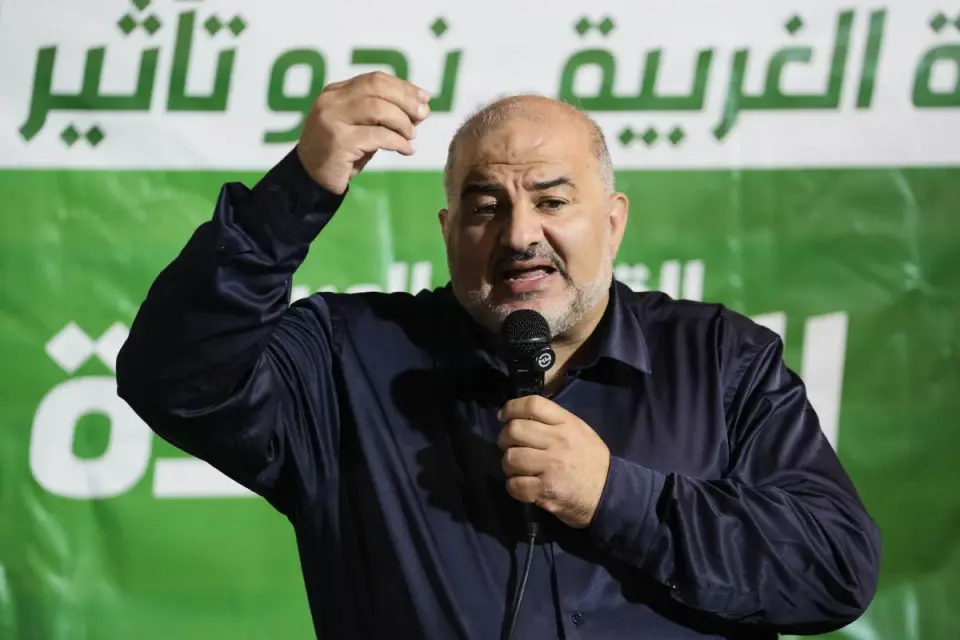
With no party expected to secure a majority in Israel's October 27 election, Arab-led parties may become decisive kingmakers. Polls show a tight race between Prime Minister Benjamin Netanyahu and centrist Gadi Eisenkot, while coalition and opposition blocs remain evenly matched at 51 seats each. Although major Arab lists were initially disqualified, legal challenges have restored their participation, making their support crucial for forming a government.
Key points
- The Knesset has 120 seats; a majority requires 61. Current polls show both the coalition and opposition blocs tied at 51 seats, with no single party leading by a wide margin.
- Mansour Abbas, leader of the Arab-led Ra'am party, is positioned as a potential kingmaker. He previously helped oust Netanyahu in 2021 and now focuses on domestic issues affecting Arab citizens, such as crime and housing, rather than West Bank or Gaza policy.
- Netanyahu and Eisenkot have both stated they will not form coalitions with Arab-led parties. Yair Lapid also ruled out such alliances in May 2026. If no majority is formed, Israel may face another election or a caretaker government.
- A Maariv poll found 48% of Israelis view Eisenkot as a better prime minister than Netanyahu (41%). Most Israelis (73%) prefer a unity government over another election if the vote results in a deadlock.
- Arab citizens, comprising about 20% of Israel's population, face significant tensions following the October 7, 2023 attack and subsequent military operations in Gaza, which have alienated many Palestinian citizens of Israel.
Background
Recent legal battles have shaped the electoral landscape. The Central Elections Committee initially disqualified major Arab lists, including Ra'am and the Joint List, but the Supreme Court is reviewing these decisions. Additionally, Balad leader Sami Abu Shehadeh withdrew his candidacy after Supreme Court pressure, raising concerns about Arab representation. These developments follow earlier controversies regarding pre-October 7 intelligence warnings and far-right party participation.
How outlets are covering it
AP News emphasizes the potential for Arab voters to sway the election outcome, highlighting the risk of another election if no coalition forms. The New York Times focuses on Mansour Abbas's role as a 'kingmaker' and his focus on domestic Arab issues, contrasting with Netanyahu's framing of Abbas as a threat. The Jerusalem Post provides polling data showing Eisenkot's lead over Netanyahu and public preference for a unity government, while noting the tight balance between coalition and opposition blocs. All sources agree on the critical importance of Arab-led parties in determining the next government, but differ in emphasis: AP and NYT focus on the political dynamics and potential deadlock, while Jerusalem Post highlights polling numbers and public sentiment.
Why it matters
The outcome of the October 27 election will determine whether Israel forms a stable government or faces further political instability. Arab voters' influence could shape policy on domestic issues affecting Palestinian citizens and potentially impact broader regional tensions. A deadlock could lead to another election or a caretaker government, prolonging uncertainty in a region already affected by the aftermath of the October 7 attack and Gaza operations.
What to watch
The Supreme Court is expected to rule on the disqualification of Arab lists by Sunday, potentially restoring their participation. Campaigns will intensify in the final days before the October 27 vote. If no clear majority emerges, negotiations for a unity government or minority coalition will begin, with Arab-led parties potentially playing a decisive role. Public opinion polls suggest a preference for a unity government over another election, but the tight race makes the outcome uncertain.
- Israel’s Arab-led parties could decide the election if anyone would partner with them AP News
- The Arab Kingmaker in Israel’s Election Who Wants a Partnership With Jews The New York Times
- Israelis prefer unity gov't to another election, Benjamin Netanyahu falls behind Gadi Eisenkot The Jerusalem Post
- Israel’s Arab parties could be the kingmakers in its election The Economist
- Opinion | Want a different Israel? Vote for an Arab party Haaretz
Want the full story? Read the original reporting
Read on AP News